Martin O’Neill Set to Stay at Celtic as Manager
Twenty-six years after Dermot Desmond first persuaded Martin O’Neill to take the Celtic job, the club is preparing to hand the team back to him again. Different era, same instinct: when Celtic need a steady hand, they reach for O’Neill.
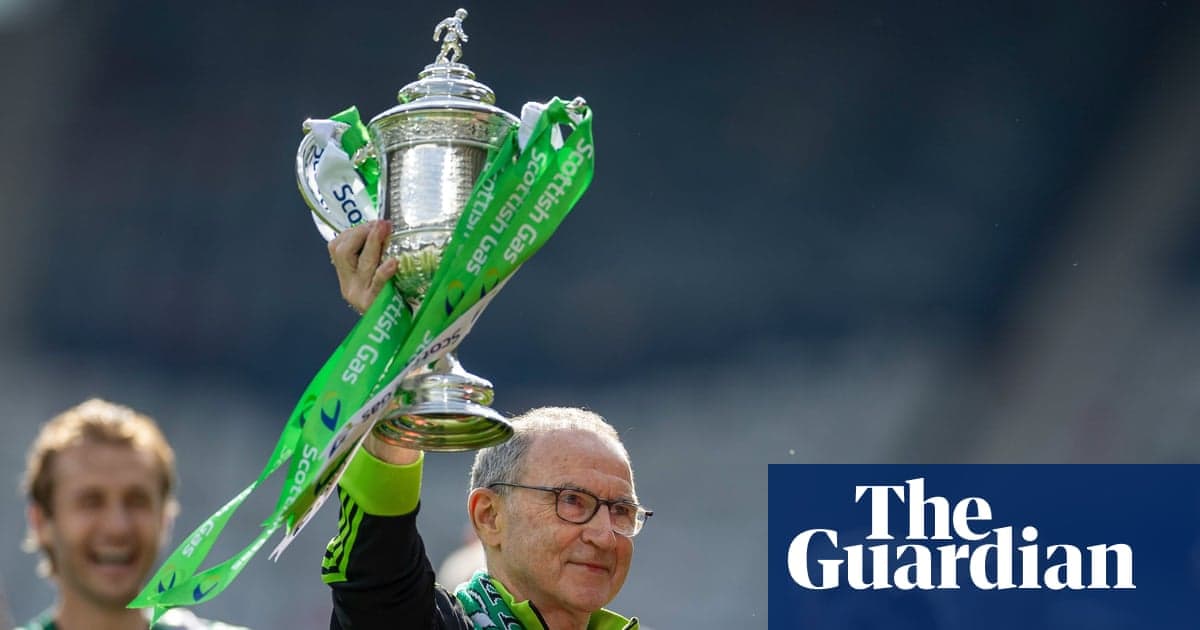
The 74-year-old has agreed a one-year contract to remain in Glasgow, with an option for a second season, and Celtic are expected to confirm his appointment as permanent manager. He returns not as a nostalgia act, but as the man who just delivered a domestic double in the second of two interim spells this campaign.
O’Neill had asked for time after the Scottish Cup final win over Dunfermline, publicly stepping back to consider his position. Inside Celtic Park, though, there was little real doubt. The sense throughout the club was that the Northern Irishman wanted the job beyond the stopgap role he had been filling, and that the board, under pressure to make a decisive call, trusted him to carry the team into next season.
That decision has not been made in a vacuum. Robbie Keane had moved firmly into the frame, holding talks earlier this week with Desmond, the club’s principal shareholder. Keane, a hero to many Celtic supporters as a player, had emerged as a serious contender after his managerial stints with Maccabi Tel Aviv and Ferencvaros, where he resigned at the end of May.
Then came the backlash. A vocal section of the support reacted furiously to the prospect of Keane taking charge, objecting in particular to his time in Israel with Maccabi Tel Aviv. What might have been framed as a bold, modern appointment quickly turned toxic. The mood music around Keane’s candidacy shifted, and shifted fast.
At that point, the contrast with O’Neill sharpened. Where Keane represented risk and controversy, O’Neill offered certainty and history. He knows the club, the demands, the politics. He has just proved he can still win trophies in Scotland. And his name still carries weight across the city and beyond.
For Desmond, the symmetry is impossible to ignore. It was he who first coaxed O’Neill from Leicester City to Glasgow in 2000, a move that transformed Celtic’s modern history. Under O’Neill in that first spell, Celtic won three Scottish titles, three Scottish Cups and two Scottish League Cups. They went toe-to-toe with Europe’s elite and reached the 2003 Uefa Cup final, losing to José Mourinho’s Porto in Seville in one of the defining nights of the club’s recent past.
Now, more than a quarter of a century on from that original appointment, Celtic are turning again to the manager who once dragged them out of a domestic slump and into an era of dominance. The stakes are different this time, the landscape altered, but the calculation is familiar: when the noise grows too loud, O’Neill brings clarity.
He has one year, with the option of another, to prove that the old magic can still shape the club’s future, not just decorate its past.