Manchester United Face Battle to Retain Gabriel's Talent
Manchester United are fighting to keep hold of Gabriel – and the battle is getting ugly.
The 15-year-old forward, widely regarded as the brightest talent to come through Carrington since Marcus Rashford, is being hunted by Real Madrid, Barcelona, Paris Saint-Germain and Bayern Munich. United, though, have no intention of cashing in or stepping aside. Senior figures are now scrambling to change his mind before he walks away for nothing.
A generational talent on the brink
Sir Jim Ratcliffe has already felt the heat from supporters over a string of unpopular calls since taking charge of football operations. Letting a prodigy like Gabriel slip away would ignite a full-scale revolt. This is not just another academy prospect; inside the club, he is seen as a once-in-a-generation talent.
On paper, United hold a contract until next summer. In reality, their grip is far looser. Gabriel is not a full-time scholar, and when he turns 16 on October 16, he will technically be free to leave if he holds a European passport.
That detail has become crucial. His father, Joe O’Cearuill, played twice for Ireland, his mother is of Greek Cypriot descent, and under post-Brexit regulations Gabriel could move to an EU club as a dual national before turning 18. United are now poring over the paperwork, desperately trying to close a door that may already be ajar.
They kept him out of Manchester City’s hands last year. This fight feels far more precarious.
The first signs of a break
The warning lights have already started flashing. Gabriel was due to train with the first team on Saturday. He didn’t turn up. He has not been seen at Carrington this week.
Michael Carrick had planned to include him in the squad for Wednesday’s Carabao Cup third-round tie against Brighton at Old Trafford. Had he stepped onto the pitch, Gabriel would have become the youngest player ever to feature for United’s senior side. That dream is off the table for now. His involvement has been ruled out.
For a club whose academy has not produced a true global superstar since Rashford, Gabriel has carried enormous hope since joining at 11. A two-footed forward, slippery in tight spaces, with the balance and agility to glide away from challenges and the calm to finish when the chance comes – he has looked like the answer to a lot of questions.
The Messi comparisons do him no favours, but stylistically he leans closer to Neymar: low centre of gravity, flair, the swagger of a street footballer. He even laces up the same model of Nike boots as the Brazilian, having penned a lucrative extension with the brand in March 2025.
The numbers back up the noise. Last season he broke into United’s Under-18s at just 14, another club record, and rattled in 20 goals in 21 league matches. That haul earned him the first-ever Premier League U18s Player of the Year award and United’s Jimmy Murphy Young Player of the Year, making him the youngest winner of that historic prize.
He then stepped up again. In August, Gabriel debuted for the U21s against Ipswich, delivered two assists and added a delicate chip in a 5-0 rout. A week later, he scored again as United hammered Leicester 4-1. Every rung of the ladder, he has climbed faster than expected.
No wonder there is a clamour for Carrick to unleash him in a senior side crying out for spark in the final third. Especially when Arsenal are showing what can happen when a club fully commits to its boy wonder.
The Dowman and Yamal effect
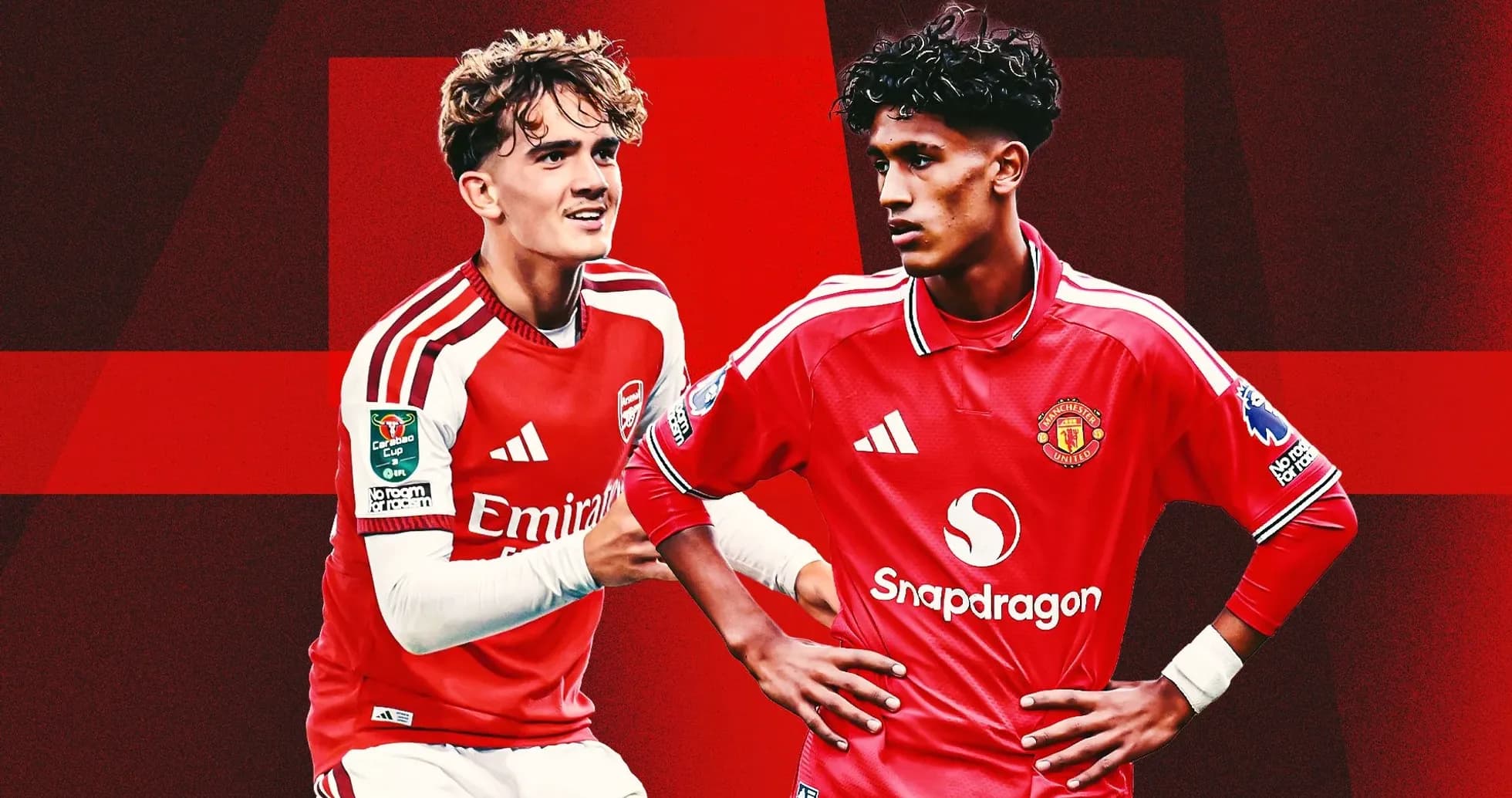
Max Dowman has changed the conversation around youth in the Premier League. Arsenal threw him in at 16 years and 139 days and he responded by breaking James Vaughan’s record as the league’s youngest goal-scorer with a brilliant solo strike against Everton in March. He had already become the Premier League’s second-youngest player when Mikel Arteta sent him on against Leeds in August 2025.
By May, Dowman was the youngest title-winner in league history. This week he matched Wayne Rooney as only the second 16-year-old to score a brace for a Premier League club in a major competition, inspiring a 4-2 Carabao Cup win over Ipswich. Fourteen senior appearances already, a blend of flair and physical power that has forced Arteta’s hand.
Arteta has even spoken of Dowman in the same breath as Messi, but he has also been careful. “We have to look after him. He's 16 years old. You don't see that in this league,” he said after the Ipswich game, stressing the need to pick the right moments and the right context.
That is where Gabriel’s situation diverges. He does not yet match Dowman physically. He is slight, often the smallest player on the pitch. His courage and determination narrow that gap, but they do not erase it. Throwing him into the Premier League could backfire, especially if he explodes onto the scene.
If Gabriel made an instant impact, Carrick would face relentless pressure to start him every week. United do not possess Arsenal’s squad depth; they cannot rotate at will while still steamrolling opponents. Dowman can be eased in and out of a winning side. Gabriel would be asked to rescue a faltering one.
Drop him after a dip and Carrick is branded too cautious. Persist with him if he struggles and the teenager is dismissed as overhyped. The stakes are different. The margin for error is smaller.
Former United defender and academy graduate Danny Simpson believes Carrick has handled the situation wisely so far. Speaking to GOAL courtesy of Free Bets, he drew a sharp contrast with Dowman’s environment.
He recalled breaking through under Sir Alex Ferguson, when United were routinely two or three goals up and even the so-called second XI “could win the Premier League.” That, he argued, is Dowman’s reality at Arsenal: a team “flying in confidence, full of top, top talent, winning games,” where even the backups are elite and it is “easy to come on and have an impact and play well.”
United, Simpson pointed out, are not that side anymore. “I know we all want to see Gabriel play and it's exciting, but it's just a very different situation to Max Dowman at Arsenal,” he said, urging patience. His view: let Gabriel train, stay around the group, and trust that his time will come – just as it is beginning to for another gifted youngster, Shea Lacey.
Yet that is easier said than sold to a teenager watching his peers conquer Europe.
Lamine Yamal’s rise at Barcelona is another powerful reference point. He was just 15 years, nine months and 16 days old when he made his senior debut in 2023. Slight, yes, but lightning quick, with the intelligence to evade heavy challenges. La Liga’s more technical, less physically brutal style gave him room to breathe and think. In the Premier League’s chaos, he might not have surfaced so quickly.
From Gabriel’s vantage point, a move to Barca or Real Madrid might look like a fast-track to stardom. The logic feels simple: follow Yamal’s path, become the next teenage phenomenon. The reality is far more complicated.
When Yamal broke through, Barcelona were heading towards the La Liga title under Xavi but had crashed out of the Champions League in the group stage. Raphinha, Ousmane Dembele and Ferran Torres were not yet at their current levels; there was space in the hierarchy for a fearless kid to rip it up.
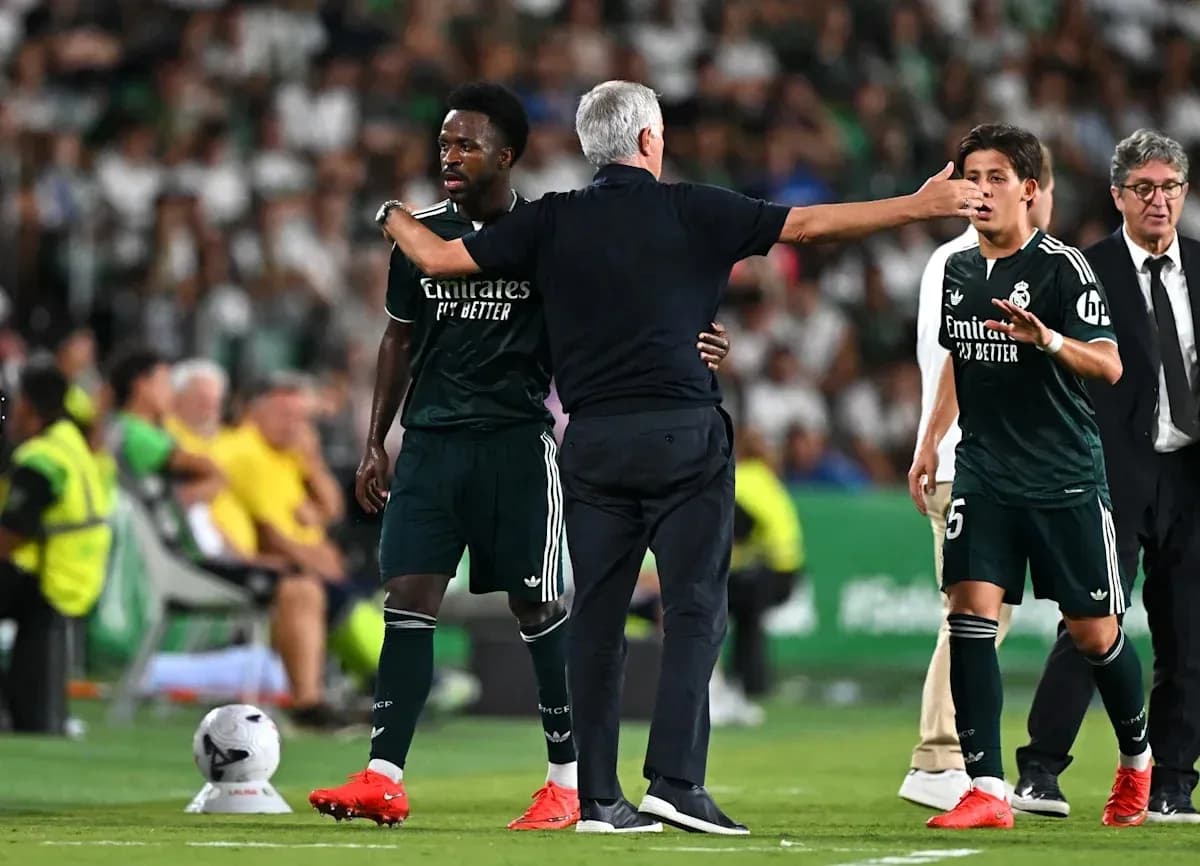
Now, the picture at the top of Spain has shifted again. Barca boast Yamal, a peak Raphinha, Anthony Gordon, Karim Adeyemi and Gabriel Jesus in attack. Across the divide, Jose Mourinho can call on Kylian Mbappe, Vinicius Junior, Jude Bellingham and Yan Diomande at Real Madrid. PSG and Bayern are hardly easier routes.
Where, in those squads, does a 16-year-old Gabriel get regular minutes?
United’s line in the sand
Whatever decision he makes, Gabriel will have to wait his turn somewhere. On pure opportunity, the clearest path still runs through Old Trafford. United’s attack is weaker than those of the European giants chasing him. The door is not just ajar; it is propped open.
If he insists on everything now, though, he risks slamming it shut himself.
Inside the club, there is a growing feeling that United cannot be held to ransom by a boy who is still 18 months from sitting his GCSEs. Talent is not the issue. Attitude might be. Carrick and the academy staff have managed his rise carefully to this point and believe they can continue to do so – if he buys back in. If not, there is little sense in clinging to a player already halfway out of the door.
United also know how corrosive a long-running saga can be when the first team is already stumbling. Every leaked whisper, every missed training session, every absent name on a teamsheet becomes another distraction from the attempt to salvage the season.
The sense from those around the club is that Gabriel is being emboldened by a false sense of privilege, whether that comes from his own ambitions or from voices in his ear. The contrast with the club’s homegrown legends is stark.
George Best, Sir Bobby Charlton, Ryan Giggs, David Beckham, Paul Scholes, Gary Neville – none of them had their paths smoothed by entitlement. They fought for their moments. Standards were brutal, on and off the pitch. You met them or you moved on.
Former manager Ruben Amorim, heavily criticised and ultimately sacked in January, still cut to the heart of the matter before he left. “There is a feeling of entitlement we have in our club,” he warned. “Sometimes, difficult moments is not a bad thing for the kids. We don't always need accolades in everything. We are not helping.
“Nowadays, they speak and go against the club because they feel entitled. Let's stay. Let's fight. Let's overcome. That is the way we can solve things.”
He failed in many areas, but on that point he struck a nerve.
Right now, with his current mindset, Gabriel looks unlikely to change United’s fortunes in the famous red shirt. The lesson for every youngster watching is brutal but timeless: no one is bigger than the club.
If that message does not land with Gabriel, United may decide the cleanest solution is also the coldest – let him go, let him chase the fast track elsewhere, and see who really wins that race in five years’ time.