Manchester Derby Analysis: United's Volatility vs City's Control
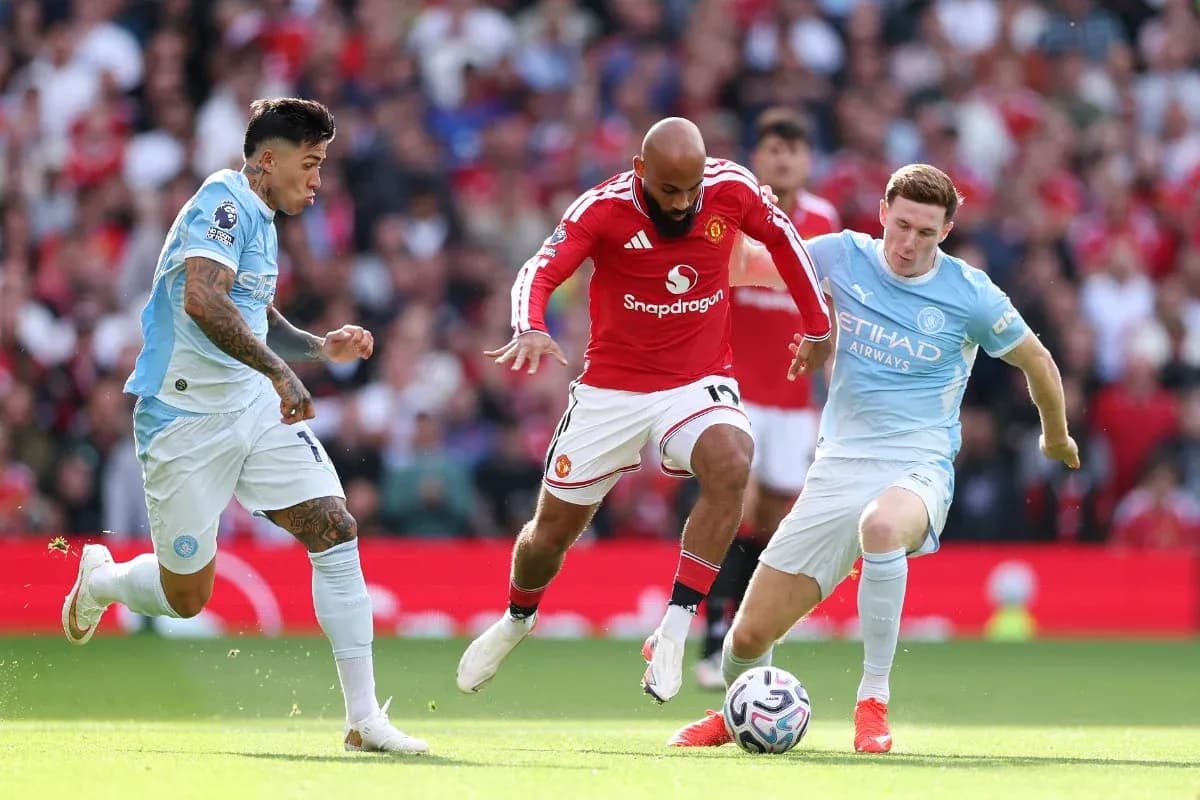
Old Trafford under grey Manchester skies, a 15:30 kick-off, and a derby that underlined just how far apart these neighbours currently are in competitive rhythm. Manchester United, 13th in the Premier League with 4 points and a goal difference of 0, came in searching for stability. Manchester City arrived across town as a machine in motion: 2nd in the table, 12 points from 4 matches, 8 goals for and only 2 against overall, the only side in this snapshot with a perfect start.
Both managers mirrored each other structurally in a 4-2-3-1, but the systems told different stories. Michael Carrick’s United have leaned into volatility this season. At home they have scored 5 and conceded 3 in 2 league fixtures, averaging 2.5 goals for and 1.5 against at Old Trafford. They are high-event, high-risk, and still without a single clean sheet in total across 4 matches. Enzo Maresca’s City, by contrast, are built on control: in total they average 2.0 goals for and just 0.5 against, with clean sheets in half of their league outings so far.
The tactical voids were clear before a ball was kicked. United’s absentee list stripped Carrick of structural anchors. C. Baleba (ankle injury) and M. Ugarte (knee injury) removed two natural ball-winners who could have patrolled the spaces in front of the defence. M. de Ligt’s back injury deprived United of an aerial and organisational presence at centre-back, while L. Shaw’s injury took away their most natural left-sided outlet. A. Diallo and T. Heaton were also unavailable, further thinning depth.
On the other side, City’s only listed absentee was J. Doku with a calf injury. His absence removed one of Maresca’s most explosive one‑v‑one threats, but the rest of the structure remained intact. When a side already this balanced can replace raw wing chaos with technical control, the system barely flickers.
Carrick’s solution was to double down on technicality between the lines. S. Lammens started in goal behind a back four of Diogo Dalot, H. Maguire, Lisandro Martínez and P. Dorgu. Ahead of them, Y. Tielemans and K. Mainoo formed the double pivot, with a high-usage, creative trio of B. Mbeumo, Bruno Fernandes and M. Rashford supporting Matheus Cunha as the lone forward.
This is a lineup built to have the ball, not to suffer without it. Bruno Fernandes arrived as one of the league’s standout early performers: 3 goals and 1 assist in total from 4 appearances, with 262 passes at 85% accuracy and 9 key passes. His threat from the edge of the box and from the penalty spot (1 penalty scored from 1 taken) is United’s most reliable offensive pattern. But the trade-off is protection. United’s season-long card profile shows a late-game tilt: 50.00% of their yellow cards arrive between 76–90 minutes, with another 16.67% between 91–105. When fatigue hits, their defensive concentration slips.
Against this, City fielded a quietly ruthless 4-2-3-1. G. Donnarumma in goal, a back four of Matheus Nunes, M. Guéhi, Rúben Dias and J. Gvardiol. In midfield, E. Fernández and E. Anderson formed a double pivot capable of both progressing and regaining the ball. Ahead of them, P. Foden, R. Cherki and A. Semenyo operated behind E. Haaland.
This is where the derby’s “Hunter vs Shield” narrative crystallised. Haaland, already on 4 goals from 4 appearances, has taken 15 shots with 9 on target and averages a rating of 7.91. He is fed by Cherki, who has 2 goals and 2 assists, 10 key passes and a 91% pass accuracy, and by Foden and Semenyo, both already on 2 assists each. City’s attack is layered: Haaland as the finisher, Cherki as the creative hub, Foden and Semenyo as hybrid wide creators and press triggers.
The Shield he ran into was a United defence led by Maguire and Martínez, but without a true destroyer in front. Maguire has quietly been one of United’s more active defenders: 34 duels contested, 21 won, 5 interceptions, and he has blocked 1 shot. Yet he also tops United’s disciplinary charts with 2 yellow cards, and his 7 fouls committed underline how often he is forced into recovery defending. In a derby where City are happy to drag centre-backs into wide spaces, that is a structural stress point.
The “Engine Room” duel sat at the heart of Old Trafford. For United, Bruno Fernandes and Tielemans needed to dictate tempo and supply Cunha while still tracking City’s advanced midfielders. For City, Fernández and Anderson were tasked with smothering those same channels. Cherki, floating between the lines, is particularly dangerous because he can turn United’s strength into a weakness: Bruno’s instinct to press high can open the pocket where Cherki thrives.
Disciplinary trends added another layer. City’s yellow-card distribution is heavily weighted to the final quarter of matches too, with 42.86% of their yellows between 76–90 minutes and 14.29% between 91–105. Foden, who already has 1 yellow and 1 red this season, embodies that edge: high-intensity pressing, high risk of overstepping. City have also seen 1 red card in total, coming between 16–30 minutes in their season profile, a reminder that their aggression can occasionally tip early.
Yet the underlying defensive solidity is hard to ignore. Across 4 league matches, City have conceded only 2 goals in total, 1 at home and 1 on their travels, with an average of 0.5 goals against in both dimensions. They have already collected 2 clean sheets. United, by contrast, have conceded 7 in total, 3 at home and 4 away, averaging 1.8 goals against overall. Even at Old Trafford, where they score freely, they leak at 1.5 goals per game.
In a statistical prognosis, this derby was always likely to hinge on whether United’s attacking volatility could overwhelm City’s structure before their own defensive frailties were exposed. United’s season so far suggests an open, chance-heavy game; City’s numbers point to a controlled, low-concession performance with superior finishing. With City perfect in total on their travels (2 wins from 2, 5 scored and 1 conceded away) and United still searching for their first clean sheet in total, the probabilities tilted sky blue.
The final 0–1 scoreline at Old Trafford simply confirmed the patterns. City’s Hunter found just enough space; United’s Shield bent once, and that was all Maresca’s side needed to keep their perfect start intact and underline the current gulf in tactical maturity between these two rivals.