Liverpool vs Brentford: Tactical Analysis of a 1–1 Draw
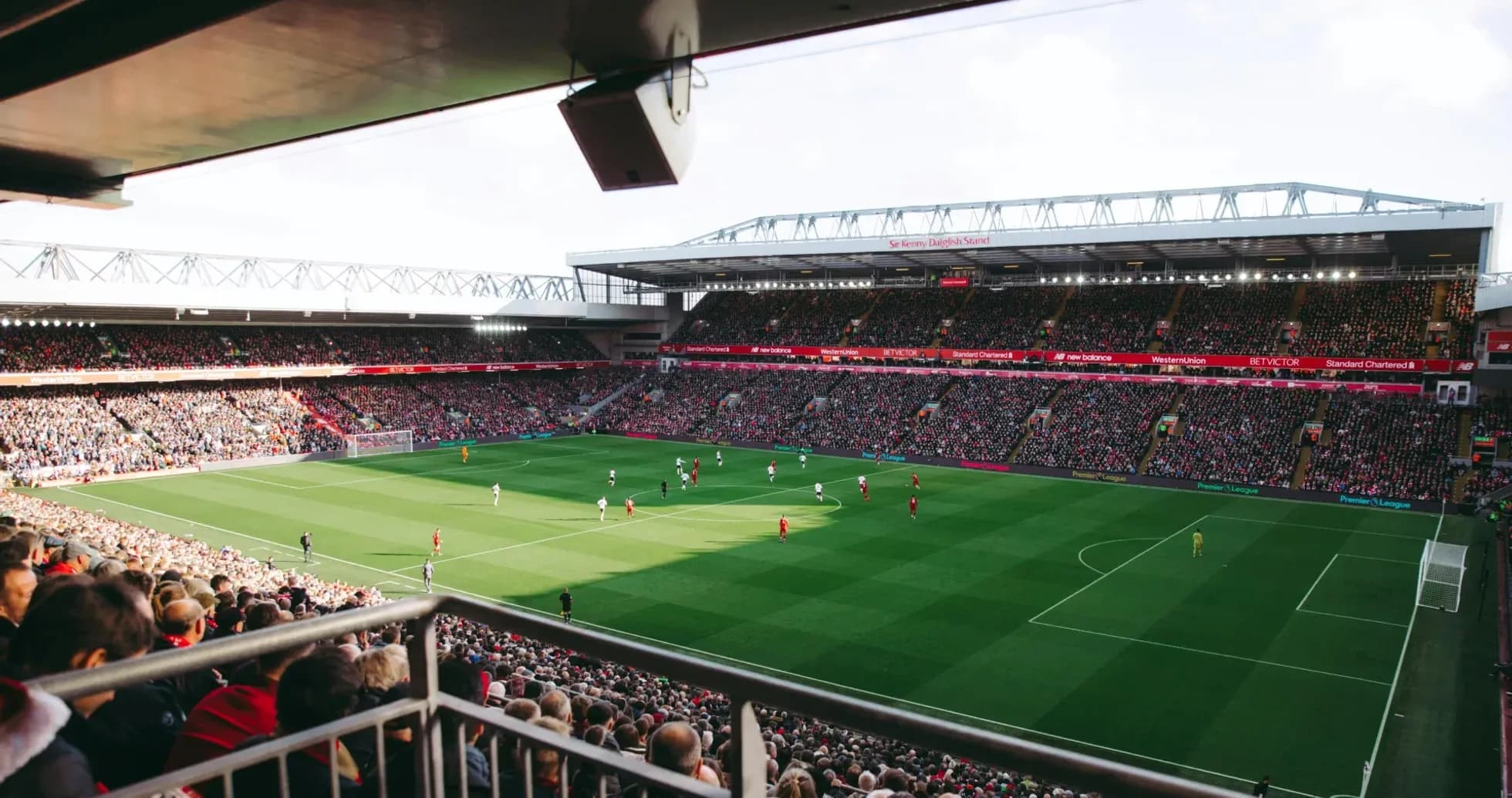
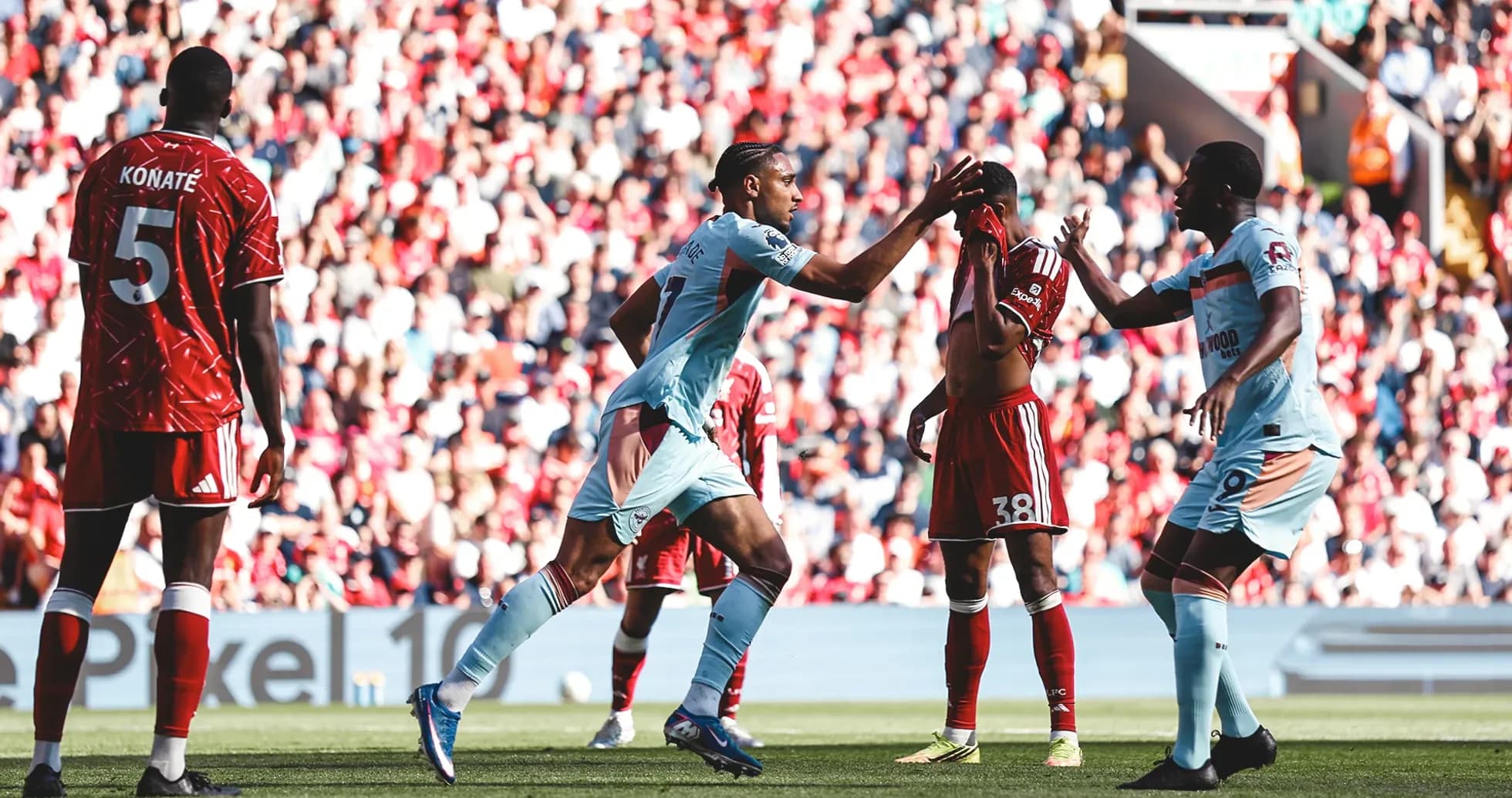
Anfield’s final act of the 2025–26 Premier League season closed not with a roar but with a murmur of frustration. Liverpool, chasing a statement finish, were held 1–1 by a Brentford side that has grown comfortable upsetting hierarchies. Following this result, Liverpool close the campaign 5th on 60 points, Brentford 9th with 53 – a respectable away point for the visitors, a missed opportunity for the hosts.
I. The Big Picture – Two 4‑2‑3‑1s, Two Very Different Stories
Both managers doubled down on their season’s tactical identity. Arne Slot stayed loyal to the 4‑2‑3‑1 that has underpinned Liverpool’s campaign, a shape they used in 34 league matches. Keith Andrews mirrored it with his own 4‑2‑3‑1, the system Brentford deployed 29 times in the league.
For Liverpool, the numbers this season sketch a side more volatile than in recent years but still potent. Overall they scored 63 goals and conceded 53, a goal difference of +10. At Anfield they were a more controlled force: 34 home goals at an average of 1.8 per match, with just 20 conceded at 1.1 per game. That home platform underpins their 10 wins, 6 draws and only 3 defeats in 19 league matches at Anfield.
Brentford, by contrast, arrive as a hardened mid‑table disruptor. Overall they scored 55 and conceded 52, a goal difference of +3. On their travels they are less expansive – 22 away goals at 1.2 per game, with 31 conceded at 1.6 – but they still collected 6 away wins and 3 draws in 19 matches. This is not a side that shrinks on big stages.
II. Tactical Voids – Who Was Missing, and What That Meant
Both squads had to navigate key absences that subtly rewired their game plans.
Liverpool were without S. Bajcetic (hamstring), C. Bradley (knee), H. Ekitike (Achilles tendon) and G. Leoni (knee). Ekitike’s absence is the most tactically significant: 11 league goals and 4 assists overall, a mobile attacker who offers depth runs and penalty‑box presence. Without him, Slot turned to Cody Gakpo as the nominal No 9, flanked by Mohamed Salah and the young R. Ngumoha, with D. Szoboszlai and A. Mac Allister knitting the play behind.
Brentford’s list – F. Carvalho (knee), R. Henry (hamstring), A. Milambo (knee) – particularly stings in wide areas. Henry’s absence removes a natural left‑side defender and outlet, which helps explain why K. Lewis‑Potter was redeployed as a full‑back. That choice hints at Andrews’ intent: keep pace and direct running in the back line to cope with Liverpool’s wide threats.
Across the season, discipline has been a quiet subplot. Liverpool’s yellow cards skew dramatically late: 31.58% of their bookings come in the 76–90’ window, with another 17.54% between 91–105’, a clear pattern of late‑game emotional spikes. Brentford show a similar late‑pressure profile, with 26.09% of their yellows between 76–90’ and 21.74% from 61–75’. Both teams are prone to fraying just as matches open up.
On the red‑card front, there is edge in key roles. Szoboszlai has 1 red card this season, and Brentford’s K. Schade also carries 1 red. Neither side is reckless overall, but their high‑intensity wide and central operators walk a fine line when games get stretched.
III. Key Matchups – Hunter vs Shield, Engine Room vs Enforcer
The headline duel was always going to orbit Igor Thiago. Brentford’s No 9 has been one of the league’s deadliest finishers: 22 goals and 1 assist overall, from 38 appearances and 37 starts. He is a volume presence as much as a clinical one – 67 shots, 43 on target – and he thrives on contact, engaging in 524 duels and winning 202. At 191 cm and 85 kg, he is built to wrestle with centre‑backs.
His opposite numbers, Virgil van Dijk and Ibrahima Konate, form the core of a Liverpool defence that, at home, concedes only 1.1 goals per match. The matchup was classic “Hunter vs Shield”: Brentford’s vertical supply into Thiago against Liverpool’s aerial and positional dominance. Anfield’s 1.8 home goals‑for average and 1.1 against suggest Liverpool usually win these battles on their own turf, but Thiago’s profile – 8 penalties scored and 1 missed overall – means any loose contact in the box is punished. Brentford’s penalty record overall is spotless this season (8 scored from 8), but Thiago himself has that one miss on his ledger, a reminder he is prolific rather than infallible.
Behind him, the supporting cast was built for transition. D. Ouattara, M. Jensen and Schade formed the line of three, with V. Janelt and J. Henderson as the double pivot. Henderson’s presence as a stabilising “enforcer” in front of the back four was crucial: his task was to screen Salah’s half‑spaces and track Szoboszlai’s surges from midfield.
For Liverpool, the “Engine Room” ran through Szoboszlai and Mac Allister. Szoboszlai’s season has been immense: 6 goals, 7 assists, 78 key passes and 2,184 completed passes at an 87% accuracy rate overall. He also brings bite – 55 tackles and 8 blocked shots – but that aggression has a cost: 8 yellow cards and 1 red, plus a missed penalty on his record. Slot’s structure asks him to be both architect and disruptor, stepping up alongside Salah and Gakpo when Liverpool build pressure.
Salah, meanwhile, has evolved into a hybrid scorer‑creator. Overall he has 7 goals and 7 assists, with 49 key passes and 72 dribble attempts. His duel with Lewis‑Potter and right‑back M. Kayode was always going to tilt the pitch. Brentford’s defensive numbers on their travels – 31 away goals conceded at 1.6 per game – suggest that wide‑area containment is a persistent issue, and Salah is exactly the type of player who punishes half‑spaces between full‑back and centre‑back.
On the other flank, Ngumoha’s inclusion added unpredictability. With Gakpo’s 7 goals and 5 assists overall, plus 53 key passes, Liverpool’s front four promised fluid rotations: Gakpo dropping, Salah inverting, Szoboszlai bursting beyond, Ngumoha stretching the line. Against a Brentford back four featuring S. van den Berg and N. Collins, the question was whether their centre‑backs could pass runners on cleanly without opening channels for Thiago’s counters the other way.
IV. Statistical Prognosis – A Draw That Fits the Numbers
Following this result, the 1–1 scoreline feels almost like a statistical synthesis of both seasons. Liverpool’s overall average of 1.7 goals scored and 1.4 conceded, and Brentford’s 1.4 scored and 1.4 conceded, point toward tight margins rather than routs. Anfield’s slightly elevated attacking output meets Brentford’s slightly more porous away defence, while Brentford’s efficient forward line tests a home defence that, for all its control, has conceded 20 times in 19 home matches.
In xG terms, this matchup always hinted at balance: Liverpool’s structured, high‑volume chance creation through Szoboszlai, Salah and Gakpo against Brentford’s more selective, high‑value looks for Thiago. The late‑card patterns for both sides foreshadowed a frantic closing phase rather than a serene walk to the whistle, and the shared 1–1 feels like the meeting point of those curves.
Liverpool leave Anfield with European qualification secured but a lingering sense of what might have been. Brentford walk away with a point that underlines their evolution: no longer plucky underdogs, but a side whose structure, star striker and tactical discipline can stand up to one of the league’s most demanding venues.