Liverpool vs Brentford: Tactical Analysis of a 1-1 Draw
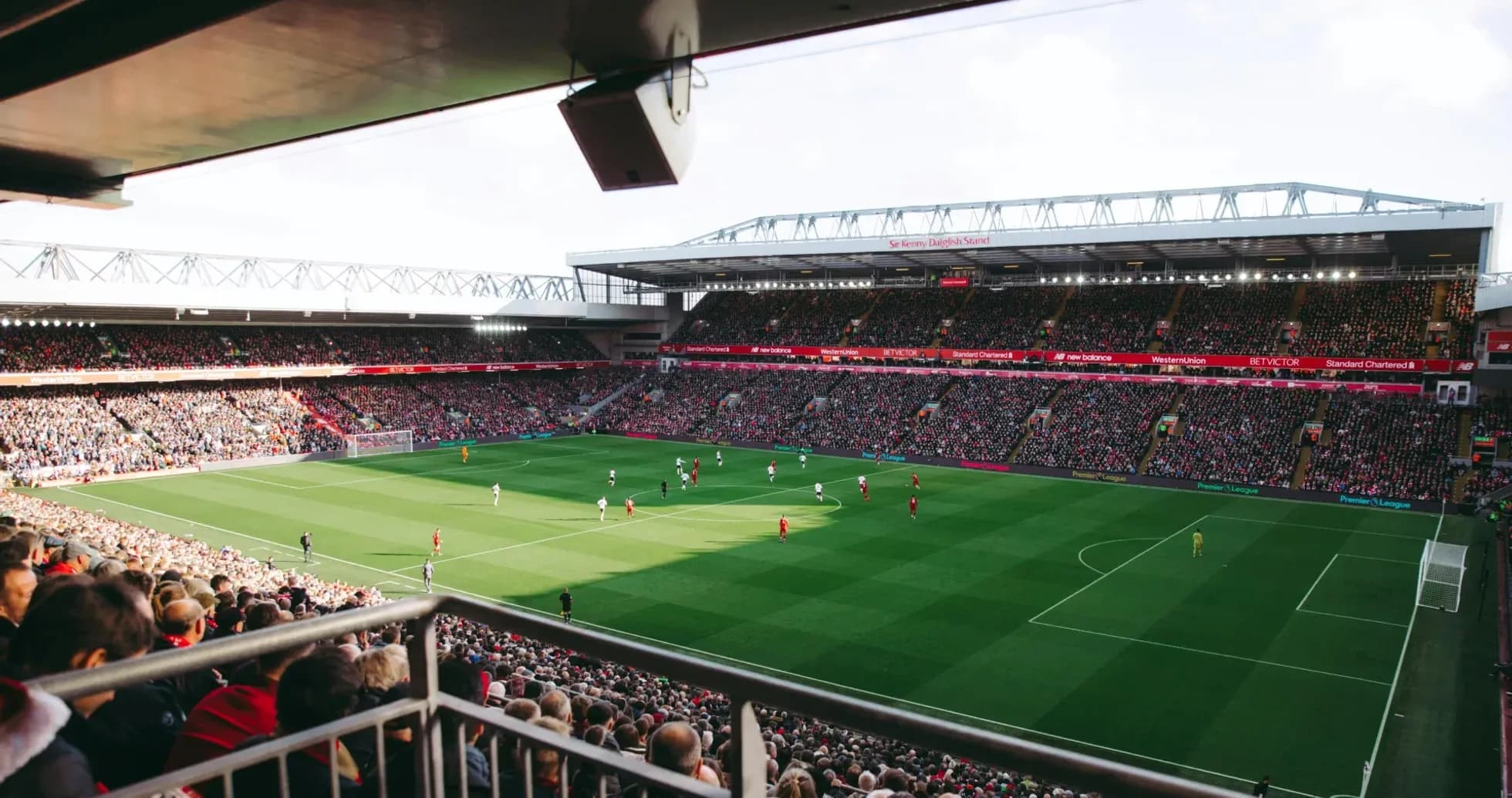
Liverpool’s 1-1 draw with Brentford at Anfield unfolded as a territorial siege against a compact 4-2-3-1 block, with the hosts controlling tempo and territory but failing to convert dominance into a decisive second goal. Both sides stayed in their base shapes throughout, and the tactical story became one of Liverpool’s structural superiority versus Brentford’s disciplined low and mid-block, backed by efficient goalkeeping and clear counter-punch intentions.
Liverpool’s 4-2-3-1 was possession-heavy and high-field. The 60% share of the ball, 503 passes (434 accurate, 86%), and a massive 24 shots (8 on goal, 8 blocked) show a side committed to sustained pressure rather than transition chaos. The back four of C. Jones, I. Konate, V. van Dijk and A. Robertson acted as an aggressive rest-defense line, stationed high to keep Brentford pinned and to immediately counter-press any turnovers. With only 9 fouls committed, Liverpool pressed with structure rather than reckless challenges.
In possession, the double pivot of R. Gravenberch and Alexis Mac Allister provided the platform. Mac Allister’s booking at 90+2' for “Foul” underlines how long he was involved in late counter-press phases, still stepping in to break up a Brentford transition as Liverpool chased a winner. Gravenberch, later replaced by T. Nyoni at 83', offered forward-carrying and vertical passing, helping Liverpool access the half-spaces where the three behind C. Gakpo were positioned.
The central tactical lever was the advanced line of M. Salah, D. Szoboszlai and R. Ngumoha behind Gakpo. Salah started nominally from the right but frequently moved into the right half-space and central zones, which is reflected in his assist for the opening goal: at 58', C. Jones scored for Liverpool, assisted by M. Salah. That pattern – full-backs high, Salah inside, and a nominal wide player occupying the flank – allowed Liverpool to overload Brentford’s double pivot of J. Henderson and Vitaly Janelt.
Out of possession, Liverpool’s 4-2-3-1 morphed into a 4-4-2/4-2-3-1 press, with Gakpo and the central attacking midfielder stepping onto Brentford’s centre-backs. The home side allowed only 11 shots in total, just 2 on goal, which speaks to how often Brentford’s attacks were forced to shoot from suboptimal positions or were blocked (3 blocked shots).
The key defensive figures were V. van Dijk and Ibrahima Konaté. Konaté’s yellow card at 79' for “Foul” came as he stepped out aggressively to halt a Brentford move, emblematic of Liverpool’s high line and proactive defending. Behind them, Alisson (Liverpool) had a quiet but telling afternoon: he faced 2 shots on goal, made 1 save, and, according to the statistics, prevented 1.4 goals. That goals prevented figure, set against Brentford’s 1.22 xG, indicates that the single save involved a high-quality chance and that his positioning and interventions outside traditional “save” moments contributed significantly to limiting the final damage.
Brentford’s approach was pragmatic. In their own 4-2-3-1, M. Kayode and K. Lewis-Potter as full-backs were conservative for long stretches, forming a narrow back four with S. van den Berg and Nathan Collins to protect the box. The double pivot of J. Henderson and Janelt sat deep to screen cut-backs and central combinations. Brentford had only 40% possession and 331 passes (262 accurate, 79%), which confirms their acceptance of a low-possession game state.
Their discipline without the ball was mixed: 9 fouls and 3 yellow cards, but crucially several for “Argument”, reflecting emotional flashpoints under pressure. Jordan Henderson was booked even before kick-off at -5' for “Argument”, setting a tone of agitation. Later, Nathan Collins (90+5') and Vitaly Janelt (90+4') both received yellows for “Argument” in stoppage time, as Brentford clung to the draw amid sustained Liverpool pressure and disputed decisions. These late cards underline how much of the closing phase was played in Brentford’s defensive third.
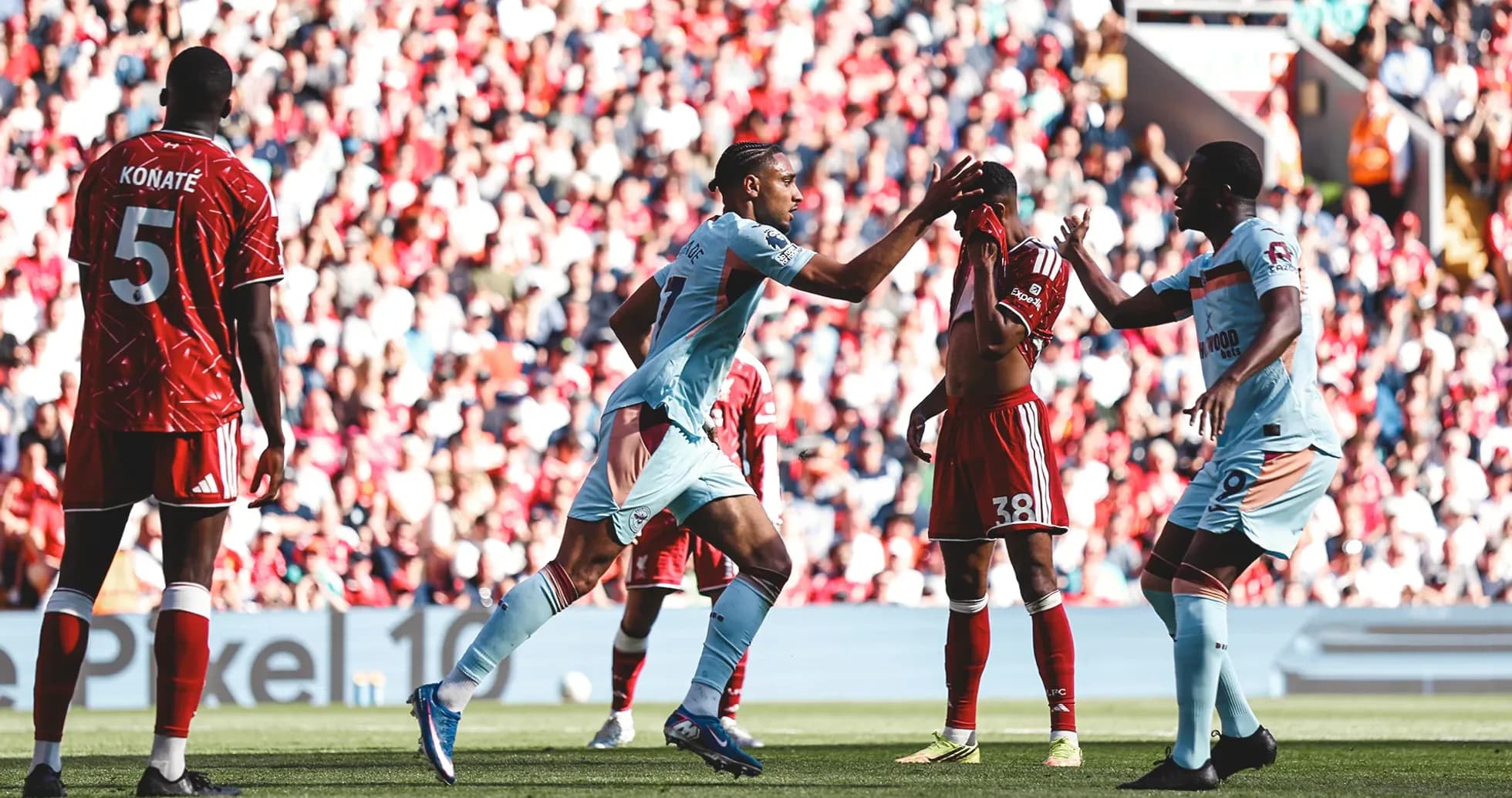
The visitors’ offensive plan hinged on quick vertical transitions and exploiting the space behind Liverpool’s high line. That intent crystallised at 64', when K. Schade scored for Brentford with a “Normal Goal” (no assist). Coming just six minutes after Liverpool’s opener, it reflected Brentford’s readiness to strike immediately once they could escape the press. With 9 shots inside the box from only 11 total attempts, Brentford’s shot profile was concentrated around high-value central areas, aligning with their 1.22 xG and showing that when they did progress, they created genuinely dangerous situations.
Keith Andrews’ substitutions aimed to refresh legs and preserve structure. At 60', J. Henderson (OUT) was replaced by A. Hickey (IN), a move that likely reshaped the defensive line and added fresh defensive energy. At 83', M. Jensen (OUT) gave way to M. Damsgaard (IN), providing a more technical outlet to help Brentford breathe in possession. At 89', K. Lewis-Potter (OUT) was replaced by R. Nelson (IN), a late adjustment to cope with Liverpool’s wing pressure and offer a counter threat.
Arne Slot’s bench usage was assertive and attack-minded. After Liverpool’s lead was cancelled out, he sought extra creativity and penetration. At 73', F. Wirtz (IN) came on for R. Ngumoha (OUT), adding a high-level playmaker between the lines. A minute later, at 74', J. Frimpong (IN) replaced M. Salah (OUT), injecting pace and direct running from wide areas as Liverpool chased the winner. At 83', M. Kerkez (IN) for A. Robertson (OUT) and T. Nyoni (IN) for R. Gravenberch (OUT) refreshed both full-back and midfield energy to maintain the tempo. Finally, at 89', J. Gomez (IN) came on for I. Konate (OUT), stabilising the back line for the late onslaught and guarding against counters while Liverpool committed numbers forward.
In goal for Brentford, C. Kelleher (Brentford) was central to the result. He faced 8 shots on goal, made 7 saves, and, like Alisson, posted 1.4 goals prevented. That combination – high save volume and strong goals prevented – underlines how often he had to intervene from close range and how his shot-stopping directly preserved the point. Given Liverpool’s 2.9 xG and 17 shots inside the box, Kelleher’s performance was the tactical anchor of Brentford’s low-block strategy.
Set pieces further highlighted Liverpool’s territorial control: 14 corner kicks to Brentford’s 2. Yet the visitors’ compact box defending and Kelleher’s command of his area meant this advantage did not translate into additional goals. Liverpool’s 8 blocked shots show how frequently Brentford got bodies in the way, compressing the central lane and forcing Liverpool into repeated attempts to thread passes and shots through a crowded penalty area.
Overall, Liverpool’s structure, volume of chances, and xG superiority suggested a game they should have won. But Brentford’s disciplined 4-2-3-1 block, key interventions from C. Kelleher, and clinical exploitation of transition moments through K. Schade turned the contest into a tactical stalemate, where control belonged to Liverpool but resilience and efficiency ensured Brentford left Anfield with a hard-earned point.