Jürgen Klopp's Bold Move: Two Germany Squads for Nations League
Jürgen Klopp’s first Germany squads were never going to be quiet. They were always going to make noise.
In his opening act as national team head coach, Klopp has named not one, but two separate squads for the upcoming Nations League fixtures, calling up a staggering 44 players across four games against the Netherlands, Serbia and Greece. It is a reset on fast-forward.
Sixteen of those players have never worn the senior Germany shirt. Among the uncapped are Said El Mala of Köln, Freiburg trio Max Rosenfelder, Philipp Treu and Derry Scherhant, and Celtic midfielder Mika Baur. The message is blunt: reputations mean less than form, energy and potential.
There were hard calls, too. Stuttgart striker Deniz Undav, one of the Bundesliga’s standout forwards last season, has been left out. Klopp put that down to fitness, but the absence will still raise eyebrows. At the same time, he moved quickly to end one long-running debate: Joshua Kimmich will be a midfielder under Klopp, not the hybrid right-back Julian Nagelsmann often relied on. The captain’s role has been nailed to the centre of the pitch.
Nagelsmann’s resignation, coming after Germany’s World Cup last-32 exit to Paraguay, created the vacuum Klopp now fills. His response has been to widen the door rather than close ranks.
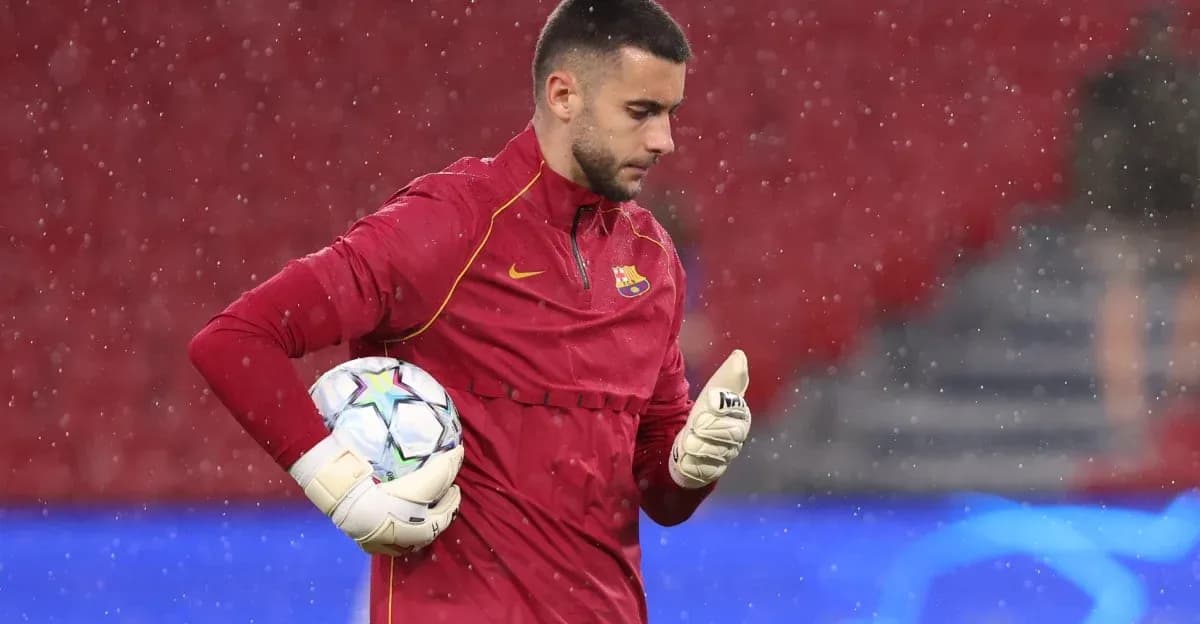
Marc-André ter Stegen, on loan at Ajax from Barcelona, has been confirmed as first-choice goalkeeper. Behind that decision sits a familiar name, but around it Klopp has freshened the cast. Karim Adeyemi returns. So does Leeds United midfielder Anton Stach. Brentford forward Kevin Schade is back in the fold as well, another nod to pace and vertical threat.
The structure of this international window underlines Klopp’s intent to experiment. One squad will handle the first two games: the trip to Amsterdam to face the Netherlands on Thursday, September 24, and then Greece in Augsburg on September 27. A second group will take over for Serbia in Munich on October 1 and the return meeting with Greece in Thessaloniki on October 4. Four games, two squads, one clear objective: find out quickly who can live at this level.
A cap, a slogan, and a divided country
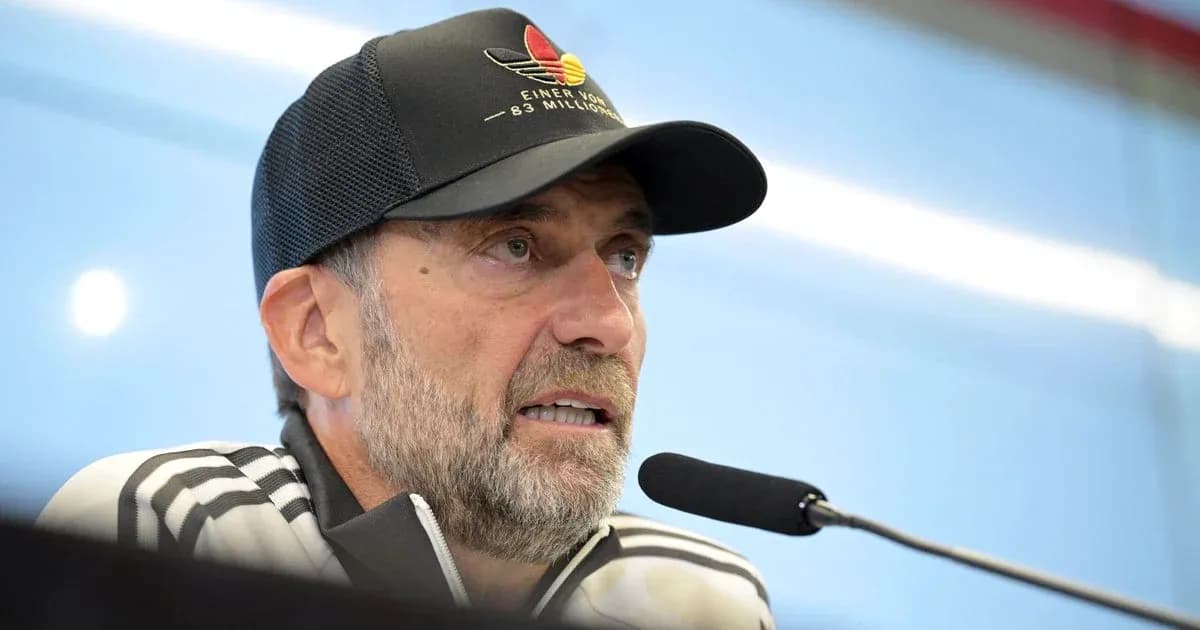
If the football decisions were bold, Klopp’s appearance at his first major press conference was even more pointed. On his head, a baseball cap in black, red and gold, emblazoned with the words: “one of 83 million”.
It was impossible to see that as anything other than political.
Germany is wrestling with a fractious, angry period. The far-right Alternative für Deutschland (AfD) recently secured over 43 per cent of the vote and a majority in Saxony-Anhalt’s state election, another step in a steady rise that has stretched across much of East Germany and beyond. Their anti-immigration, nationalist rhetoric has found fertile ground in regions hit by industrial decline, and their polling strength at both state and federal level has become a source of deep unease.
Klopp did not duck that context. Asked about the cap, he spoke of unity, joy and reclaiming symbols. He wants the flag to belong to everyone again, not just those who shout the loudest. He talked about national pride as something inclusive, about football as a place to feel fortunate to live in “this wonderful country”, and about the responsibility to create an atmosphere of community around the national team.
“I don’t want to leave national pride to the wrong people,” he said. Coaching Germany, he added, fills him with pride. When people gather around the national side, in his view, it should be to feel better together, not to divide.
That touches a raw nerve. In Germany, questions of patriotism and the flag are never simple. The legacy of National Socialism still hangs over any discussion of national symbols. As the country becomes more multicultural and more contested, gestures that might look straightforward elsewhere carry a heavier weight here. A flag on a cap can be read as a celebration, a provocation, or a warning sign, depending on who is looking.
That is the fracture Klopp walks into. A federal nation of different regions, different histories, different ideas of what Germany is and what it should become. The blurred lines around patriotism, the struggle over who gets to define national pride, are symptoms of that division.
Klopp cannot solve that with a team sheet. But he can set a tone. Two squads, 44 players, a reclaimed flag on his head and a clear statement: this national team is supposed to belong to all 83 million. The next question is whether his football can make the country believe it.