Séamus Coleman Left Out of Ireland Squad for Nations League
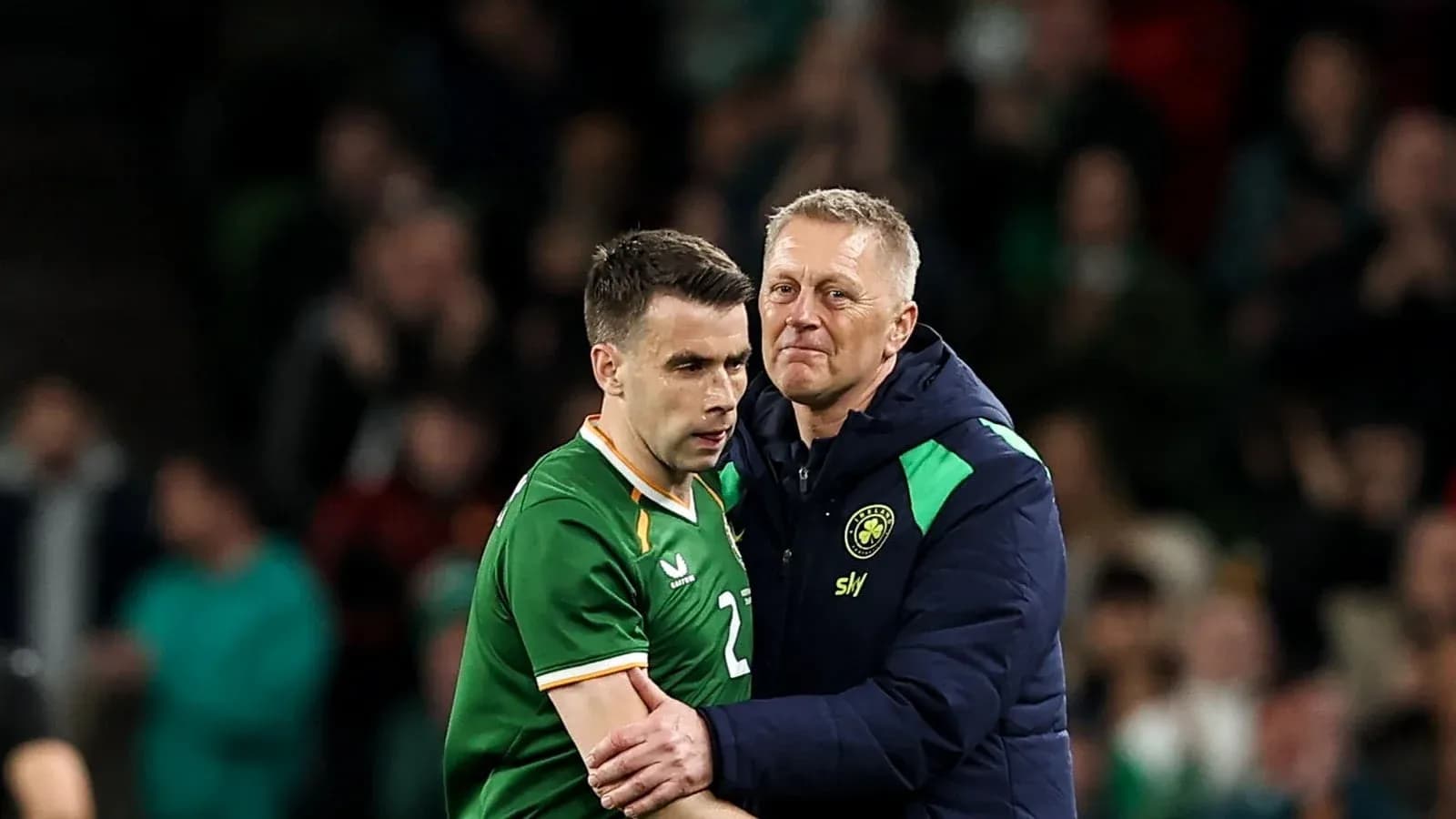
Séamus Coleman has been left out of Heimir Hallgrímsson’s Republic of Ireland squad for the upcoming Nations League games against Kosovo, Israel and Austria – but the Ireland manager insists this is not the end of the road for his long‑serving captain.
Coleman, 37, is without a club after leaving Everton at the end of last season and has not been training with a team. That, Hallgrímsson says, made the decision for this camp unavoidable.
“Neither Séamus nor Robbie Brady have a club so we leave them out for this camp,” said Hallgrímsson. “Séamus will be with us in the future, hopefully as a player. He hasn’t been training with a team so we felt it was appropriate that he sits this camp out. It was more Séamus’ decision as it would not be fair on other players.”
For the first time in more than a decade, Ireland head into a competitive window without Coleman anywhere near the matchday squad. The armband and the dressing-room void will be significant, even if the manager is careful to stress the door remains open.
New faces, big gaps
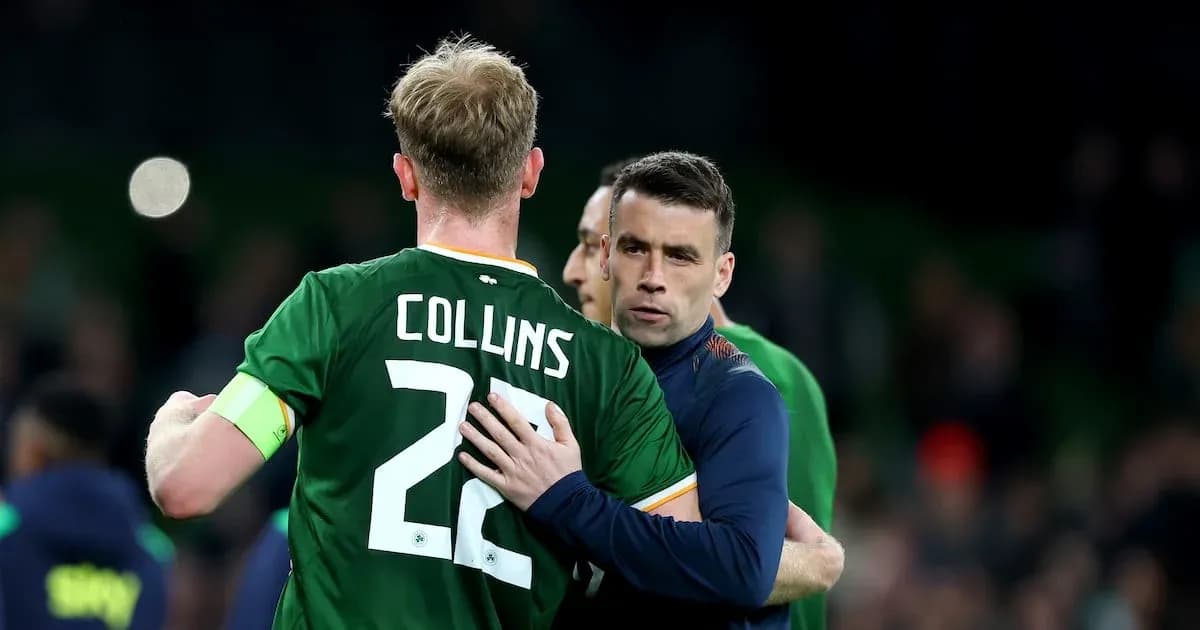
In defence, Hallgrímsson turns to another English-born, Irish-qualified option. Liam Kitching, now at Sheffield United, comes in to cover for injured Brentford centre-half and Ireland skipper Nathan Collins, who is sidelined with a calf problem and expected to miss around five weeks.
There is also a first senior call-up for Owen Elding. The former Sligo Rovers forward, who moved to Hibernian in the Scottish Premiership last season, is in line for his debut in a forward line that is starting to look younger and more mobile.
Bosun Lawal is listed as a midfielder, joining Harvey Vale and Jayson Molumby in the engine room. Hallgrímsson clearly sees a long-term project there, even if the timing is awkward.
“I hope so,” he said when asked if Lawal can establish himself in midfield. “But he is injured. We rate him so highly that we feel it is necessary that we have him around the squad.”
So Lawal travels as an investment in the future rather than an immediate solution. Sammie Szmodics, by contrast, misses out entirely, while Rocco Vata returns after an injury lay-off to bolster the attacking options.
Israel strengthened, Kosovo in turmoil
While Ireland juggle absentees and blood new faces, their Nations League opponents arrive with very different storylines.
Israel head coach Ran Ben-Shimon named his squad earlier in the day, with Arab-Israeli wing-back Anan Khalaili included after a bright start at Crystal Palace. Khalaili has hit the ground running in the Premier League following his €25 million move from Royale Union Saint-Gilloise, and now links up with an international set-up that also includes a familiar Irish connection: he works at club level under Paddy McCarthy, who is part of Hallgrímsson’s Ireland staff.
Ajax playmaker Oscar Gloukh is also named. He will face Austria in Linz and then Ireland and Kosovo in Debrecen before a second meeting with Ireland at the TSC Arena in Bačka Topola. Gloukh featured against Shelbourne last month in the first leg of the Uefa Conference League qualifiers, though he stayed on the bench for the return at Tolka Park.
Irish supporters looking for deeper background on Israel’s preparations will struggle – the official Israel football association website is geoblocked in Ireland.
If Israel look settled and quietly dangerous, Kosovo are anything but.
There is open unrest in their camp ahead of next Thursday’s opener against Ireland in Pristina, with several leading players withdrawing in solidarity with Napoli defender Amir Rrahamni.
“After 10 years, seven as captain, I will not be part of the Kosovo squad as long as the FKK is led by its current individuals,” Rrahamni declared, a blunt statement that has sent shockwaves through their preparations.
Former Ipswich Town goalkeeper Arijanet Murić and Juventus midfielder Edon Zhegrova are also believed to have turned down call-ups to Franco Foda’s squad, leaving Kosovo stripped of some of their most recognisable names just as the competition begins.
For Ireland, that unrest offers an opportunity – but also a warning. A wounded camp can splinter, or it can close ranks.
Hallgrímsson’s 26-man squad
- Goalkeepers: Caoimhin Kelleher (Brentford), Max O’Leary (West Bromwich Albion), Gavin Bazunu (Bolton Wanderers)
- Defenders: James Abankwah (Udinese), Joel Bagan (Cardiff City), Jimmy Dunne (Queens Park Rangers), John Egan (Hull City), Liam Kitching (Sheffield United), Ryan Manning (Southampton), Jake O’Brien (Everton), Dara O’Shea (Ipswich Town), Liam Scales (Celtic)
- Midfielders: Finn Azaz (Southampton), Conor Coventry (Charlton Athletic), Jason Knight (Bristol City), Jamie McGrath (Hibernian), Jayson Molumby (West Bromwich Albion), Harvey Vale (Queens Park Rangers), Bosun Lawal (Stoke City)
- Forwards: Owen Elding (Hibernian), Adam Idah (Swansea City), Jack Moylan (Cardiff City), Chiedozie Ogbene (Lincoln City), Troy Parrott (Real Betis), Rocco Vata (Watford), Tom Cannon (Sheffield United)
The road ahead
Ireland open their Nations League campaign away to Kosovo in Pristina on Thursday, September 24th (7.45pm), before facing Israel in Debrecen, Hungary, on Sunday, September 27th (7.45pm).
Austria visit the Aviva Stadium on Thursday, October 1st (7.45pm), and Hallgrímsson’s side then meet Israel again at a neutral ‘home’ venue – the TSC Arena in Bačka Topola, Serbia – on Sunday, October 4th (7.45pm).
A campaign that starts without Séamus Coleman, without Nathan Collins, and with a clutch of fresh faces will quickly reveal whether this is a gentle evolution or the beginning of a hard reset for Ireland’s next era.