
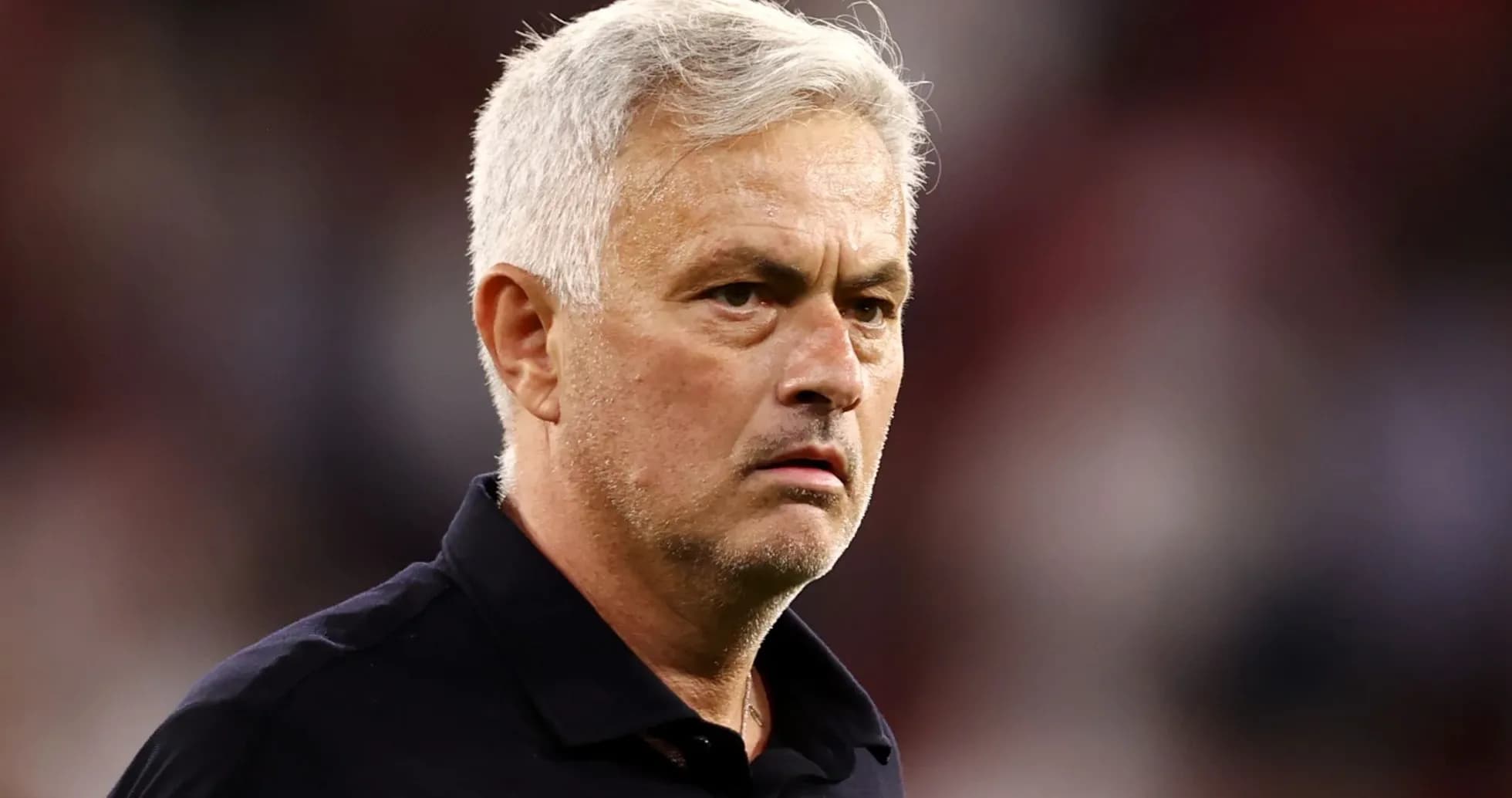
José Mourinho: The Coach Who Made Rome Lose Its Mind
José Mourinho has lived a football life crammed with finals, trophies and feuds. Yet when he’s asked which game he’d replay if he could, his mind doesn’t drift to Istanbul, Munich or Lisbon.
It goes straight to Budapest.
The one that still burns
“Roma - Sevilla, Europa League final. Without Anthony Taylor!”
On the Beast Mode On Podcast with Adebayo Akinfenwa, Mourinho didn’t hesitate. Out of a 26-year managerial career, that night in 2023 – his first defeat in a European final – is the one he would rewrite.
That game was everything Mourinho teams tend to be in Europe: combative, emotional, on the edge. Roma pushed Sevilla to penalties, then watched the trophy slip away from 12 yards. The football faded into the background as fury at the Premier League-based officiating team, led by Anthony Taylor, took centre stage. Mourinho’s post-match rage carried into the car park and, for months, into every conversation about that final.
Everyone else has moved on. Sevilla lifted the trophy. Taylor went back to the Premier League. Roma reset. Yet as Mourinho prepares for a second act at Real Madrid, the wound clearly hasn’t healed. The defeat still sits there, raw, among all the medals.
Roma, the city that lost its mind
Mourinho’s Roma tenure was chaotic, combustible and, at times, utterly magical. He took a club starved of major silverware for 11 years and dragged it back onto a European stage that had long felt out of reach.
Back-to-back European finals. A new competition conquered at the first attempt. The 2022 Europa Conference League title over Feyenoord did more than add another line to his CV – it completed his personal UEFA treble: Champions League, UEFA Cup/Europa League and Conference League. No manager had done that before.
Ask him what means the most, though, and he doesn’t talk about tactics or records. He talks about a city.
“I did a few!” he said, when pressed on his proudest achievement. “When we won the Conference League in Roma, that city went mad.
“I believe that we did to that city what Champions League winners cannot do in other cities. Roma is a city where people are really, really, really in love with that club. A giant club with incredible passion. Absolutely incredible.”
The trophy itself was new, doubted, even dismissed in some quarters. Mourinho felt that, too.
“Of course, when we won the Conference League it was the first season of the Conference League, I don't think Europe was giving [recognition] to the Conference League what it is giving now.”
The recognition he wanted came not from UEFA, but from Rome. From the streets.
“When we arrived in Rome and we went for the parade around the Colosseum, Circus Maximus, you realise what you gave to those people.”
That image – Mourinho on an open-top bus, the Conference League trophy held aloft, the city wrapped in yellow and red – is the one he clings to. For all the Champions Leagues, for all the league titles, it is Rome in delirium that still takes his breath away.
Anfield, the cauldron; Madrid, the kingdom
Mourinho has seen everything the elite game can throw at a coach. He has walked into some of the most hostile grounds in Europe and walked out with results. One stadium, though, stands apart.
Anfield.
The home of Liverpool, with its steep stands and its soundtrack of noise and venom, remains the toughest away ground he has faced. He has won there, he has suffered there, and he has felt that surge from the Kop that can tilt a match in a heartbeat.
The other side of his world is Madrid.
Asked to name the best dressing room, he points straight back to the Santiago Bernabéu. Real Madrid, again. This time with a new generation waiting for him: Jude Bellingham, Kylian Mbappé, Vinícius Júnior. A three-year contract signed. A second chance in a place where second chances are rare.
He knows what it takes there. Between 2010 and 2013, he ripped La Liga away from Barcelona at their peak and delivered the Copa del Rey. Those titles came with all the usual Mourinho theatre – conflict, controversy, and a sense that everything might explode at any second – but they also came with silverware in a club that demands it as a bare minimum.
Now he returns older, still defiant, still sharp, still nursing that grievance from Budapest. He has already conquered Portugal, England, Italy and Spain. He has built dynasties, wrecked dynasties and left scars in every league he’s touched.
The question is simple, and it’s one he seems intent on answering: can the man who made Rome lose its mind do the same again in Madrid, in a club where winning is expected, but joy is never guaranteed?




