Wouter Vrancken Takes Charge at Hearts: A New Era Begins
Six weeks ago, Heart of Midlothian were a few agonising minutes from the Scottish Premiership title. Since then, the club has shed its captain, waved off a clutch of key players, welcomed seven new signings and now installed a new head coach.
Tynecastle hasn’t so much turned a page as ripped up the chapter.
Vrancken steps into the storm
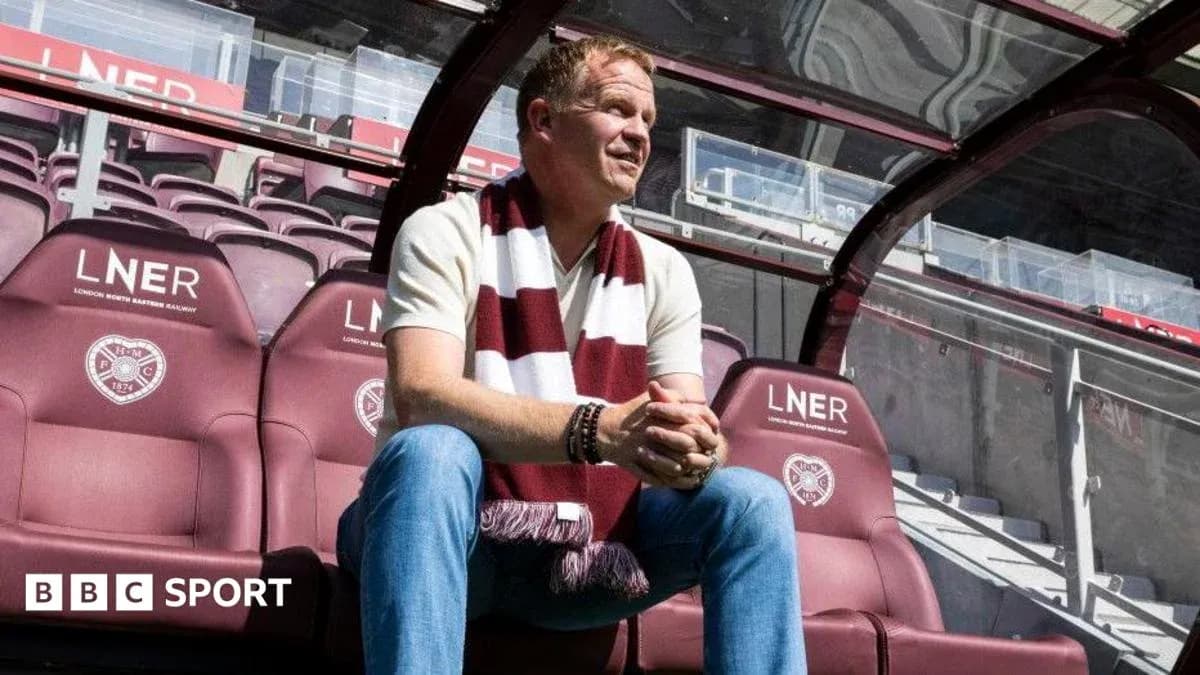
Into this turbulence walks Wouter Vrancken, a 47-year-old Belgian whose reputation has been built on making teams punch above their weight. When he sat down for his first media duties as Hearts head coach, it felt less like an introduction and more like a statement: the data era is no longer in the background. It is running the show.
Tony Bloom and his analytics operation have been quietly steering Hearts’ direction for well over a year. With Vrancken replacing Derek McInnes, that influence now has a clear touchline presence. This is what full commitment to a data-led project looks like.
Sporting director Graeme Jones made it plain: in the numbers, Vrancken was “a standout” during the search. His work at Sint-Truiden and Genk, consistently dragging clubs into higher territory than their budgets suggested, lit up the models.
The fit goes beyond spreadsheets. Unlike McInnes, who operated more as a traditional manager, Vrancken has always worked as a head coach inside a collaborative recruitment structure. That matters at a club where seven players arrived before he had even signed his contract.
He doesn’t see that as a problem. He sees an opening.
“I always wanted to look behind the curtain, actually,” he said. “So maybe this is an opportunity to do it. I have a lot of confidence or trust in the way the recruitment works because I was confronted with it in Belgium. And now from the other side, I want to be part of it.”
There is another thread tying him to this new world. Vrancken is friends with Chris O’Loughlin, sporting director at Union Saint-Gilloise, another club in Bloom’s portfolio and a rival he faced in Belgium. He knows how these clubs operate. He has seen the model from the opposite dugout.
Now he has to make it work in Gorgie.
High press, high risk, little time
If the structure is data-driven, the football Vrancken wants is anything but cold.
His sides in Belgium earned a reputation for aggressive, attacking play: front-foot, ball-dominant, high energy. That is the identity he intends to bring to Hearts. The problem? The clock.
He has four weeks to prepare for his first competitive game, a Champions League qualifier against Sturm Graz. For any coach, never mind one working in a new country with a remodelled squad, that is a brutal runway.
He is not interested in excuses.
He says he will go “as fast as possible” to imprint his style, convinced it fits the Scottish game as well as it did in Belgium.
“I like to have the ball,” he explained. “I like to be positive and constructive and also a lot of joy in the game. So I think always players, when they want to reach their full potential, they have to enjoy the game and enjoy what they’re doing.
“We try to create this with a positive kind of play, as offensive as possible, with a lot of pressure, with a lot of intensity, energy.”
It is an appealing vision. It is also demanding. High pressing and high tempo require fitness, cohesion and clarity. Those things usually come with time. He doesn’t have much.
A squad in flux, a style in mind
The human cost of Hearts’ transformation has been sharp. Last season’s captain and talisman Lawrence Shankland has gone. So has Beni Beningime, a key figure in midfield. Cammy Devlin has yet to decide on a new contract. Michael Steinwender and Frankie Kent are also out the door, while Craig Halkett will miss the start of the season through injury.
Reports suggest Claudio Braga and winger Alexandros Kyziridis could be the next to leave. The churn that was expected when Bloom arrived has truly kicked in.
Vrancken is not rattled. He talks about a “good, big squad” that “did very well last year” and hints that, while he will not rule out further additions, he sees enough raw material to work with.
“So I don’t think it’s needed for me to change a lot, just to have maybe other talents for the players that I need more than the previous coach, who did really great,” he said.
There is respect for McInnes’ work, but no pretence that the blueprint will be copied.
“You respect a lot the work that he did here, it’s incredible. But you’re never the same, two coaches are never the same, working on other things. I saw also with the squad who was playing last year that there are a lot of qualities that I can use in my way of playing.”
The message is clear: evolution, not revolution, but on his terms.
Learning to live with heartbreak
Hovering over all of this is the way last season ended. Hearts were seconds from a title. Then they weren’t. The scar tissue from that kind of collapse does not disappear in a summer.
Vrancken understands that pain more intimately than most. In 2023, his Gent side lost the Belgian title to a late Royal Antwerp goal on the final day. He knows what it is to watch a dream slip away in stoppage time.
“It takes time [to get over] for sure,” he admitted.
So how do you move on? You point everything at what comes next.
“But with aiming on the new season and working for the new goals, that’s the only way to get over it and to work for it. I hope that we’re on the good side of the story, let’s say, the next time. I think it’s just putting the energy in it and what’s left to come and not looking back too much.”
There is no attempt to dampen expectations. No talk of transition seasons or lowering sights.
“The best clubs to work in are those that have ambitions. I think this is a good ambition, it’s a good point of focus, a good goal to have. And then we have to work for it and aim as high as possible and then we’ll see where we’ll end.”
Hearts want to go again at the top of the table. The remit is not survival, consolidation or gentle progress. It is to challenge. To turn last season’s heartbreak into fuel.
The model is in place. The data is running. The squad is reshaping. In a month, a Champions League qualifier will offer the first hard verdict on whether Wouter Vrancken can turn all of that into a team that not only entertains, but finishes on “the good side of the story” when the next title race reaches its final, ruthless minutes.