Fiorentina vs Atalanta: Serie A Season Finale Ends in Draw
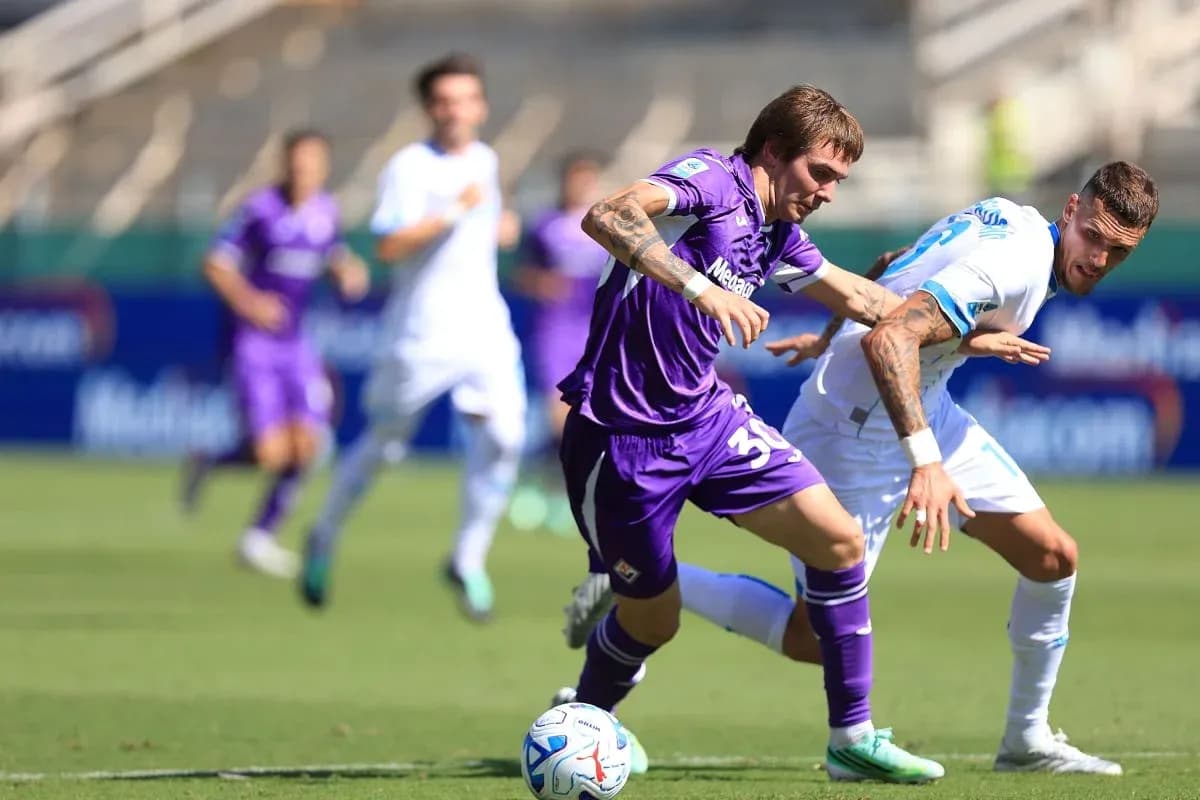
Under the Tuscan lights of Stadio Artemio Franchi, Fiorentina and Atalanta closed their Serie A seasons with a 1–1 draw that felt like a condensed summary of their campaigns: Fiorentina’s fragile balance between control and vulnerability against Atalanta’s structured aggression and deeper quality.
I. The Big Picture – contrasting trajectories, shared stalemate
Following this result, the table tells a blunt story. Fiorentina finish 15th on 42 points, their overall goal difference at -9, the product of 41 goals scored and 50 conceded. At home they have been the definition of middling: 4 wins, 9 draws, 6 defeats, with 21 goals for and 21 against. The averages are equally stark – 1.1 goals scored and 1.1 conceded at home underline a side that rarely collapses but just as rarely overwhelms.
Atalanta, by contrast, leave Florence in 7th place with 59 points and a positive overall goal difference of 15, built from 51 goals scored and 36 conceded. On their travels they have been solidly upper-tier: 6 away wins, 8 draws, 5 defeats, scoring 26 and conceding 21. Their away averages – 1.4 goals scored and 1.1 conceded – frame them as a side that usually carries more threat than their hosts while maintaining a relatively secure back line.
The formations on the night mirrored each club’s seasonal DNA. Paolo Vanoli went with Fiorentina’s most-used structure, a 4-3-3, the shape they have deployed 15 times in Serie A. Raffaele Palladino doubled down on Atalanta’s identity with the 3-4-2-1 that has underpinned 34 of their league outings. The scoreboard – 1–0 at half-time, 1–1 at full-time – reflected Fiorentina’s familiar pattern of starting with promise but struggling to turn control into a decisive margin, before Atalanta’s system and depth gradually tilted the balance.
II. Tactical voids and disciplinary shadows
Both sides arrived carrying absences that subtly redrew the tactical map.
Fiorentina were without M. Kean (calf injury) and F. Parisi (knee injury), but the most significant absence was L. Ranieri, suspended after a red card. Ranieri’s season profile – 34 appearances, 1 goal, 8 yellow cards and 1 red – marks him as a key, combative presence on the left side of the back line. His 34 tackles, 13 successful blocks and 24 interceptions highlight how often he steps into danger to break play. Without him, Vanoli turned to P. Comuzzo and D. Rugani as the central pairing, with R. Gosens repurposed as a left-back. The knock-on effect was clear: Fiorentina lost Ranieri’s aggressive front-foot defending and his ability to defend wide spaces, forcing a more conservative line.
For Atalanta, L. Bernasconi (knee injury) and O. Kossounou (thigh injury) thinned Palladino’s defensive options. Kossounou’s absence in particular narrowed the rotation in the back three, leaving G. Scalvini, I. Hien and H. Ahanor to shoulder the full 90 minutes. The bench still offered experience in B. Djimsiti and S. Kolasinac, but the starting selection underlined trust in a younger, more mobile trio.
Disciplinary trends also shaped the risk calculus. Fiorentina’s season-long yellow-card profile shows a pronounced late-game spike: 25.30% of their yellows arrive between 76–90 minutes, with a further 15.66% between 91–105. Their reds also flare late, with 66.67% in the 76–90 range. This is a side that often finishes on the edge, and the absence of Ranieri – himself a red-card offender – was as much about temper as tactics.
Atalanta’s own yellow distribution mirrors a similar late-game rise, with 23.33% of bookings between 76–90 minutes and 21.67% from 61–75. They have seen red early and late – 50.00% of their reds in the opening 0–15 minutes and 50.00% in the 76–90 window – a reminder that their aggression can tip into recklessness at either end of the match.
III. Key matchups – Hunter vs Shield, Engine Room vs Enforcer
The “Hunter vs Shield” dynamic was clearest in the way Fiorentina’s front three tried to pry open Atalanta’s away defence, which has conceded just 21 goals in 19 matches. A. Gudmundsson, starting from the left of the 4-3-3, carried the dual identity he has shown all season: 5 goals, 4 assists, and a red card that hints at his edge. His 32 key passes and 39 dribble attempts (20 successful) speak to a player who wants the ball and wants to break lines.
Opposite him, Atalanta’s shield was built on structure more than star power. Scalvini, Hien and Ahanor formed a back three protected by a compact midfield line of R. Bellanova, M. De Roon, M. Pasalic and Y. Musah. De Roon, in particular, acted as the pivot and enforcer, screening central zones and stepping out to meet Fiorentina’s interior midfielders G. Fabbian and R. Mandragora. Fiorentina’s season numbers – 21 home goals, an average of 1.1 – suggest a side that needs combinations and set patterns to score; Atalanta’s 0.9 overall goals against per match and 13 clean sheets overall underline how hard that is against a settled block.
The “Engine Room” battle pitted Fiorentina’s trio against Atalanta’s double pivot plus advanced creators. Mandragora’s role as metronome had to contend with the energy and pressing of Musah and the timing of Pasalic’s runs. Ahead of them, L. Samardzic and K. Sulemana floated behind G. Raspadori, constantly asking Comuzzo and Rugani to decide whether to step into midfield or hold the line.
From the bench, Atalanta’s attacking depth loomed as a latent threat. N. Krstović, with 10 league goals and 5 assists, is both their joint-top scorer and a top assist provider, his 21 key passes and 39 dribble attempts underlining his all-round forward play. G. Scamacca, also on 10 league goals with 2 penalties scored, offered a more classic focal point. C. De Ketelaere, with 5 assists and 63 key passes, is the creative scalpel. Even if not all three entered, their mere availability shaped Fiorentina’s defensive choices: Vanoli’s back four could never fully commit numbers forward knowing that such firepower sat waiting.
IV. Statistical prognosis – a draw that fits the numbers
Following this result, the numbers around both clubs feel internally consistent. Fiorentina’s overall record – 9 wins, 15 draws, 14 defeats – is that of a side that lives in small margins. With 10 clean sheets overall but 11 matches failing to score, their season has oscillated between solidity and bluntness. Their penalty record – 6 taken, 6 scored, 100.00% conversion with no misses – shows clinical execution when the chance is structured, but open play remains a struggle.
Atalanta’s 15 wins, 14 draws and only 9 defeats, combined with 13 clean sheets and just 8 matches failing to score, frame them as a more complete unit. On their travels, scoring 26 and conceding 21, they typically edge the xG battle through volume and variety rather than chaos.
Overlaying those trends on this fixture, a 1–1 feels like the statistically plausible outcome: Fiorentina’s home average of 1.1 goals against a side that scores 1.4 away, and Atalanta’s away concession rate of 1.1 against a Fiorentina attack that averages 1.1 at home. The equilibrium point is almost exactly a goal each.
If we read the game through the lens of expected goals rather than just the final score, Fiorentina’s structured 4-3-3 and home comfort likely produced a handful of medium-quality chances, while Atalanta’s 3-4-2-1 and bench depth would have generated pressure spikes, especially as legs tired and cards loomed late. Both teams’ propensity for late bookings hints at a frantic closing phase, but neither side’s season-long penalty profile (no misses for either) suggests the kind of wild penalty-box chaos that often decides finales.
In tactical terms, Fiorentina close the season as a side still searching for a sharper edge in the final third and more composure in late-game management. Atalanta, even from the frustration of a draw, walk away with their identity intact: a flexible, aggressive 3-4-2-1, underpinned by a robust defensive record and a forward line deep enough that the next campaign’s xG curve will almost certainly keep them in the European conversation.