Everton 1–3 Sunderland: Match Analysis and Tactical Insights
Everton 1–3 Sunderland at Hill Dickinson Stadium, a result that dents Everton’s hopes of pushing into the top half while significantly boosting Sunderland’s late-season surge. Everton slip further away from European contention, while Sunderland strengthen their position in the upper mid-table with one round left.
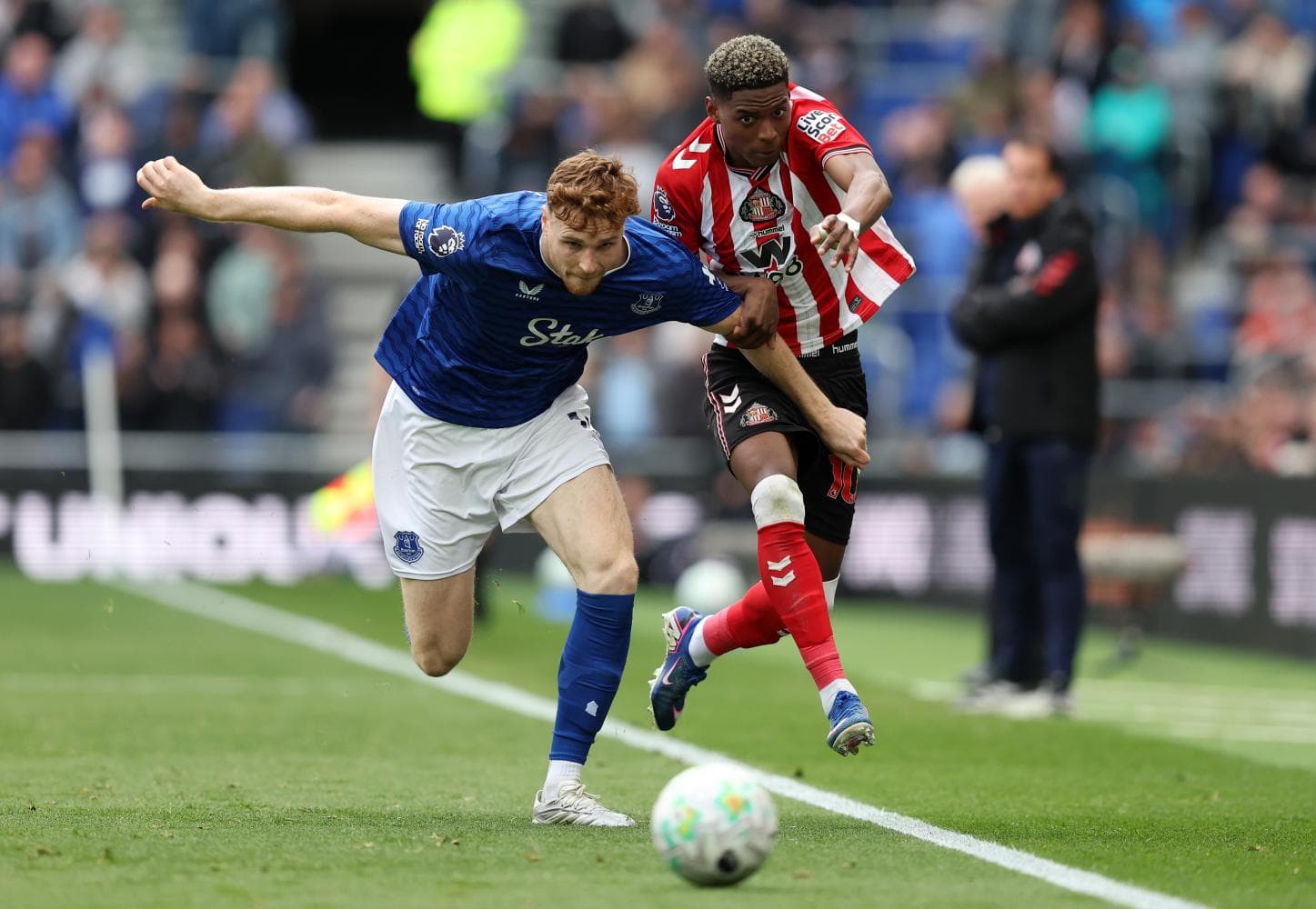
Everton made the first change of the afternoon when Sunderland were forced into an early defensive reshuffle on 23 minutes: Luke O'Nien replaced O. Alderete, adjusting the visitors’ back line but not the overall 4-2-3-1 structure. Two minutes later, Everton’s midfield aggression boiled over as T. Iroegbunam was booked for tripping in the 25th minute, setting the tone for a combative central battle.
The hosts capitalised on their first sustained spell of pressure just before the break. In the 43rd minute, M. Rohl opened the scoring for Everton, finishing from a move created by centre-back M. Keane, whose assist underlined Everton’s willingness to step defenders into advanced areas. That strike gave Everton a 1–0 lead at half-time.
Early in the second half, Everton’s discipline was tested again. J. O'Brien received a yellow card for holding in the 47th minute as Sunderland began to push higher and target quick transitions through midfield.
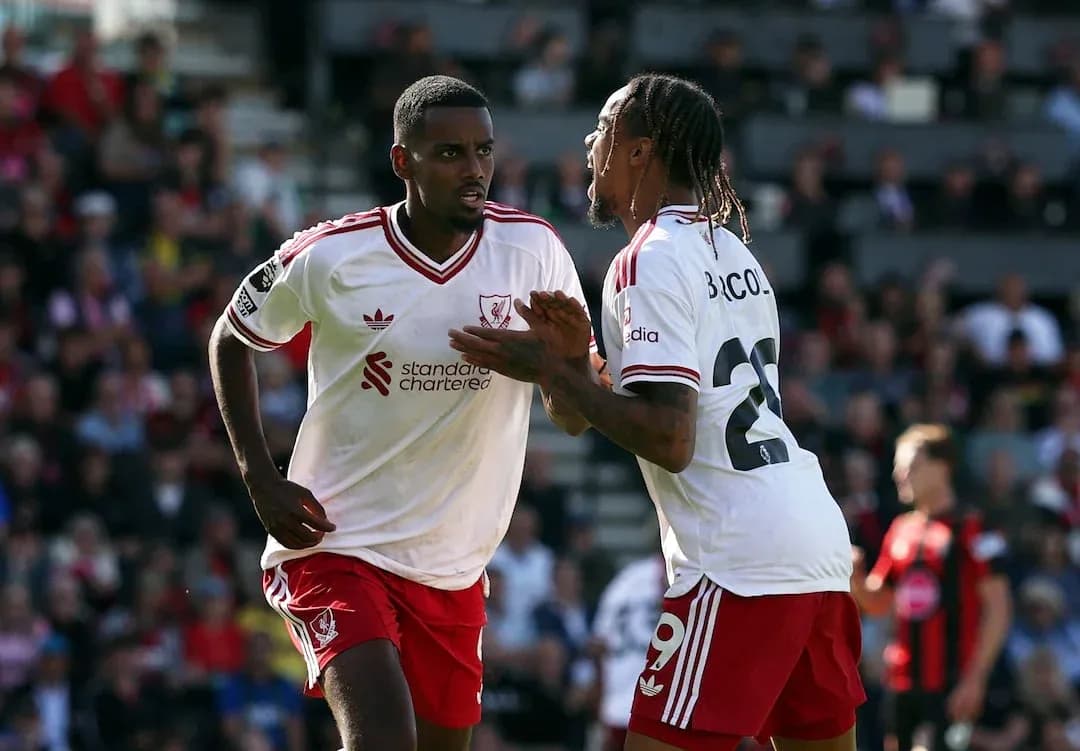
The equaliser arrived on 59 minutes. Sunderland’s B. Brobbey levelled the match at 1–1, converting a chance created by E. Le Fée, whose assist reflected his growing influence between the lines. Just a minute later, in the 60th minute, Sunderland freshened their right side as C. Talbi replaced T. Hume, adding more attacking thrust from wide areas.
Everton responded with a double substitution on 73 minutes, seeking more direct threat. T. George replaced T. Iroegbunam, adding attacking impetus from midfield, while T. Barry came on for Beto to lead the line and offer fresh movement against a tiring Sunderland defence.
The game’s decisive phase came in the final quarter-hour. Sunderland made a triple substitution in the 77th minute, overhauling their attacking unit: C. Rigg replaced N. Angulo, W. Isidor came on for B. Brobbey, and H. Diarra replaced N. Sadiki. Those changes injected energy and creativity, immediately tilting the momentum.
On 81 minutes, Sunderland turned the match around. E. Le Fée, already provider of the equaliser, struck to make it 2–1 to the visitors, finishing a move fashioned by substitute C. Rigg, whose assist justified his introduction and highlighted Sunderland’s bench impact.
Everton chased a route back into the game with two late changes in the 88th minute: D. McNeil replaced goalscorer M. Rohl to add fresh wide delivery, while S. Coleman came on for the booked J. O'Brien, offering attacking overlaps from full-back as Everton pushed numbers forward.
That late ambition left space in behind, and Sunderland ruthlessly exploited it in stoppage time. In the 90+1 minute, W. Isidor added a third, finishing off a move created by fellow substitute H. Diarra to make it 3–1, sealing the comeback and underlining the impact of Sunderland’s bench. Everton’s frustration was capped in the 90+6 minute when J. Garner was booked for tripping, as the hosts’ composure slipped in the closing stages.
Fixture Statistics & Tactical Audit
- xG (Expected Goals): Everton 1.07 vs Sunderland 0.73
- Possession: Everton 49% vs Sunderland 51%
- Shots on Target: Everton 4 vs Sunderland 3
- Goalkeeper Saves: Everton 0 vs Sunderland 3
- Blocked Shots: Everton 2 vs Sunderland 0
The numbers suggest Everton created the slightly better quality of chances on paper (xG 1.07 vs 0.73) and edged the shot volume, but Sunderland were markedly more efficient in turning limited attempts into goals (3 goals from 3 shots on target). Everton’s lack of goalkeeper saves (0, mirroring Sunderland’s 3 shots on target) underlines how every Sunderland effort on goal was decisive, while Sunderland’s keeper made 3 saves from Everton’s 4 shots on target, reflecting a clinical visiting performance at key moments (3 goals from 0.73 xG) and a failure by Everton to convert their marginal xG advantage into scoreboard control.
Standings Update & Seasonal Impact
Everton began the day on 49 points with a goal difference of -2, having scored 47 and conceded 49. The 1–3 defeat adds 1 goal for and 3 against, moving them to 48 goals scored and 52 conceded, a new goal difference of -4, while their points total remains 49. They stay in 11th place, slipping further adrift of the European-chasing pack and leaving themselves with only one final fixture to improve their mid-table finish.
Sunderland started on 51 points with a goal difference of -7 (40 goals for, 47 against). Scoring three and conceding one pushes them to 43 goals scored and 48 conceded, improving their goal difference to -5 and lifting their points tally to 54. They remain 9th but close the gap on the teams immediately above them, strengthening their position in the upper half and keeping an outside interest in the late-season race for higher prize-money places.
Lineups & Personnel
Everton Actual XI
- GK: Jordan Pickford
- DF: Jake O'Brien, James Tarkowski, Michael Keane, Vitaliy Mykolenko
- MF: James Garner, Tim Iroegbunam, Merlin Röhl, Kiernan Dewsbury-Hall, Iliman Ndiaye
- FW: Beto
Sunderland Actual XI
- GK: Robin Roefs
- DF: Lutsharel Geertruida, Nordi Mukiele, Omar Alderete, Reinildo Mandava
- MF: Granit Xhaka, Noah Sadiki, Trai Hume, Enzo Le Fée, Nilson Angulo
- FW: Brian Brobbey
Expert's Post-Match Verdict
Sunderland’s win was built on superior in-game management and the impact of their substitutes rather than territorial dominance. With near-parity in possession (51% vs 49%) and lower xG than Everton (0.73 vs 1.07), Regis Le Bris’ side focused on compressing space, then striking decisively through transitions and fresh legs, as all three second-half goals involved key contributions from substitutes (C. Rigg and H. Diarra both registering assists, W. Isidor scoring late). That points to clinical attacking execution relative to chance quality (3 goals from 3 shots on target).
Leighton Baines’ Everton, by contrast, produced enough structure and volume to lead at half-time and edge the underlying metrics, but lacked penalty-box sharpness and defensive control in the final 30 minutes. Conceding three times from limited Sunderland pressure (Sunderland total shots 7, xG 0.73) reflects a defensive collapse in key phases rather than sustained inferiority, while Everton’s own attack under-delivered against expectation (1 goal from 1.07 xG and 4 shots on target). The result underlines a recurring issue: Everton can construct games and create moderate-quality chances, but without greater ruthlessness and late-game resilience, they struggle to turn performances into points.