England's World Cup Squad: Tuchel's Bold Decisions and Surprising Omissions
When England walk out for their World Cup opener on June 11, it will be a year and a day since Ivan Toney last pulled on the shirt. Two minutes off the bench in a grim friendly defeat to Senegal at Nottingham Forest’s City Ground. Then nothing. No call-ups. No cameos. No hint that he was even in Thomas Tuchel’s thoughts.
Now he is back as Harry Kane’s understudy on the biggest stage of all.
Tuchel has executed a sharp U-turn on the 30-year-old Al-Ahli striker, and the numbers explain why. More than 40 goals in Saudi Arabia have kicked the door down after the manager spent 12 months pretending he couldn’t hear the knocking. Toney has also been vocal in one key area: he believes his time in the Gulf leaves him better equipped than most for the furnace-like heat waiting in North America.
It is a gamble, but a calculated one. And it is far from the only bold call in a squad list that has detonated debate across the country.
No.10 roulette: Palmer and Foden frozen out
Everyone knew the No.10 role would be the flashpoint. England are suddenly rich in that area, and Tuchel could not take them all.
Morgan Rogers was effectively inked in. Jude Bellingham, with his ability to roam between lines and lines of headlines, was never in danger. That left Eberechi Eze, Cole Palmer, Phil Foden and Morgan Gibbs-White fighting for what felt like two seats on a shrinking plane.
Gibbs-White, despite being the form option, had long been painted as an outsider. His omission stings but doesn’t shock. The real tremor came when the names of Palmer and Foden were missing. Two of the most gifted attacking midfielders in the country, both out. Social media did the rest.
Strip away the emotion, though, and Tuchel’s logic is ruthless rather than irrational. Palmer’s campaign has been shredded by injuries. His England involvement since Euro 2024 has been minimal, and only in the final weeks of the season has he begun to resemble the fearless force who lit up his first two years at Chelsea.
Foden’s story is different but no less troubling. His dip has dragged on. For club and country he has looked a shadow of the electric talent who once seemed untouchable, his form tailing off all the way back to the Euros two years ago when his anonymous performances triggered calls for him to be dropped.
So Eze stands alone. The Arsenal man has survived a debut season that veered between slick and subdued, and emerges as Tuchel’s chosen creator in chief from that cluster.
Many will argue that Palmer, Foden and Gibbs-White offer far more off the bench than some who have made the cut. Tuchel’s answer was blunt when asked about the discarded playmakers: he wanted “a balanced squad” and refused to haul five No.10s across the Atlantic only to shunt them out of position. In his mind, that helps nobody – not the players, and not the manager who has to live with the compromise.
Mainoo’s revival and a midfield door that finally opened
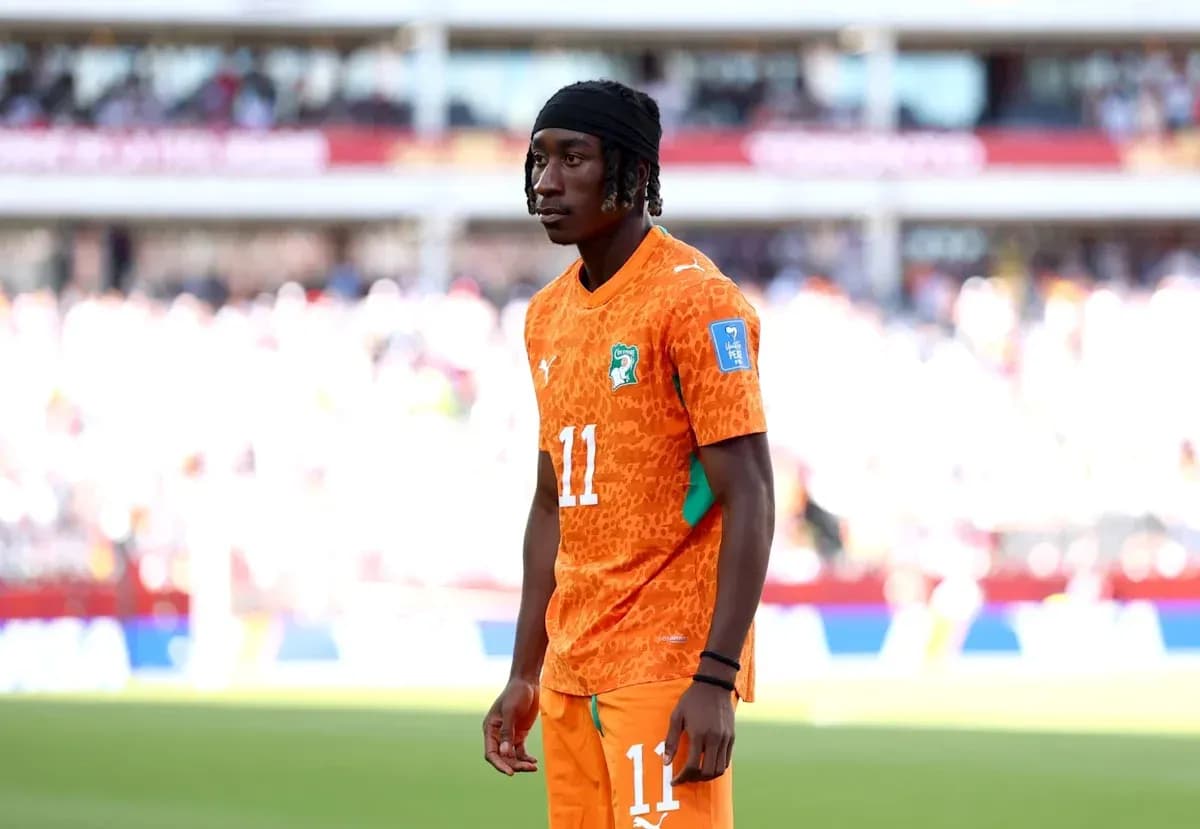
Kobbie Mainoo’s World Cup dream looked finished before Christmas. Under Ruben Amorim at Manchester United, he barely existed. The Portuguese coach never warmed to him, convinced the academy graduate didn’t suit his back-three system. By January, Mainoo was eyeing the exit.
He stayed. Amorim didn’t.
Michael Carrick’s arrival as interim head coach flipped the script. Mainoo went straight back into the side, his calm in possession and positional maturity restoring a sense of order to United’s midfield. The reward came quickly: a new contract and a central role in a surge that carried his boyhood club back into the Champions League.
That resurgence has now carried him into the England squad. He has edged out Adam Wharton and James Garner for the final central midfield spot, even if he will almost certainly start behind Declan Rice and Elliot Anderson in the pecking order.
From forgotten man to World Cup wildcard in half a season. Few selections capture Tuchel’s willingness to reward momentum quite like this one.
Trent left on the outside again
If one omission felt inevitable and yet still brutal, it was Trent Alexander-Arnold’s.
The Real Madrid right-back had already seen the writing on the wall when Tuchel left him out of a swollen 35-man squad for the March internationals. Injuries to others seemed to reopen the door, only for it to be slammed shut again as Tottenham’s Djed Spence got the nod instead.
For Alexander-Arnold, this is a grim full stop on a flat first year in Madrid. He left Liverpool to step into the Ballon d’Or conversation; instead, he finds his England career frozen. He has not played for his country in close to a year, and with Tuchel unmoved by his profile, that exile could stretch on.
The decision will be picked apart. Against deep, compact defences, Alexander-Arnold’s passing is a weapon few teams in the world possess. Tuchel, though, has once more decided that the defensive flaws outweigh the attacking upside. With Ben White injured and Tino Livramento only just returning from his own lay-off, the snub feels even more pointed.
Chelsea’s unexpected winner: Xabi Alonso
One man quietly applauding Tuchel’s ruthlessness will be Xabi Alonso. The new Chelsea head coach starts work at Cobham on July 1 and has just been handed a gift: a near full-strength English contingent for pre-season.
Reece James is the only Chelsea player in the England squad. Palmer has been left at home. So have Levi Colwill and long shot Trevoh Chalobah. For Alonso, that means time – precious, uninterrupted time – on the training ground with players who badly need it.
Palmer’s season has been punctured by fitness problems. Colwill is only just back after an ACL tear that wiped out most of his campaign. They, and Alonso, will benefit from a summer free of international duty.
With Brazil boss Carlo Ancelotti also leaving out Joao Pedro, Andrey Santos and Estevao, Chelsea’s World Cup contingent will likely be limited to James, Marc Cucurella, Jorrel Hato, Enzo Fernandez, Moises Caicedo, Pedro Neto and Nicolas Jackson. For a new manager trying to impose ideas, that is a rare slice of good fortune.
Maguire’s shock, Tuchel’s steel
Harry Maguire thought he was back. His recall for the last international break, coupled with a strong second half to Manchester United’s season, had him convinced the World Cup was a formality.
Tuchel disagreed.
The German had already warned in March that Maguire remained low down his list of centre-backs and that his opinion “hadn’t changed”. Now he has acted on it, cutting the former United captain from the final 26.
Behind the scenes, concerns swirled. Some reports pointed to Maguire’s ego and doubts over whether he would accept a back-up role. Others suggested Tuchel never trusted him to play out from the back with the composure his system demands.
The reaction did little to change that perception. On the eve of the squad announcement, Maguire – and some of his family members – vented publicly. “I was confident I could have played a major part this summer for my country after the season I’ve had,” he wrote on social media. “I’ve been left shocked and gutted by the decision.”
For Tuchel, it will only have underlined the sense that this particular personality did not fit the group he is building.
O’Reilly’s rise and a calculated risk at left-back
Few stories in English football this season have soared like Nico O’Reilly’s.
At 21, he has emerged as Manchester City’s revelation, racking up 15 goal involvements from the left side of defence. Now he heads into the World Cup as England’s likely starting left-back.
That status was cemented when Lewis Hall and Myles Lewis-Skelly were both unexpectedly omitted. Tuchel was widely expected to take at least one of them to compete with O’Reilly. Instead, he has cleared the lane for the City youngster, with Spence the probable deputy.
There is risk here. O’Reilly is, by trade, a midfielder. England travel without a single orthodox left-back, and Spence is more natural on the right. Tuchel is betting that O’Reilly’s intelligence, athleticism and attacking output will outweigh any teething problems in a specialist role.
It is bold. It is also entirely in keeping with the rest of this squad.
A squad – and a tenure – on the line
From his first day in the job, Tuchel promised he would not manage by committee. He talked about unpopular decisions, about building a team in his image, about chasing the World Cup on his own terms.
This squad is the clearest expression of that vision so far. It is also the riskiest.
On paper, the core of the starting XI looks strong. Kane, Rice, Bellingham, Anderson, James, O’Reilly: the spine is there. But scratch beneath that surface and the questions pile up. No Jarrod Bowen. No Palmer. No Alexander-Arnold. No Gibbs-White. No Wharton. No Maguire. That is a lot of potential game-changers left watching from home.
Instead, the responsibility shifts to the likes of Jordan Henderson, Spence and Noni Madueke – players who do not inspire the same instinctive confidence when the clock is ticking and a match is drifting away.
What Tuchel has gained is clarity. There will be no endless arguments about whether Palmer must start, no weekly referendum on Foden’s form, no tactical circus around Alexander-Arnold’s best position. The strongest XI is largely obvious, with only the No.10 slot likely to be shared between Bellingham and Rogers.
That simplicity may prove priceless in tournament football. Or it may leave England one injury away from a cliff edge.
One thing feels certain: this 26-man list will define Tuchel’s England reign. If he reaches the semi-finals or beyond, these calls will be hailed as the courage of a coach who trusted his convictions. If he falls short, the inquest will begin with this squad sheet and the names missing from it.
Has he drawn the line in exactly the right place – or stepped one star too far? The answer will come under the unforgiving heat of a World Cup summer.