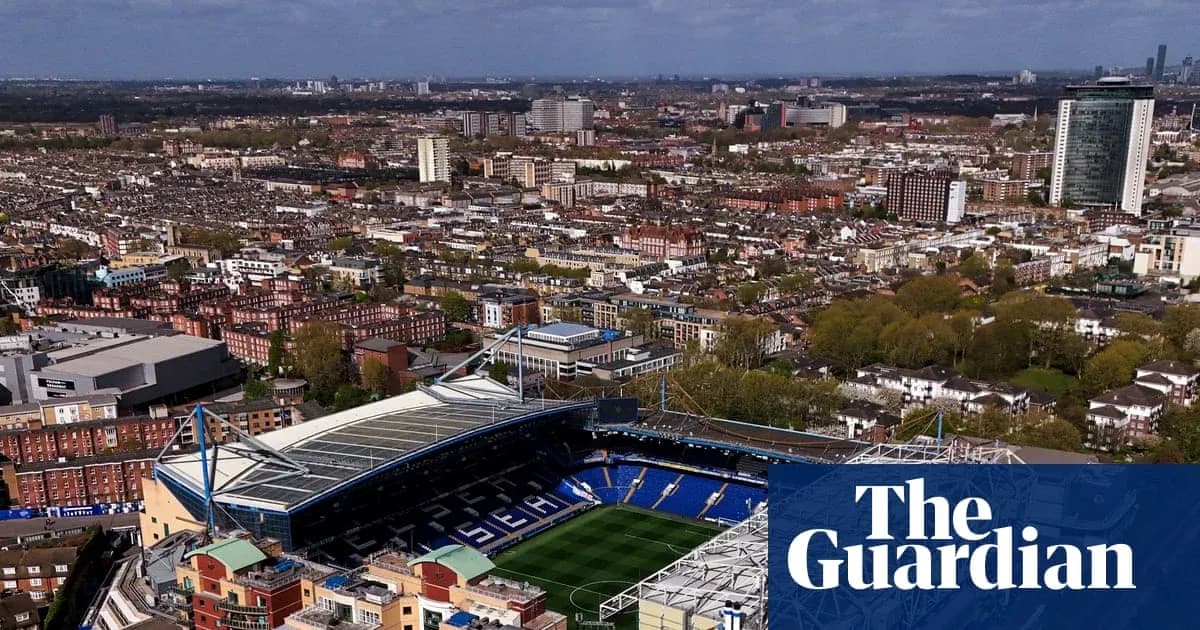
Chelsea Hit with £10m FA Fine and Suspended Transfer Ban
Chelsea’s Roman Abramovich years have been dragged back into the spotlight, and the verdict from English football’s authorities is brutal: a £10m FA fine and a suspended transfer ban, and a withering assessment of how the club once did its business.
The punishment, announced after an independent commission heard the FA’s case, mirrors the sanction handed down by the Premier League earlier this year. Both bodies concluded that, between 2009 and 2022, Chelsea used unlicensed agents and disguised the true nature of transfer payments, breaching rules on a grand scale over more than a decade.
Deals involving Samuel Eto’o, Eden Hazard and Willian were among those flagged. These were not fringe moves or marginal figures; they were central to Chelsea’s rise and sustainment as a superclub in the Abramovich era.
From points deduction to transfer ban
Initially, the commission went much harder. It started from a 15‑point deduction as a theoretical benchmark, then moved to a six-point suspended deduction as the proposed sporting sanction. That would have hung over Chelsea like a storm cloud.
Chelsea appealed. The appeal board ultimately scrapped the points threat altogether, replacing it with a suspended two‑window ban on registering new players. The ban will only bite if the club offends again.
Crucially, the appeal board concluded there was not enough evidence to prove Chelsea had actually gained a sporting advantage from the breaches, even if the original commission believed they had clearly sought one.
So Chelsea keep their points. They keep their league position. They pay the fine.
Self-reporting and a new regime
The case only came to light because Chelsea’s new owners, the BlueCo consortium, reported the irregularities after taking control in 2022. Once they lifted the lid, the scale of what had gone on under Abramovich became impossible to ignore.
The disciplinary panel acknowledged that, praising the club’s cooperation and transparency throughout. Chelsea, who are also under a settlement agreement with Uefa, stressed that they had “worked openly and transparently with all regulators” and welcomed the fact that this “brings all regulatory proceedings against the club to a close”.
Behind that carefully worded relief lies a clear line in the sand: old Chelsea versus new Chelsea. The FA’s written reasons make that divide painfully clear.
“Shameful and arrogant”
In its published findings, the independent commission did not bother to sugarcoat its view of the previous regime. It said the rule-breaking showed “a shameful and arrogant disregard for the rules of the game … which has done so much to bring the game of football in general, and the name of CFC into disrepute”.
Those are not throwaway phrases. They are the governing body’s official judgment on how one of England’s biggest clubs operated for years.
Yet the commission also expressed “particular concern” about elements of the FA’s own case. It criticised the governing body for failing to charge any individuals involved in the misconduct and for actually asking that no sporting sanction be imposed.
The Premier League, too, argued against a sporting penalty. The result was a curious alignment: league, FA and club all pushing away from a points deduction, even as the independent panel felt the behaviour merited one.
Stefan Borson, a football finance expert and head of sport at law firm McCarthy Denning, summed up Chelsea’s legal performance in striking terms. “Chelsea’s lawyers performed a masterclass in non-adversarial diplomacy with both the FA and the Premier League,” he said.
He pointed to the journey from that 15‑point starting position to a six-point suspended penalty, and then to its total removal on appeal, leaving “a final meagre fine out of its retained escrow from Abramovich’s proceeds.”
Offshore payments and Cyprus leaks
The investigation did not appear from thin air. The Premier League and the FA had been poring over tens of millions of pounds in secret payments routed through offshore companies controlled by Abramovich.
The trail emerged through Cyprus Confidential, a leak of data from Cypriot financial services firms used to manage the Russian’s wealth. The Guardian and international media partners exposed a web of transactions that raised serious questions about how Chelsea had been structuring deals.
Among the payments highlighted were apparent off‑book sums to Hazard’s agent and to an associate of Antonio Conte, the manager who led Chelsea to the 2016‑17 Premier League title.
The FA’s published documents also offer rare detail on the internal mechanics of a major transfer. They describe conversations inside Chelsea around the 2013 signing of Willian, a move hijacked at the last moment after the Brazilian had looked set to join Tottenham.
An unnamed senior Chelsea figure is recorded as saying that losing Willian was “not good” and losing him to Spurs was “adding insult to injury”. That frustration, the FA argued, spoke to the mindset behind the rule breaches.
In its submissions, the FA suggested this individual “may have loved the power associated with having a bottomless pocket when it came to acquiring players of great quality and/or with great potential”, and that to claim there was no intention to secure a sporting advantage “is stretching our credulity beyond reasonable limits”.
The appeal board, though, drew a sharper distinction between intent and proof. The desire to gain an edge was obvious; the evidence that Chelsea actually did so, less so.
Tax settlement and a final reckoning
The rulings also revealed, for the first time, that BlueCo reached a multi‑million pound settlement with HM Revenue & Customs over historic transactions dating back to 2011. The exact figure remains redacted, but the appeal board indicated Chelsea repaid at least £1.35m.
That detail underlines the financial shadow cast by the Abramovich era. Even as the club spends heavily under new owners, it is still paying off the legacy of how previous deals were structured.
One point is non-negotiable: the FA has confirmed that the entire £10m fine will be channelled into grassroots football. Money that once flowed through offshore accounts and opaque arrangements will now, in theory, help fund pitches, coaching and facilities at the base of the English game.
Chelsea, on the pitch, move on under a different ownership, different leadership and a very different regulatory climate. The question now is not what they did in the past, but whether English football has really decided how hard it is prepared to hit its giants when they cross the line.