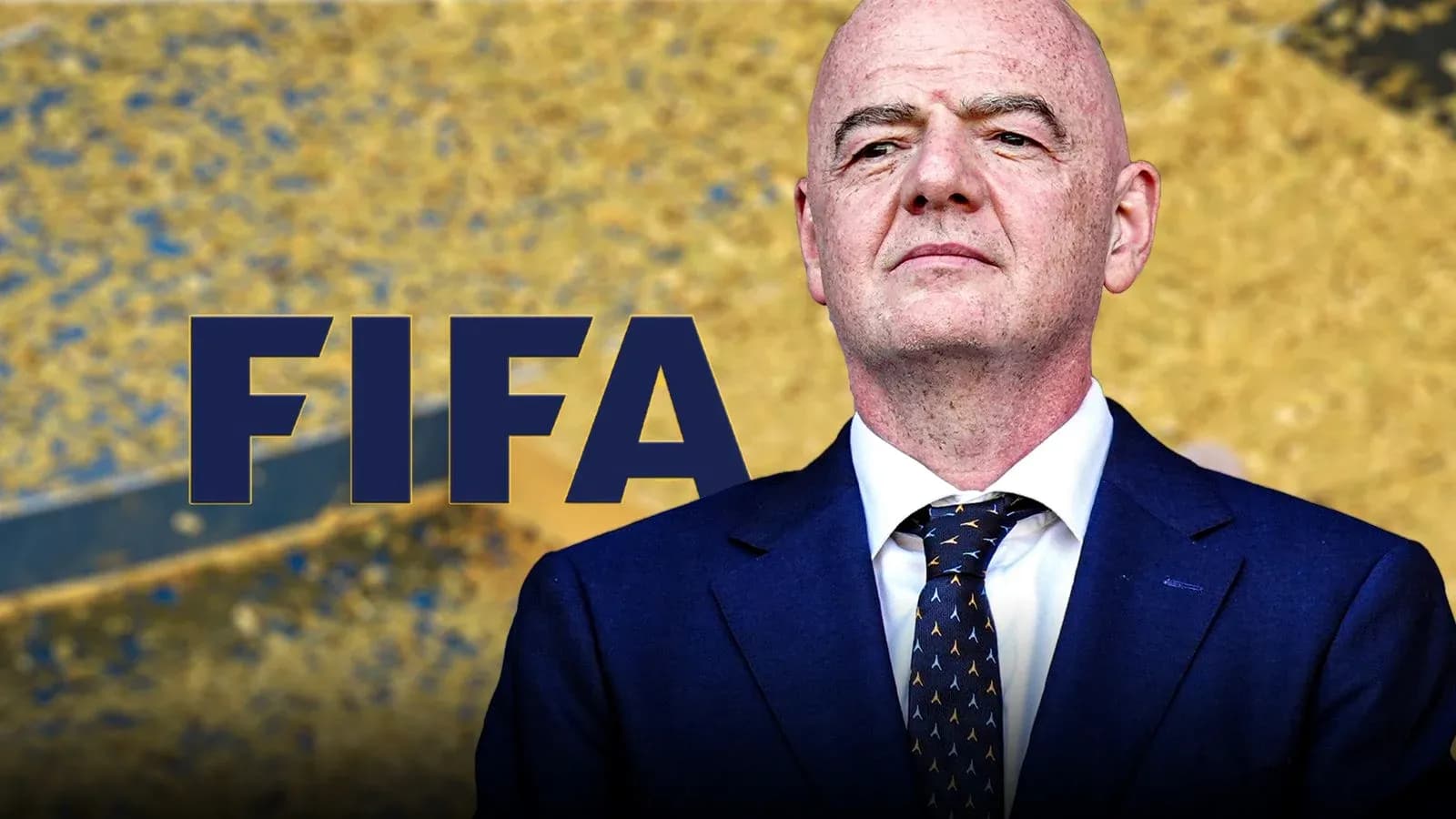
Carlos Cordeiro Resigns from FIFA Amid Power Struggle
Carlos Cordeiro has walked away from FIFA – and straight into the heart of the biggest power struggle world football has seen in years.
The senior advisor to Gianni Infantino stunned Zurich by resigning in protest at plans to explore selling a stake in a new World Cup commercial vehicle to private investors. He did not soften the blow.
“As a senior advisor to the FIFA president, a former banker, and a lifelong football fan, I cannot stand by while FIFA considers selling a stake in the World Cup,” he said in an exclusive statement to Sky News. “Let me be clear: I had no involvement in this proposal, and I oppose it unequivocally. It is a bad deal for FIFA's Member Associations, a bad deal for football, and a bad deal for the long-term future of the game.”
One of Infantino’s closest insiders publicly breaking ranks would be seismic on any day. On this one, it landed on top of a full‑scale revolt.
A president under siege
By the time Cordeiro’s resignation became public, Infantino was already facing open rebellion from the game’s most powerful blocs.
UEFA’s 55 member associations had declared they would not take part in any FIFA competition while the proposal remained alive. Not a threat. A boycott.
Their language was as stark as their stance. UEFA said its opposition was “unanimous and unequivocal” and warned: “No UEFA national teams will participate in any FIFA competition for so long as these proposals remain alive, unless this proposal has been abandoned in its entirety and binding assurances have been given that FIFA will never again open its governance or competitions to private ownership.”
They were not alone. CONCACAF – representing 41 nations across North and Central America and the Caribbean – announced it “rejected the proposal”. The Asian Football Confederation, long seen as a key pillar of Infantino’s support, lined up against him as well and demanded “an urgent review” of FIFA’s governance.
Those three confederations together speak for 143 of FIFA’s 211 member associations. That is not a murmur of dissent. It is a bloc.
FIFA digs in
Faced with that level of resistance, many presidents would have hit the brakes. Infantino has chosen to press on.
In the early hours of Friday morning, FIFA released a lengthy statement insisting “nobody is selling football” and defending the planned consultation over the creation of FIFA Forward Enterprise (FFE), the proposed commercial arm.
“We have heard the feedback provided by the respective confederations in relation to the proposed establishment of FIFA Forward Enterprise (FFE) and would like to address the issues that have surfaced since the initial media reporting on Tuesday,” the statement read. “We respect the feedback and concern aired in public and reaffirm our commitment to an open and democratic consultation.”
FIFA claimed its “planned consultation process was disrupted by incorrect media reports” and pledged to move ahead “to ensure that each MA has the ability to express its vote based on facts”.
The message was clear: the process goes on.
FIFA argued that FFE is designed “solely to ensure that all FIFA Member Associations (MAs) have the opportunity to take meaningful ownership of the commercial opportunity of football in their respective countries, and that this does not come at the cost of either the spirit or the governance of FIFA or football itself”.
“Nobody is selling football,” it added. “This is not something FIFA would ever entertain.”
Yet the core of the plan remains: a minority stake in a World Cup commercial entity, with an investor group led by Thrive Eternal – founded by Joshua Kushner, brother of Jared Kushner, son‑in‑law of former US president Donald Trump – waiting to move.
The money, the risk, and the missing Europeans
On paper, the lure is obvious. FIFA has spoken of huge returns flowing to national associations if the deal goes ahead. For many smaller federations, that kind of cash can transform facilities, youth systems, even basic infrastructure.
But there is a catch. If UEFA’s boycott holds and European teams refuse to play in FIFA competitions, the entire financial model starts to crumble.
A men’s or women’s World Cup without Europe is still a tournament. It is not the same product. Broadcasters know it. Sponsors know it. Investors know it too.
European and world leagues have already raised the alarm, fearing that a commercially driven FIFA will chase ever bigger and more frequent tournaments to maximise revenue, squeezing domestic calendars and piling even more strain on players.
The backlash has fused financial anxiety with a deeper concern: that the World Cup, football’s most precious shared asset, is being leveraged in a way that drags the game closer to private ownership and away from collective control.
Asia turns, the ground shifts
Perhaps the most telling development came from Asia.
The AFC has been one of Infantino’s strongest backers since he won the FIFA presidency in 2016, beating Sheikh Salman, the confederation’s president. Its statement this week marked a sharp change of tone.
“The AFC believes this moment must become a catalyst for strengthening institutional reform,” it said. “While every FIFA MA must have the opportunity to consider and determine proposals affecting the future of world football, meaningful democracy is not measured solely by the opportunity to vote. It begins with transparent governance, timely consultation, informed deliberation and genuine participation throughout the decision-making process.”
The AFC then called on FIFA “to undertake an urgent review of its governance and decision-making framework” to ensure proposals of “global significance” are developed with proper consultation and oversight by FIFA’s statutory bodies.
For a confederation that has consistently backed Infantino to edge this close to questioning his leadership is a warning in bold type.
‘He’s in a hole and he needs to stop digging’
Inside FIFA, the official line is that this is all just democracy at work. Outside, the mood is very different.
Sky Sports News’ Kaveh Solhekol described FIFA’s late‑night statement as “a desperate, tone-deaf statement that was issued in the middle of the night from FIFA's Zurich bunker,” noting it did not mention Infantino by name.
“The way I read this is that this is a statement from Gianni Infantino; it's not necessarily a FIFA statement,” he said. “How many people inside FIFA actually agree with what he is doing?
“He's in a hole and he needs to stop digging. He needs to start reading the room. He needs to start accepting the fact his power is starting to ebb away and he needs to start by apologising to football, to football fans all around the world – and he also needs to start apologising and explain himself to the confederations and the presidents of the 211 member associations.
“And he needs to stop blaming the media. What is this crazy obsession he's got? He seems to have picked it up from President Donald Trump, where he thinks it's a good idea to keep lashing out at the media. He seems to somehow think that is going to help him.”
Solhekol defended the reporting by The Times and the Financial Times, saying it had been “completely and utterly accurate” and central to exposing the scale of the controversy.
His verdict on Infantino’s options was blunt: “I suggest Infantino needs to change course. He needs to wake up and fully understand the mess he has created for himself and he needs to start saying sorry because I think that's the only way he's going to be able to save himself.”
A way back – or the beginning of the end?
Infantino has survived crises before. Allegations, investigations, political battles – he has ridden them out and tightened his grip on power. This one feels different.
“Infantino has been in plenty of tight spots and he has managed to extricate from them. But I think he's in big, big trouble now. I think this is the biggest crisis he's faced – and it's all of his own making,” Solhekol said.
According to him, the FIFA president appears to believe he can present this as a straightforward consultation: 211 member associations study the proposal, vote, and if they reject it, he shrugs and moves on, painting the storm as overblown.
Others see a much narrower path. They would urge Infantino to apologise, step back from the frontline, let the anger cool and aim to be re‑elected unopposed next March.
At the moment, he shows little sign of that. The consultation process remains on the table. The attacks on the media continue. The gap between Zurich and the confederations widens.
“I’m not sure he can carry on down this road of blaming the media and carrying on with the consultation process,” Solhekol warned. “I'm not sure he understands the strength of feeling against him – not just over this, but over lots of things he's done since he's been FIFA president.”
The numbers tell their own story: a senior advisor gone, three confederations in open revolt, and a World Cup project that risks losing Europe before it has even left the drawing board.
For Infantino, the question is no longer just whether FIFA Forward Enterprise can be saved. It is whether his presidency can.