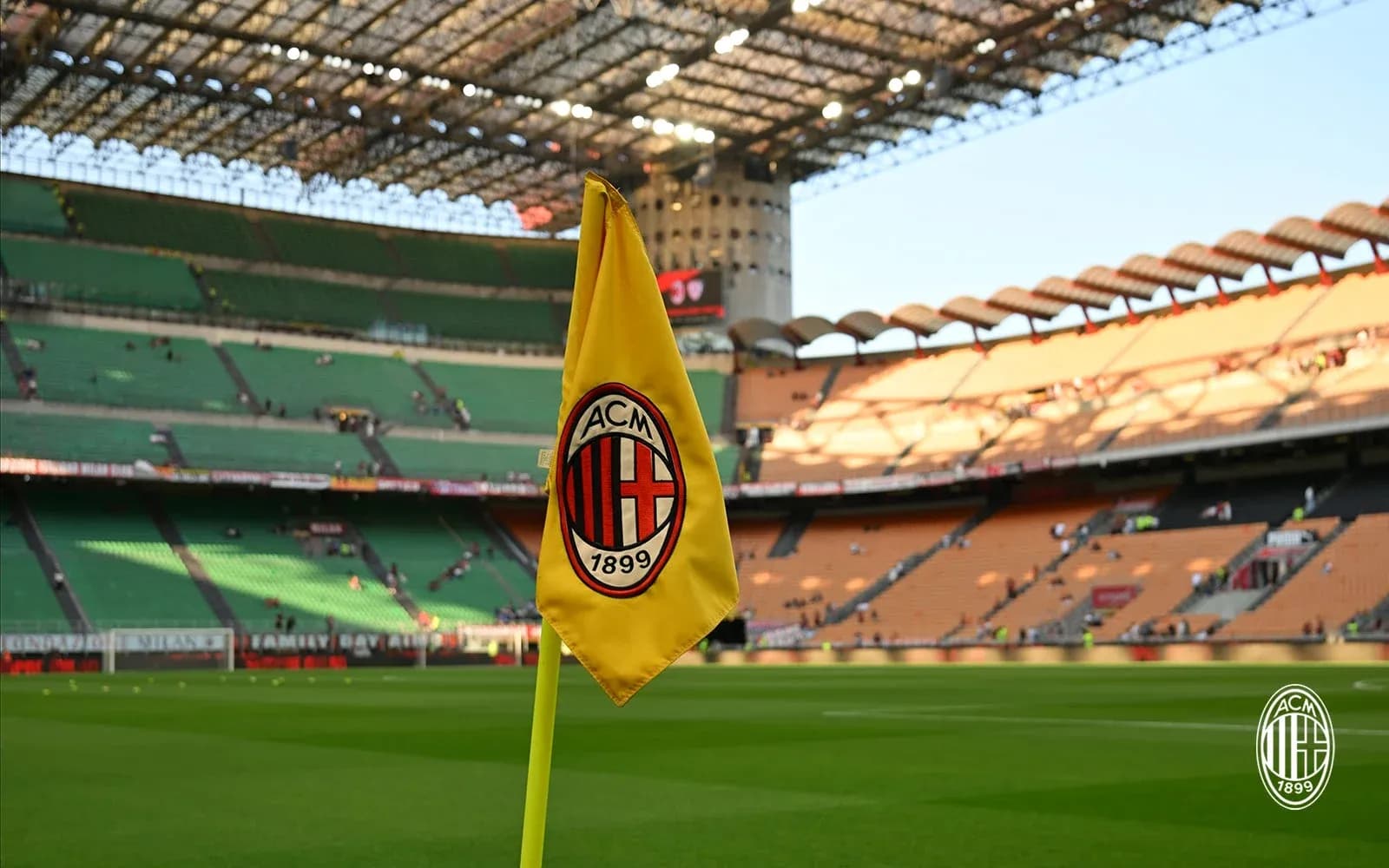
Cagliari Triumphs Over AC Milan in Serie A Finale
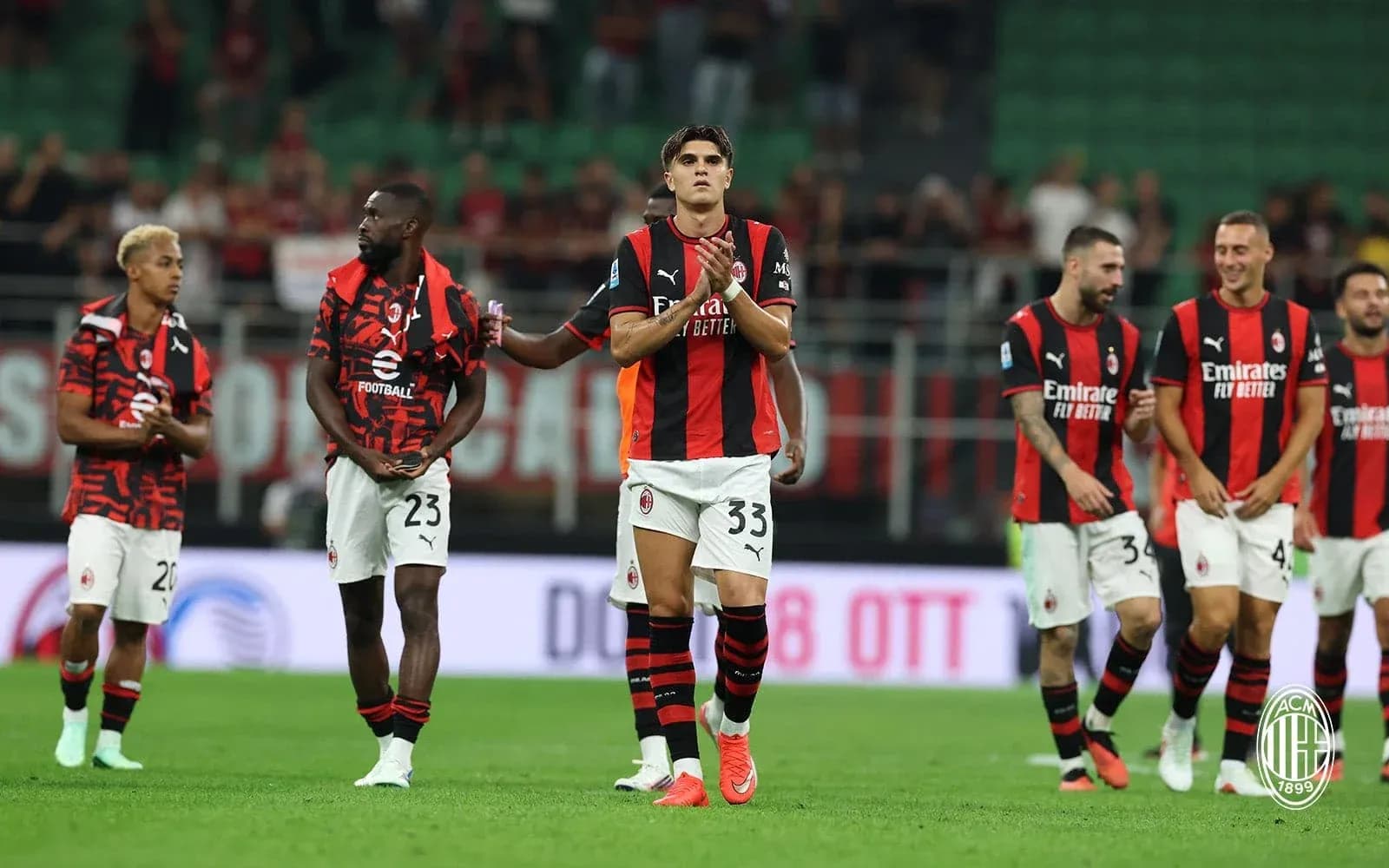
The final whistle at Stadio Giuseppe Meazza did more than confirm a 2-1 victory for Cagliari; it crystallised the contrasting seasonal identities of two clubs who arrived at the final round of Serie A on very different trajectories.
Following this result, AC Milan closed their 2025 campaign in 5th place on 70 points, their Europa League ticket secured but their late-season form (“LWLLD”) underlining a side that has flirted with control yet too often surrendered margins. Cagliari, by contrast, finished 14th with 43 points and a goal difference of -13, a survival story written through resilience rather than refinement: 40 goals scored and 53 conceded overall, a team that has lived on the edge all year.
I. The Big Picture – Mirror Formations, Divergent Intent
Both sides lined up in a 3-5-2, but the shapes told different stories. Massimiliano Allegri’s Milan used the back three as a platform for dominance: in total this campaign they scored 53 goals and conceded 35, a goal difference of +18 built on control rather than chaos. At home, they averaged 1.3 goals for and 1.1 against, a narrow but usually manageable edge.
Cagliari’s 3-5-2 under Fabio Pisacane was more pragmatic, almost fatalistic. On their travels they averaged 0.9 goals for and 1.6 against, a negative away profile that made this win in Milan all the more significant. Their season has been a patchwork of systems—11 different formations used, with 3-5-2 only one of many masks—but here they mirrored Milan and trusted their duels.
The first half, which ended 1-1, reflected that structural symmetry. Milan tried to impose themselves through central density—A. Rabiot, Y. Fofana and A. Jashari forming a tight triangle ahead of M. Gabbia, F. Tomori and S. Pavlovic—while Cagliari accepted long spells without the ball, banking on transition moments led by G. Gaetano and S. Esposito.
II. Tactical Voids – Absences and Discipline
The selection sheet for Cagliari was notable for who was missing. M. Folorunsho (muscle injury), R. Idrissi (knee), S. Kilicsoy (personal reasons), J. Liteta (thigh) and L. Pavoletti (knee) all sat out. That stripped Pisacane of rotation options in attack and midfield, making the choice to start G. Borrelli and Esposito up front almost non-negotiable. It also placed a heavier creative burden on Gaetano and forced A. Obert into a dual role: wide midfielder by position, auxiliary centre-back by behaviour.
Disciplinary trends across the season hung over the contest like a quiet threat. Milan’s yellow cards peaked late, with 25.00% of their bookings arriving between 76-90 minutes. Cagliari were even more volatile: 27.16% of their yellows and all of their league red cards (100.00% of them) came in that same 76-90 window. This was a fixture almost designed to fray at the edges in the final quarter, and both coaches knew it.
Yet over 90 minutes, Milan never quite turned that tendency into territorial siege. Their season-long defensive structure—only 0.9 goals conceded per game in total—usually allowed them to manage risk. Here, however, the emotional looseness of a final-day game and the frustration of chasing the match eroded their usual control.
III. Key Matchups – Hunter vs Shield, Engine Room Wars
The “Hunter vs Shield” narrative was flipped on its head. On paper, Milan’s attack—1.4 goals per game in total, with their biggest home win a 3-0—was facing a Cagliari defence that leaked 1.6 goals per away game and had been beaten 3-0 at their worst. Everything pointed towards the Rossoneri eventually overwhelming the Sardinians.
Instead, Cagliari’s back line, anchored by Y. Mina and flanked by J. Pedro and J. Rodriguez, held firm under pressure. Mina’s presence allowed Obert to defend aggressively in the left half-space. Across the season, Obert made 68 tackles, 18 successful blocks and 42 interceptions; those numbers are not the profile of a reckless destroyer, but of a defender who reads danger early. His 9 yellow cards and one yellow-red underline the edge he plays with, but here that edge was channelled into line integrity rather than rash challenges.
In midfield, the “Engine Room” battle was defined by contrast. Milan’s trio of Fofana, Jashari and Rabiot sought to progress through short combinations and positional rotations. Cagliari’s core—M. Adopo, A. Deiola and Gaetano—were more vertical, using Esposito as the pivot point between lines.
Esposito’s season numbers tell the story of Cagliari’s creative dependency: in total he produced 7 goals and 5 assists, with 71 key passes and 1003 total passes at 75% accuracy. He is both their playmaker and their pressure valve, drawing 56 fouls and committing 45, living in the collisions where Cagliari’s attacks are born. In Milan, his roaming between the lines disrupted Milan’s attempts to compress the centre, forcing Tomori and Gabbia into uncomfortable decisions about whether to step out.
On the Milan side, the key attacking narrative orbited around the bench rather than the XI. Rafael Leão, their top league scorer with 9 goals and 3 assists, and Christian Pulisic, with 8 goals and 4 assists, both started among the substitutes. Together they combined for 86 shots, 48 on target, and 61 key passes in total this season—numbers that usually tilt games. Their presence on the bench was a tactical card Allegri held for the second half, but the timing and integration of those changes never fully overturned Cagliari’s structure.
IV. Statistical Prognosis – xG Shadows and Defensive Reality
Even without explicit xG data, the seasonal patterns outline the underlying probabilities. Heading into this game, Milan’s average of 1.5 goals on their travels and 1.3 at home suggested a side consistently capable of generating chances. Their 15 clean sheets in total (7 at home, 8 away) and only 7 games in which they failed to score reinforced the expectation that they would both create and control.
Cagliari, by contrast, failed to score in 14 league matches and kept only 2 clean sheets away. Their away goal difference of -12 (18 scored, 30 conceded) painted them as underdogs not just in reputation but in underlying metrics.
Yet football lives in the margins between probability and execution. Milan’s penalty record—7 from 7 in total, with no misses—never came into play. Cagliari’s perfect penalty record (2 from 2, no misses) likewise stayed theoretical. Instead, the match hinged on Cagliari’s capacity to compress their defensive box, deny Milan clean central shots, and then exploit the transitions that their 3-5-2 is designed to spring.
Following this result, the numbers will say Milan finished with a strong goal difference and a European berth, while Cagliari survived with room to spare. The story of this particular night, though, is of a mid-table side with a fragile defensive record going into one of the league’s toughest venues and bending the probabilities to their will—through discipline, structure, and the quiet authority of players like Obert and Esposito in the game’s most contested spaces.