Brighton vs Manchester United: Tactical Analysis of 4-2-3-1 Shapes
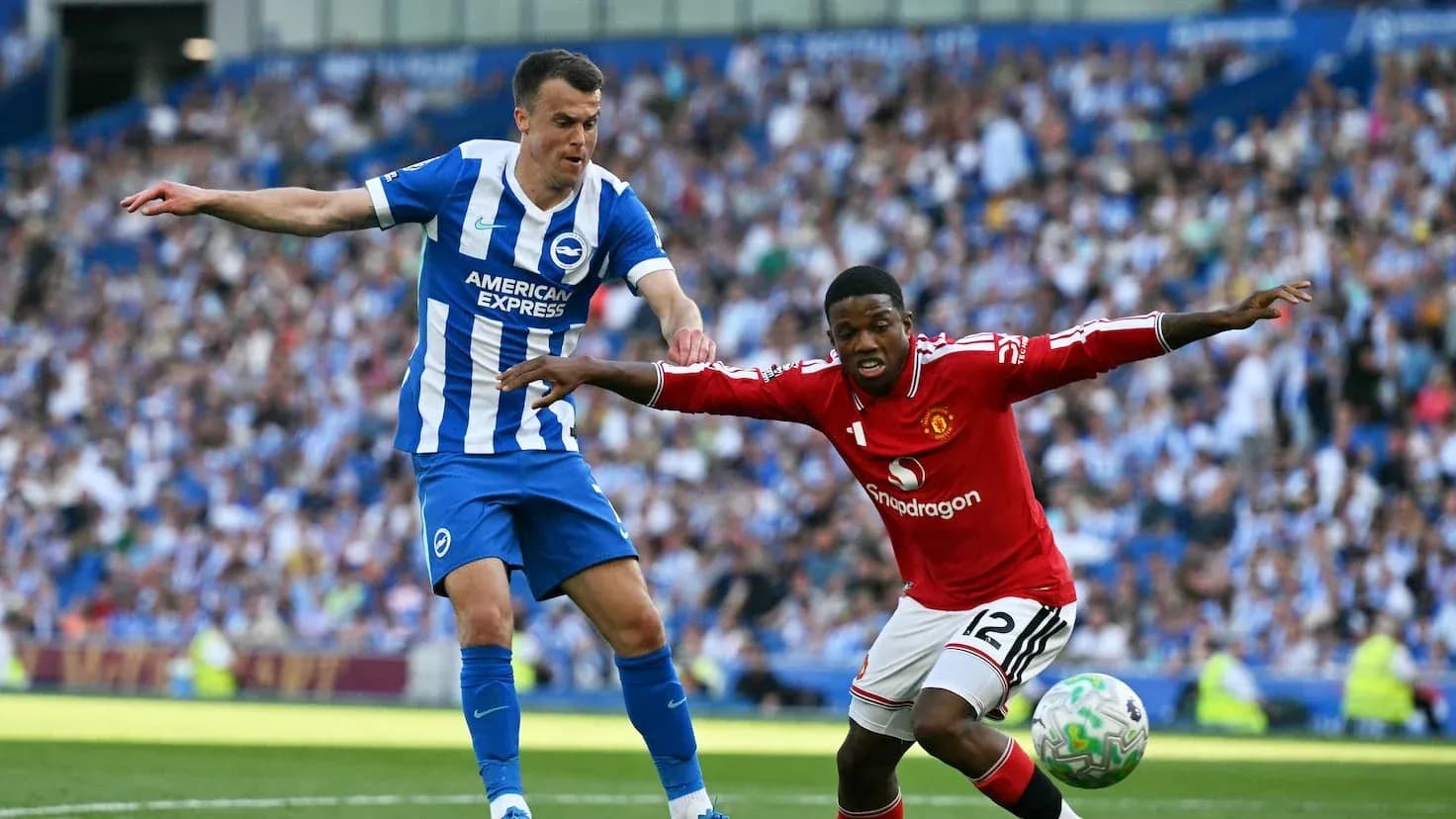
Brighton’s 4-2-3-1 at the Amex Stadium was built to control the ball, and in raw possession terms it worked: 51% of the ball, 463 passes to Manchester United’s 447, and a higher pass accuracy (397 accurate, 86%). But this was a textbook example of sterile dominance against a side whose 4-2-3-1 was far more vertical, efficient and ruthless in the final third, reflected in a 0-3 scoreline and a clear xG gap (0.81 vs 1.82).
Brighton's Setup
Fabian Hurzeler set Brighton up with B. Verbruggen in goal behind a back four of F. Kadioglu, L. Dunk, J. P. van Hecke and M. Wieffer. P. Gross and J. Milner sat as the double pivot, with a narrow three of M. De Cuyper, J. Hinshelwood and D. Gomez supporting D. Welbeck. The structure aimed to progress through short combinations and half-space rotations, and the numbers show they did reach advanced areas: 13 total shots, 9 from inside the box. However, the shot quality and execution were poor. Only 2 of those 13 efforts hit the target, and 5 were blocked, underlining how often Brighton were forced into crowded central lanes where Manchester United’s block could step out and smother.
Defensive Struggles
Defensively, Brighton’s rest defence was repeatedly exposed in transition. With both full-backs encouraged to advance and Gross/Milner tasked with orchestrating, Manchester United’s front four found space whenever possession turned over. B. Verbruggen (Brighton) made 5 saves and still conceded three, which aligns with the visitors’ superior xG and the fact that they generated 7 shots on goal from just 11 attempts. The goals prevented value of 0.32 for Brighton indicates Verbruggen marginally outperformed the post-shot quality he faced, but the volume and clarity of chances created by Manchester United meant that marginal overperformance was nowhere near enough.
Manchester United's Approach
Michael Carrick mirrored the 4-2-3-1 shape but with a very different interpretation. S. Lammens (Manchester United) in goal had a compact back four of N. Mazraoui, H. Maguire, L. Martinez and L. Shaw, shielded by the double pivot of M. Mount and Kobbie Mainoo. Ahead, A. Diallo and P. Dorgu worked as aggressive wide/half-space threats around B. Fernandes in the central role, with B. Mbeumo as the single forward. The visitors were content with 49% possession and prioritised verticality. Their 11 shots produced 7 on target and only 1 blocked effort, illustrating how effectively they created clear sightlines rather than speculative efforts under pressure.
Midfield Battle
The midfield battle was decisive. Brighton’s double pivot circulated well but struggled to break Manchester United’s compact second line. United’s 8 fouls to Brighton’s 11 show a side that managed the game without needing to constantly disrupt with contact. The only booking of the match, Kobbie Mainoo’s yellow card for “Foul” at 45+3', came as he tried to halt a rare Brighton surge just before half-time, but overall United controlled central spaces with intelligent positioning rather than persistent infringements.
Brighton's Attacking Issues
In contrast, Brighton’s attacking structure became increasingly predictable. Despite the introduction of Y. Minteh, S. March, C. Baleba and G. Rutter from the bench, their pattern remained: patient circulation, progression into the final third, then a lack of penetration against a set block. The absence of any corner kicks for Brighton (0, compared to Manchester United’s 3) is telling; they rarely forced emergency defending or last-ditch clearances. Their xG of 0.81 reflects half-chances rather than sustained high-quality opportunities.
Manchester United's Defense
Manchester United’s defensive unit, anchored by Maguire and Martinez, benefited from excellent protection. Lammens (Manchester United) was called into action for only 2 saves; the goals prevented figure of 0.32 for United suggests he slightly outperformed the quality of the shots Brighton did manage to place on target, but more importantly, the structure in front of him restricted Brighton to low-danger efforts. The visitors’ back line was also disciplined in its stepping behaviour, contributing to the 5 blocked Brighton shots by closing down at the edge of the box without overcommitting.
United's Transition Play
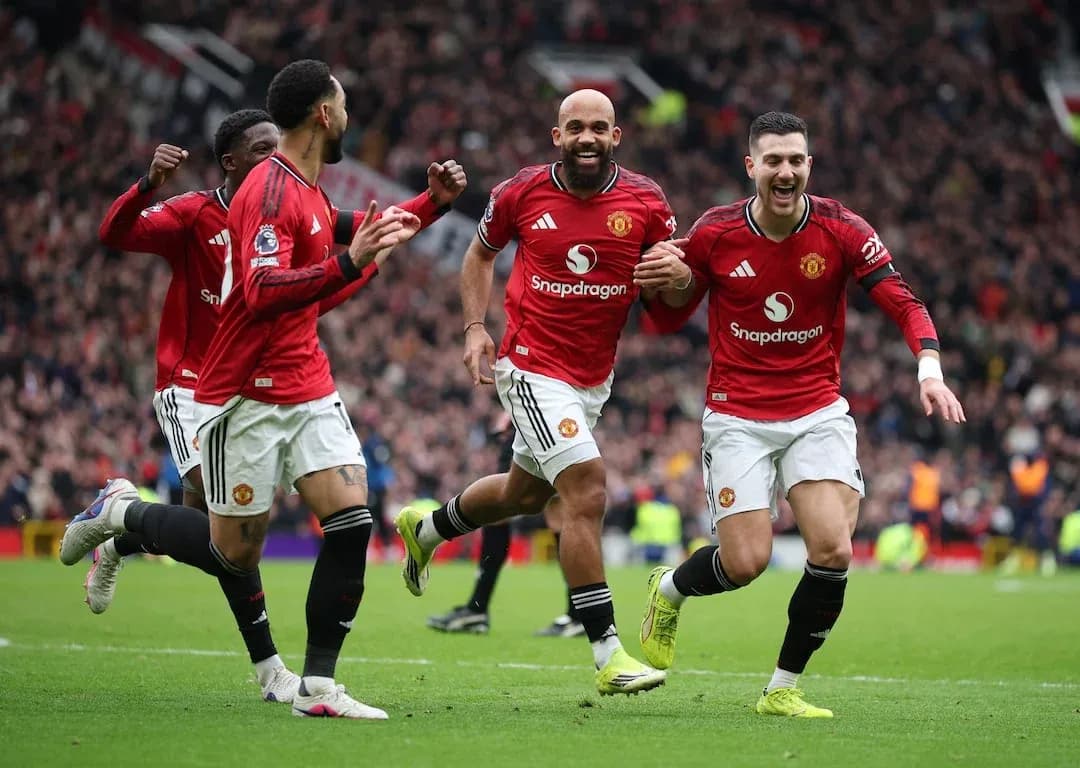
In transition, United’s front four were decisive. The 3 goals from 7 shots on target, backed by 1.82 xG, show a team that consistently turned good positions into high-quality chances. Their 3 corner kicks and the lack of offsides underline how they timed runs well and attacked space without reckless risk. Where Brighton’s 4-2-3-1 stretched itself to maintain possession, United’s version compressed defensively and exploded forward, using the technical security of Mount and Mainoo to launch quick, accurate vertical passes.
Statistical Summary
Statistically, the match underlines the tactical story. Brighton led in possession (51%), passes (463 vs 447) and pass accuracy (86% vs 83%), but trailed badly in attacking efficiency: 2 shots on goal versus 7, 0.81 xG versus 1.82, and no corners at all. Defensively, Brighton’s 11 fouls to United’s 8 and the single yellow card against Manchester United suggest the hosts were more often chasing and reacting. Both goalkeepers slightly outperformed their post-shot xG, each with 0.32 goals prevented, but the volume and quality of United’s chances meant B. Verbruggen (Brighton) was overwhelmed, while S. Lammens (Manchester United) enjoyed a relatively controlled afternoon.
Overall, Brighton’s possession-oriented 4-2-3-1 lacked penetration and protection, whereas Manchester United’s more vertical, compact interpretation of the same base shape translated directly into superior chance creation, clinical finishing and a deserved 0-3 away win at Amex Stadium.