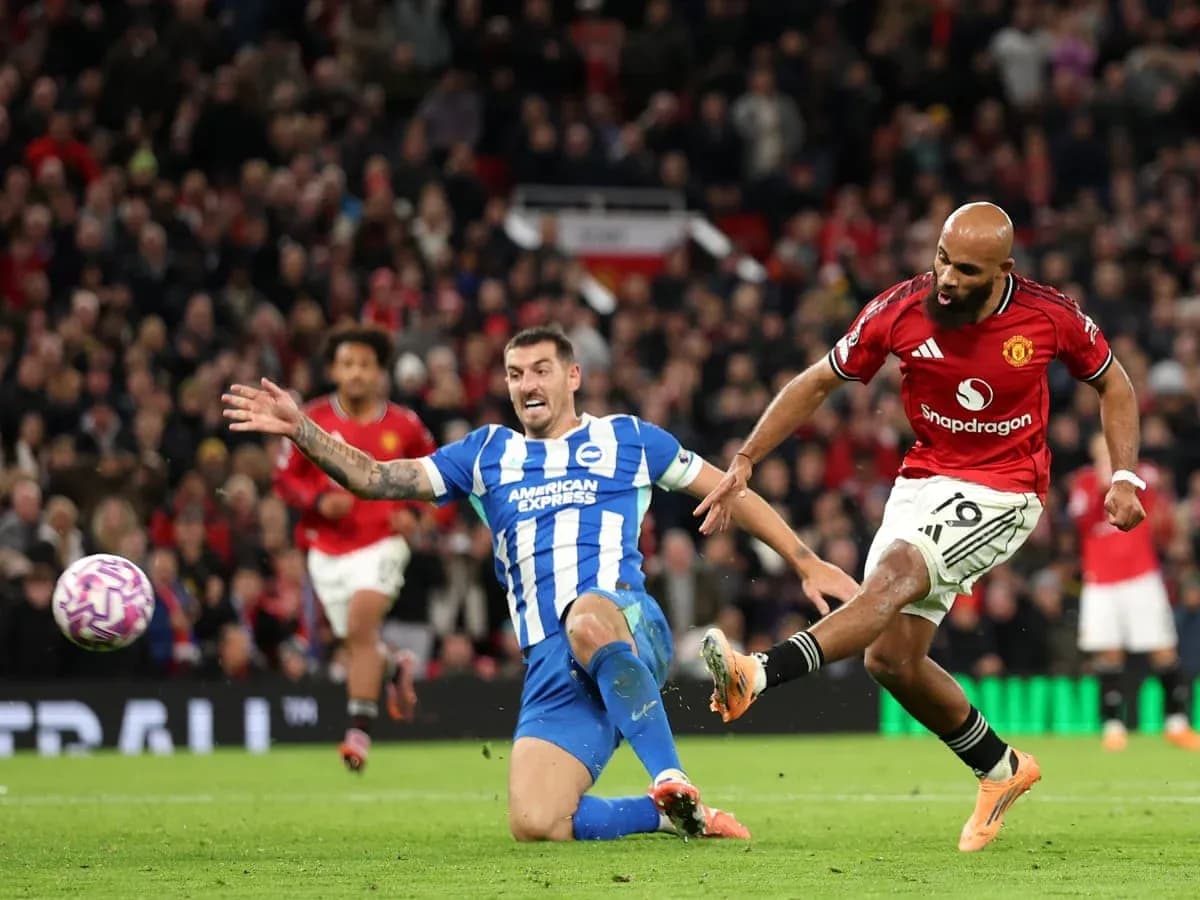
Brighton vs Manchester United: Premier League Season Finale Analysis
The Amex Stadium closed its Premier League season under grey skies and a red tide. Following this result, Brighton’s 3–0 home defeat to Manchester United sealed two very different stories: Brighton ending a promising campaign in 8th with 53 points and a goal difference of 6, United confirming a 3rd‑place finish on 71 points and a goal difference of 19.
Both sides lined up in mirrored 4‑2‑3‑1 shapes, but the symmetry on paper quickly gave way to United’s superiority in structure and execution. Brighton, who across the season at home averaged 1.6 goals for and 1.1 against, never found the fluency that had underpinned their strong Amex record of 9 wins, 6 draws and just 4 defeats. United, by contrast, arrived as one of the league’s most balanced outfits: overall they scored 69 and conceded 50, with their attack travelling well at 1.6 away goals on their travels.
I. The Big Picture – Season DNA meeting on the final day
Brighton’s season-long identity has been built on controlled risk: 52 goals in total, 46 conceded, a side comfortable with open games but usually able to tilt them their way, especially at home. The reliance on a single reference point in attack, Daniel Welbeck, has been a recurring theme. Welbeck’s 13 league goals and 1 assist came from 37 appearances, often as the lone spearhead in a possession-heavy system.
United’s campaign, by contrast, has been powered by a multi-headed threat. Bryan Mbeumo’s 11 goals and 3 assists, Matheus Cunha’s 10 goals and 2 assists, and the double‑digit contribution of Benjamin Šeško (11 goals) have been layered on top of a creative superstructure orchestrated by Bruno Fernandes. Across the season, Fernandes produced 9 goals and a staggering 21 assists, with 137 key passes and 4 penalties scored from 6 attempts.
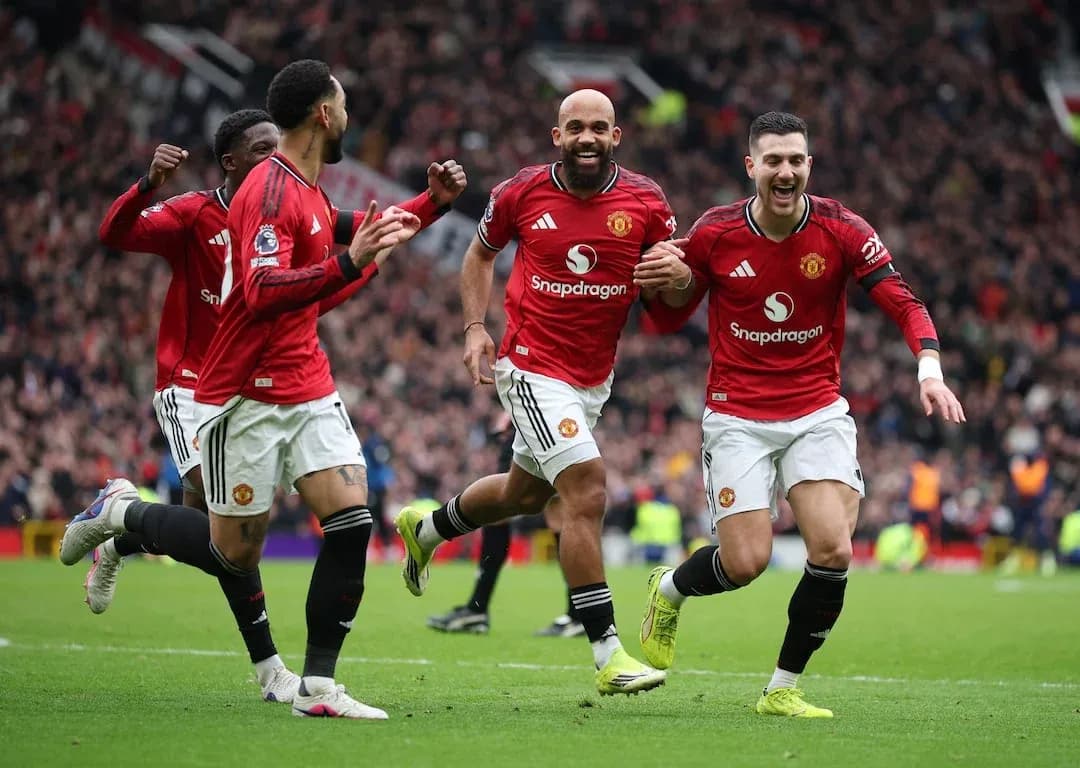
At Amex, the full-time scoreline – 0–3 – echoed that gulf in final-third punch. Brighton’s overall average of 1.4 goals per game never materialised; United hit their away attacking benchmark almost exactly, matching their 1.6 away average with three ruthlessly taken strikes.
II. Tactical Voids – Absences and discipline shaping the contest
Both managers were forced into significant reconfiguration. Fabian Hurzeler had to live without Kaoru Mitoma, A. Webster and S. Tzimas, stripping Brighton of a key ball-carrier, a first-choice centre-back and depth. The result was a back four of M. Wieffer, J. P. van Hecke, Lewis Dunk and F. Kadioglu, in front of which J. Milner and P. Gross formed a double pivot.
Mitoma’s absence was particularly damaging. Brighton’s front four of D. Gomez, J. Hinshelwood, M. De Cuyper and Welbeck lacked a natural wide dribbler capable of stretching United’s block. Welbeck, already a volume shooter rather than an all-phase creator (46 shots, 28 on target, 487 passes across the season), found himself isolated between Harry Maguire and Lisandro Martinez.
On the other side, Michael Carrick was without Casemiro, B. Šeško and M. de Ligt. Losing Casemiro – one of the league’s most combative midfielders with 90 tackles, 27 successful blocks and 10 yellow cards – could have opened a chasm in front of the United defence. Instead, Kobbie Mainoo and Mason Mount formed a mobile, technically secure axis that pressed Brighton’s build-up rather than simply screening.
Disciplinary patterns also fed into the tactical tempo. Heading into this game, Brighton’s yellow-card peak came between 46–60 minutes at 27.91%, while United’s was also heaviest just after half-time at 21.88%, with a late-game spike of 20.31% between 76–90. The second half therefore always threatened to become fractured, but United’s early 2–0 half-time advantage (0–2 at the break) allowed them to dictate when and where the game became scrappy.
III. Key Matchups – Hunter vs Shield, Engine Room vs Enforcer
Hunter vs Shield tilted decisively United’s way. Welbeck entered as Brighton’s leading scorer, but his season also carried a warning sign: from the spot he scored 1 penalty but missed 2, a reminder that Brighton’s margin for error in big moments was thin. Against a United defence that, overall, conceded 1.3 goals per game and just 1.4 on their travels, he needed high-quality service.
That service never flowed. Dunk, one of the league’s most reliable distributors (2,484 passes at 92% accuracy) and a defensive anchor with 27 successful blocks and 30 interceptions, found himself repeatedly forced into horizontal circulation rather than vertical progression. Mbeumo, pressing from the front, and Fernandes, stepping out from the No.10 line, disrupted Brighton’s attempts to feed Welbeck early.
At the other end, Mbeumo embodied the Hunter role. With 59 shots, 32 on target and 47 key passes across the season, he constantly threatened the space behind Brighton’s full-backs. His duel volume (265 contests, 86 won) and 28 fouls drawn spoke to his ability to pin defenders back, allowing United’s full-backs and Mount to advance.
The Engine Room battle was even more decisive. Without Casemiro, United leaned on Mainoo’s calm and Mount’s intensity. They faced a Brighton pivot of Milner and Gross – experienced, technically clean, but short on legs against United’s surges. Fernandes roamed in front of them, constantly finding pockets between the lines. His season numbers – 1,994 passes with 137 key passes and 21 assists – foreshadowed exactly the pattern that unfolded: Brighton’s midfield line repeatedly collapsed onto him, opening half-spaces for A. Diallo and P. Dorgu to exploit.
Luke Shaw, one of the league’s most combative full-backs with 74 tackles, 45 interceptions and 9 yellow cards, added another layer. His aggression on the left pinned Brighton’s right side, with M. Wieffer often trapped between stepping out to Diallo and covering the channel run of Mbeumo.
IV. Statistical Prognosis – Why 3–0 felt logical
Following this result, the numbers across the season frame United’s win as the natural conclusion of their structural superiority. United’s overall scoring rate of 1.8 goals per match and their away average of 1.6 met a Brighton defence that, overall, conceded 1.2 per game and 1.1 at home. Over 90 minutes, United’s layered attack – Fernandes’ creativity, Mbeumo’s movement, Cunha’s all-round threat from the bench, and Diallo’s runs – simply generated more and better chances than Brighton’s Welbeck-centric approach.
Brighton’s campaign remains a success story: 14 wins, 11 draws, 13 defeats and a positive goal difference underline a side that belongs in the top half and has earned a shot at European qualification. But this final-day defeat laid bare the gap to the league’s elite. United, with 20 wins, 11 draws, 7 defeats and a goal difference of 19, leave Amex not just with three points but with a blueprint: a 4‑2‑3‑1 that can flex between control and verticality, anchored by an Engine Room that, even without Casemiro, overpowered one of the division’s more intricate midfields.