Bologna 3–3 Inter: A Thrilling Serie A Finale
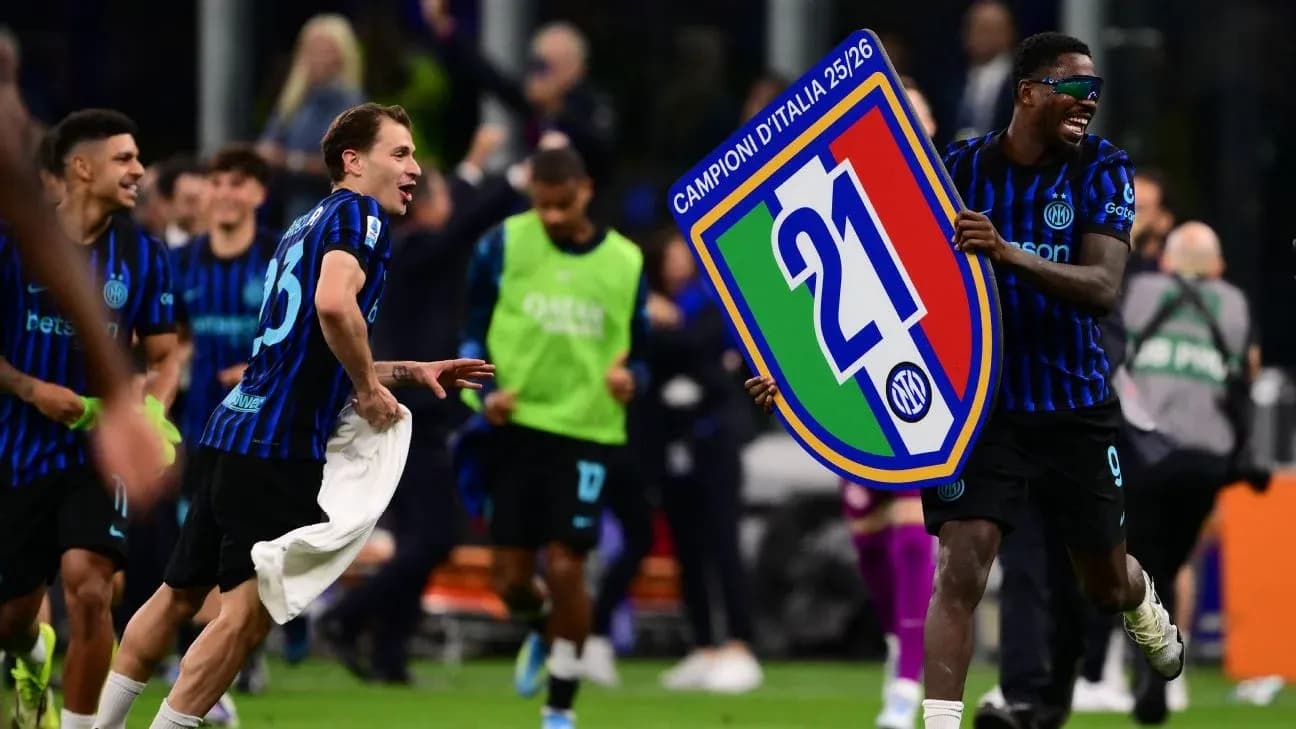
Stadio Renato Dall’Ara staged a finale worthy of Serie A’s 38th round: Bologna 3–3 Inter, a match that distilled an entire campaign’s identity into ninety frantic minutes under Kevin Bonacina’s watch.
I. The Big Picture – Clash of Profiles
Following this result, the table tells a clear story of contrasting structures. Inter close the season as champions in first place with 87 points and a towering overall goal difference of 54 (89 scored, 35 conceded). Their attacking profile is ruthless: overall they average 2.3 goals per game, with 2.6 at home and 2.1 on their travels, while conceding just 0.9 overall.
Bologna, finishing eighth with 56 points and an overall goal difference of 3 (49 for, 46 against), have been a side of streaks and tactical adaptation. Overall they average 1.3 goals for and 1.2 against, but the split is revealing: at home they score 1.0 and concede 1.2; away they are far more incisive with 1.6 for and 1.2 against. This finale, however, saw Vincenzo Italiano lean into aggression in front of their own crowd, choosing a 4-3-3 that pushed against that conservative home trend.
Cristian Chivu stayed loyal to Inter’s season-long blueprint: a 3-5-2 that has been used in all 38 league matches. The system again revolved around territorial control, width from the wing-backs, and the vertical punch of Lautaro Martínez up front.
II. Tactical Voids – Absences and Discipline
Both sides came into this fixture carrying notable absences that bent the tactical script.
Bologna were without K. Bonifazi, N. Cambiaghi, N. Casale, R. Orsolini and M. Vitik. The loss of Orsolini, their top league scorer with 10 goals and a key ball-carrier (67 dribble attempts, 32 successful), stripped Italiano of his most proven final-third difference-maker. Without him, the 4-3-3 front line of F. Bernardeschi, S. Castro and J. Rowe had to redistribute creative burden, with Bernardeschi drifting inside to approximate Orsolini’s role between the lines.
At the back, the absence of Bonifazi and Vitik increased the onus on Jhon Lucumí and E. Fauske Helland to anchor the defensive line, while J. Miranda and L. De Silvestri provided width but also had to respect Inter’s wing-backs.
Inter’s list of missing players subtly reshaped their spine. M. Akanji, D. Dumfries and M. Thuram were all rested, while H. Çalhanoğlu was unavailable through lacking match fitness. The absence of Thuram removed Inter’s most explosive runner in behind and a 13-goal, 6-assist presence who thrives on stretching defenses. Çalhanoğlu, with 9 goals, 4 assists and a 90% passing accuracy, is the metronome and set-piece specialist; without him, P. Zielinski and P. Sucic had to share creative duties in central zones, while N. Barella’s role expanded from connector to primary engine.
Disciplinary tendencies also framed the contest’s rhythm. Bologna’s yellow-card distribution shows a pronounced late-game spike: 26.87% of their cautions arrive between 61-75 minutes and 25.37% between 76-90, a pattern of rising aggression and fatigue as matches stretch. Inter, too, experience their own late surge in bookings, with 31.25% of yellows between 76-90 minutes. This shared profile helps explain how a game that began structured could unravel into an end-to-end, card-prone finale as legs and concentration waned.
III. Key Matchups – Hunter vs Shield, Engine Room
Hunter vs Shield was always going to be defined by Lautaro Martínez against Bologna’s defensive structure. Lautaro’s season – 17 league goals and 6 assists – is backed by volume and quality: 69 shots, 39 on target, and 37 key passes. His duel profile (253 contests, 115 won) underlines how often he becomes the focal point of direct play.
Bologna’s overall defensive record – 46 conceded in 38, 1.2 per game – is respectable, but at home they have allowed 23 goals in 19 matches, also 1.2 on average, and only 7 clean sheets in front of their own fans. Against a striker of Lautaro’s movement and Inter’s habit of flooding the half-spaces with midfield runners, Lucumí and Fauske Helland were always going to be stretched laterally. The 3-3 scoreline reflects that tension: Bologna’s back four could not fully contain Inter’s rotations, yet they disrupted enough to force a share of the spoils.
On the other side, Bologna’s attacking trident faced one of the league’s most miserly defenses. Inter have conceded just 35 goals overall – 0.8 at home and 1.0 on their travels – and posted 18 clean sheets (10 of those away). The back three of Y. Bisseck, Stefan de Vrij and Carlos Augusto is built for aerial dominance and positional discipline, but the 4-3-3 shape allowed Bologna to attack the wide channels, pulling Carlos Augusto into repeated 1v1s against Rowe and forcing Bisseck to defend space rather than just his zone.
In the engine room, the duel between Bologna’s R. Freuler, L. Ferguson and T. Pobega and Inter’s Barella–Sucic–Zielinski triangle defined the match’s tempo. Barella, with 8 assists and 72 key passes this season, is Inter’s tempo accelerator. His ability to combine high-volume passing (1761 total) with ball-winning (53 tackles) meant that Bologna’s midfield had to work relentlessly just to break even. Freuler’s screening and Ferguson’s vertical running were crucial in allowing Bologna to escape Inter’s press and feed their front line.
The flanks were another decisive theatre. F. Dimarco, Serie A’s top assist provider with 16, is more playmaker than traditional wing-back. His 96 key passes and 1454 total passes at 83% accuracy show how Inter use him as a left-sided quarterback. Against De Silvestri and Bernardeschi, Dimarco’s constant overlaps and early crosses forced Bologna’s right side to defend facing their own goal, a dangerous posture that contributed to the chaotic nature of the six-goal draw.
IV. Statistical Prognosis – xG Shape and Defensive Solids
Even without explicit xG data, the season-long numbers sketch the expected shot-quality landscape. Heading into this game, Inter’s away average of 2.1 goals for and 1.0 against suggested they would generate the higher xG, leveraging sustained possession, wing overloads and Lautaro’s finishing. Their 10 away clean sheets underline how often they choke off low-quality chances and force opponents into speculative efforts.
Bologna, by contrast, tend to live on fine margins. At home they score 1.0 and concede 1.2, with 8 home matches failing to score and 7 home clean sheets. Their profile is one of controlled risk, punctuated by bursts of intensity – particularly in the final half-hour, where their yellow-card spikes hint at a willingness to gamble in duels and press higher.
In this match, that volatility produced a wild equilibrium rather than a controlled Inter win. The 3-3 scoreline reads like a game where Bologna’s front three, unburdened by Orsolini’s shadow, attacked with freedom, while Inter’s rotated spine (without Çalhanoğlu and Thuram) lost just enough control to turn superiority on paper into shared points on grass.
From a tactical lens, the draw feels like Inter slightly underperforming their underlying attacking potential and Bologna slightly overperforming theirs, riding home momentum and a brave 4-3-3 to punch above their usual home averages. If this were a knockout tie, the xG-informed prognosis would still tilt toward Inter over two legs, thanks to their defensive solidity and Lautaro’s sustained output. But as a one-off Serie A finale, this was the perfect narrative compromise: the champions exposed just enough to remind everyone they are human, and Bologna expansive enough to show why an eighth-place side with an overall goal difference of 3 can still trade blows with the best.