Atletico Madrid Dominates Real Sociedad in La Liga Clash
Under the San Sebastián lights at Reale Arena, this was billed as a test of identities as much as a La Liga checkpoint. Real Sociedad, 12th in the table with 7 points and a goal difference of -5 after 6 matches (6 scored, 11 conceded overall), hosted an Atletico Madrid side already shaping up as a top‑four contender, 5th with 10 points and a goal difference of 4 from 5 games (10 scored, 6 conceded overall). The narrative promised contrast: a Real side still feeling its way through a new blend of youth and technique, against an Atletico outfit increasingly comfortable morphing between systems without losing its edge.
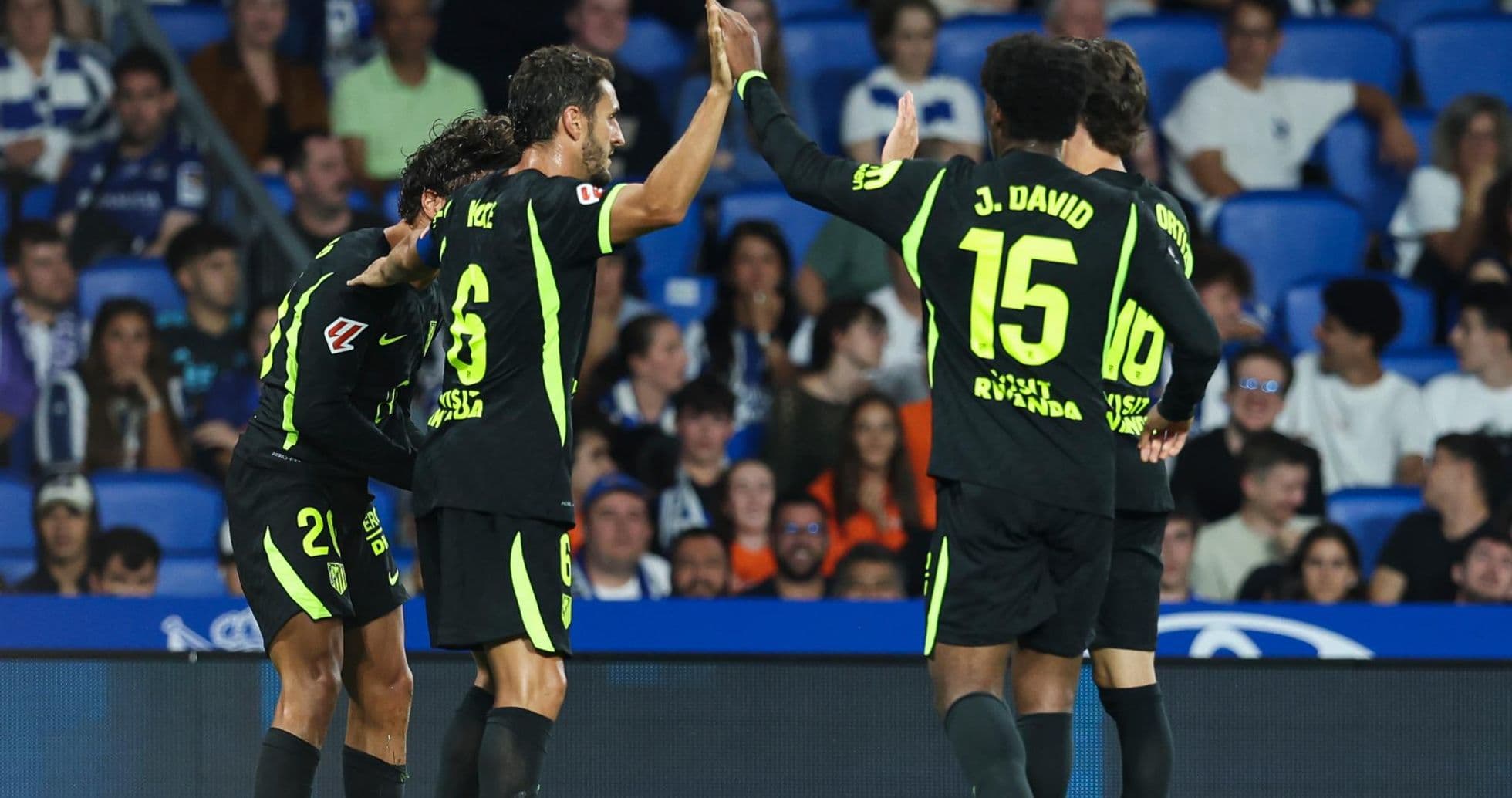
The final scoreline – Real Sociedad 0, Atletico Madrid 3 – underlined the gulf in both execution and structure.
I. The Big Picture: Structures and Season DNA
Pellegrino Matarazzo stayed loyal to Real Sociedad’s emerging template, rolling out a 4-2-3-1 that has been his most-used shape this season (4 league matches in that system). Álex Remiro anchored a back four of Jon Mikel Aramburu, Luken Beitia, M. Sarr and Sergio Gómez. In front, a double pivot of Yangel Herrera and Carlos Soler tried to knit defence to attack, with Barrenetxea, Luka Sučić and Gonçalo Guedes supporting Mikel Oyarzabal as the lone forward.
The shape looked coherent on paper but sat on fragile foundations. Heading into this game, Real Sociedad had scored just 2 goals at home in 3 league matches, averaging 0.7 goals per home game, while conceding 4 at home at an average of 1.3. Overall, they had managed only 1 clean sheet in 6 league fixtures and had failed to score 3 times in total. The 0-3 full-time score here grimly echoed their heaviest home defeat of the campaign, also 0-3.
Diego Simeone, meanwhile, leaned into flexibility. Atletico’s season had been built primarily on a 4-4-2 (3 matches) but here he trusted a 3-4-2-1, one of the newer notes in his tactical repertoire. Jan Oblak was protected by a back three of Marc Pubill, Cristian Romero and Dávid Hancko. Across midfield, Giuliano Simeone and Álex Grimaldo worked as aggressive wing-backs, flanking Marcos Llorente and Morten Hjulmand centrally. Ahead of them, Lee Kang-In and Álex Baena floated between the lines behind Ademola Lookman.
Atletico arrived with a far more stable statistical profile: 10 goals scored and 6 conceded overall in 5 league matches, averaging 2.0 goals both at home and on their travels, while allowing just 1.2 per game in total. They had already kept 2 clean sheets, one home and one away, and failed to score only once. This 3-0 win simply extended an attacking pattern that was already clearly formed.
II. Tactical Voids: Absences and Discipline
Real Sociedad came into this match with key absences that subtly reshaped their defensive personality. Jon Martín was suspended after a red card, removing a young but increasingly important defensive option. A. Odriozola and I. Zubeldia were also unavailable through injury, further thinning the back-line rotation and forcing reliance on Beitia and Sarr.
Those losses mattered in a side already walking a disciplinary tightrope. Yangel Herrera and Jon Mikel Aramburu sit near the top of the league’s yellow-card charts, each on 3 yellows. Herrera’s season profile – 51 duels, 9 fouls drawn, 8 fouls committed – reflects an aggressive enforcer who can tilt matches physically but also expose his team to transitions when cautioned. Aramburu’s 24 fouls committed across 6 appearances underline how often Real’s right side is forced into recovery defending.
Atletico were not without their own absentees. J. Alvarez, P. Barrios and A. Sorloth all missed out with muscle injuries, removing depth in defence, midfield and attack. Yet Simeone’s squad depth allowed him to compensate: Koke, Jonathan David, J. Cardoso and Robin Le Normand were all available on the bench, offering in-game solutions if control wavered.
Disciplinarily, Atletico’s season has been more controlled, though not spotless. Their yellow cards are spread relatively evenly across match phases, with a slight concentration between 31-60 minutes (44.44% of their yellows), and they have already seen one red card in the 76-90 minute window. That late-game edge is a double-edged sword: intensity that can suffocate opponents, but also the risk of finishing short-handed.
III. Key Matchups: Hunter vs Shield, Engine Room Battles
The “Hunter vs Shield” duel was epitomised by Álex Baena and Giuliano Simeone against a Real defence missing its natural rotation pieces. Baena arrived as one of La Liga’s most productive midfielders: 3 goals and 1 assist in 5 appearances, with 8 total shots (4 on target) and 10 key passes at an 84% passing accuracy. His ability to receive between lines and thread runners was a direct threat to a Real back four that has conceded 11 goals overall at an average of 1.8 per match.
Giuliano Simeone added a different dimension. With 2 goals and 1 assist in 5 league games and a huge volume of duels (52, winning 27), he is less a pure finisher and more a chaos generator. His 11 tackles and 2 blocks show a forward willing to defend first line, ideal in a 3-4-2-1 that compresses space around the ball. Against a Real side that has failed to score in half of its league fixtures overall, that front-line pressure was always likely to tilt territory Atletico’s way.
For Real, the attacking spark was meant to come from Luka Sučić and Mikel Oyarzabal. Sučić, with 2 league goals, 13 shots (5 on target) and 5 key passes at an 89% pass completion, has been their most balanced threat between creation and finishing. Oyarzabal, despite 0 goals but 2 assists, brings gravity: 6 shots, 4 on target, 6 key passes and 8 fouls drawn suggest a player who can at least pin Atletico’s back line and win set-pieces.
But their influence was blunted by Atletico’s “Shield”: Dávid Hancko. The Slovak defender has been one of the league’s standout centre-backs – 361 passes at 90% accuracy, 5 tackles, 3 successful blocks and 8 interceptions. He had already recorded 2 assists this season, hinting at his role in starting attacks as much as ending them. Against Real’s lone striker and narrow trio of attacking midfielders, Hancko’s reading of the game and calm distribution allowed Atletico to step out of pressure and turn defence into controlled possession.
The engine-room duel between Hjulmand/Llorente and Herrera/Soler was equally decisive. Herrera’s season numbers – 9 tackles, 1 block, 1 interception and 226 passes at 87% accuracy – show a player who can both break and build. But he and Soler were outnumbered horizontally by Atletico’s four-man line, especially when Grimaldo and Giuliano Simeone pushed high, forcing Real’s wingers into deeper defensive roles and leaving the double pivot exposed.
IV. Statistical Prognosis and Tactical Verdict
From a statistical perspective, the outcome aligned with the underlying trends. Atletico arrived averaging 2.0 goals per game both home and away, while Real were scoring just 1.0 overall and 0.7 at home. Defensively, Real’s 1.8 goals conceded per match overall, combined with only 1 clean sheet, suggested that a multi-goal concession against a high-functioning attack was more probability than surprise.
Atletico’s defensive profile – 1.2 goals conceded per match overall, 1.3 on their travels – pointed to a side that can occasionally be breached but rarely collapses. With Oblak behind a compact three and Hancko in form, the clean sheet at Reale Arena was an extension of a structure that had already delivered 2 shutouts this season.
Tactically, Simeone’s 3-4-2-1 proved the perfect mirror to Real’s 4-2-3-1. Atletico consistently created overloads on the flanks, especially through Grimaldo and Lee Kang-In, dragging Aramburu and Sergio Gómez into wide duels and opening lanes for Baena and Lookman to attack the half-spaces. Real, by contrast, struggled to progress centrally; their reliance on Herrera to both shield and circulate left them short of verticality when pressed.
Following this result, the trajectories diverge further. Atletico’s blend of structural solidity, flexible shapes and high-end creativity from Baena and company looks sustainable, especially with a penalty record that remains perfect this season (1 taken, 1 scored, 100.00%, no misses). Real Sociedad, however, must confront a worrying pattern: a negative goal difference built on too few goals for and too many conceded, a disciplinary core that walks the line, and a creative burden that still rests too heavily on Sučić and Oyarzabal.
The scoreline at Reale Arena was emphatic, but it was not an anomaly. It was the logical outcome of two squads at different stages of their tactical evolution – one refining a modernised version of its old steel, the other still searching for the right balance between youthful ambition and defensive stability.