Andoni Iraola's Challenge at Liverpool: Balancing Possession and Energy
Andoni Iraola didn’t need long to discover what every new Liverpool manager learns in time: this squad carries the fingerprints of its predecessors.
His Premier League debut as Liverpool coach ended in a 2-2 draw with Newcastle, a result that flattered the performance. Liverpool were overrun, ragged without the ball, and repeatedly exposed in transition. For a coach who once needed 10 games to taste his first league win with Bournemouth, this was a reminder that the rebuild at Anfield will not be a quick job.
Caught Between Klopp and Slot
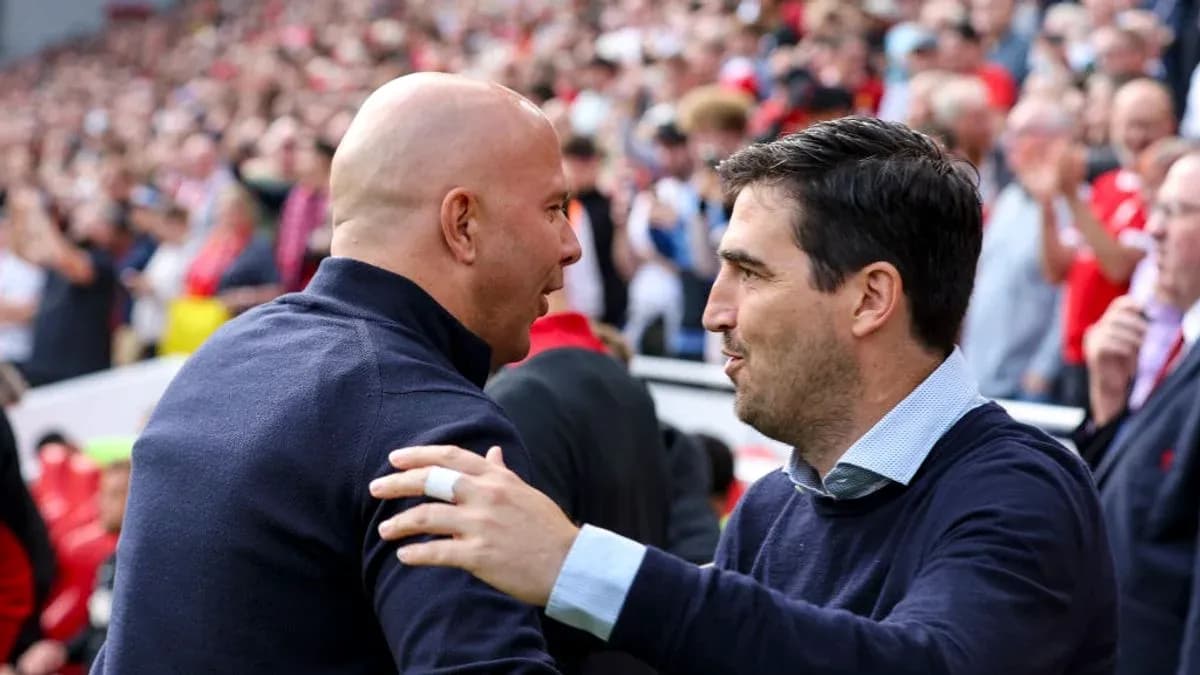
The most revealing moment of Iraola’s opening weekend didn’t come on the touchline. It came in conversation with Steven Gerrard.
Interviewed by the Liverpool legend for TNT Sports, Iraola was asked the obvious question: is he closer in style to Jurgen Klopp or Arne Slot?
“Probably closer to Jurgen, probably, I would say. But I loved a lot of the things that the team had with Arne also,” he replied.
That “probably” hides a lot of tension. Iraola wants the game to move quickly, vertically, with purpose. Klopp’s Liverpool, at their peak, lived on those transitions. Slot’s brief spell, by contrast, pushed the team towards a more patient, possession-heavy structure.
And that’s where Iraola sees the problem.
“There has to be a balance. Things are going to evolve differently because the first game we had 60, 61 percent of possession straight away,” he said of the draw with Newcastle.
Then came the line that should make Liverpool sit up.
“Naturally, because the natural tendency of the players is towards that side, and I need to adapt also towards that side. ... But we also need to keep being vertical, keep attacking, keep taking sometimes some risks.”
Natural tendency. For a coach trying to reshape a team, that’s both a diagnosis and a warning.
Possession Without Protection
That tendency was written all over Liverpool’s structure against Newcastle.
Dominik Szoboszlai, Ryan Gravenberch, Jeremie Frimpong and Milos Kerkez all drifted high and stayed there, happy to operate around the attacking third when Liverpool had the ball. Under Slot, that was the point: push bodies up, circulate, probe, and slowly grind down a low block.
Iraola doesn’t want slow strangulation. He wants speed. Directness. A team that can slice through opponents rather than just surround them.
But when too many players park themselves high, the cost is obvious. Every turnover becomes a launchpad for the opposition. Every sloppy pass leaves acres of space behind the midfield.
That is exactly what Newcastle exploited. With a 35-year-old Virgil van Dijk marshalling the back line and Jeremy Jacquet still learning the demands of top-level defending in open grass, Liverpool’s rest defence looked alarmingly exposed. Both goals conceded had the same theme: big spaces, stretched distances, and defenders asked to solve problems they should never have been left with.
Iraola isn’t just fighting for a new style. He’s stripping away habits ingrained under Slot while trying to preserve the technical control those players now naturally lean towards. That is a delicate operation, and right now the scars are visible.
Energy, or Lack of It
None of this arrives out of the blue. Iraola had already fired an early warning shot during the club’s American preseason tour, questioning the side’s “energy” and hinting at dissatisfaction with what he inherited.
After a preseason match against Leeds in early August, he was even more blunt about the physical state of his squad.
“I think we played really good [in the] first half, especially the first 30 minutes, but right now probably we don't have much more in terms of the level required to play like this,” he said. “Then they were much better in the second half.
“The problem is right now probably they don't have the energy for 90 minutes and they start to get tired. It will take time with them, we need more training with them.”
Those comments look even sharper in the light of the Newcastle game. A team that wants to be aggressive, vertical and brave with its pressing cannot run out of legs after half an hour. Yet that is exactly the picture Iraola painted – and the one Liverpool hinted at on opening day.
Two Big Problems, One Big Job
Strip it down and Iraola is wrestling with two major Slot-era legacies.
First, the possession instinct. This group now naturally leans towards controlling the ball, taking extra touches, and positioning themselves to receive rather than to hunt. Iraola doesn’t want to kill that, but he needs to bend it towards his own idea: quicker circulation, sharper forward runs, more willingness to drive at goal rather than just build around it.
Second, the physical drop-off. If the coach wants Liverpool to play with a relentless edge, the current fitness levels don’t match the vision. His own words make that clear. The team can start fast, but it cannot yet sustain the tempo he demands.
Those issues collided against Newcastle. Too many players ahead of the ball. Not enough protection behind it. Not enough energy to repeatedly reset and go again.
The result? A chaotic draw that felt less like the start of a new era and more like a team stuck between two identities.
Iraola has made no attempt to hide the scale of the task. He has to rewire habits, rebuild fitness, and do it all under the glare of a fanbase used to seeing a Liverpool side that either overwhelms opponents or, at the very least, outruns them.
He insists there must be balance. The numbers – 60, 61 percent possession in his first league game – show where the squad’s instincts lie. His words, and the way his defence was left exposed, show where he wants to drag them.
The question now is not whether Liverpool will improve. They will. The question is how long Iraola is willing to let those “natural tendencies” dictate the story before his own version of Liverpool finally takes over.