World Cup Showdown: Argentina vs Egypt and Colombia vs Switzerland
The World Cup has hit the point of no return. Every whistle, every mistake, every touch now feels like it might be etched into history.
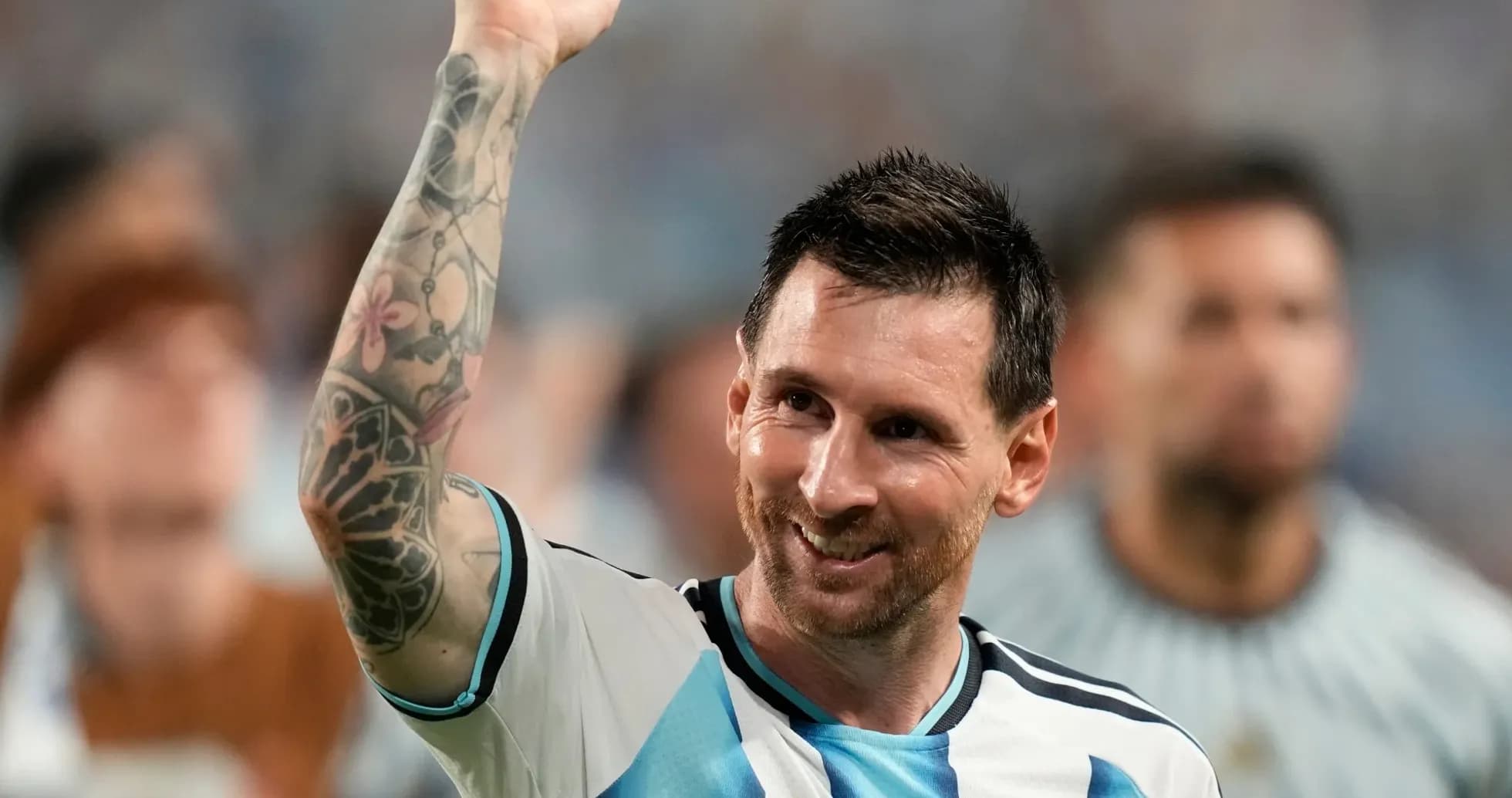
On Tuesday, the spotlight stretches from Atlanta to Vancouver. Argentina, the reigning champions, chase another chapter in their story against Egypt, while Switzerland and Colombia scrap for their own place in the quarterfinals. Around them, the tournament keeps spinning out drama: Cristiano Ronaldo’s last World Cup, the United States’ home heartbreak, political defiance from Egypt’s touchline, and Kylian Mbappe confronting racism head-on.
This is where the World Cup stops being a festival and turns into a reckoning.
Argentina, Egypt and the weight of expectation
Atlanta Stadium will feel heavy at noon local time.
Argentina arrive as world champions and overwhelming favourites, a team used to carrying the burden of a nation and now, once again, the numbers are with them. The Opta supercomputer ran 25,000 simulations and handed Lionel Scaloni’s side a 69.1 percent chance of winning inside 90 minutes.
History backs that up. Argentina have long dominated African opposition at World Cups. The last time they met Egypt, in a 2008 friendly in Cairo, they walked away 2-0 winners thanks to Sergio Aguero and Nicolas Burdisso. Lionel Messi did not even play that night.
But this is not a testimonial for the holders. Egypt have not come this far to play the supporting role in someone else’s coronation. The same data that leans so hard towards Argentina still leaves room for chaos: a 12.3 percent chance of a shock win for the Pharaohs and an 18.5 percent likelihood of a draw, which would drag the tie into extra time.
For Egypt, this is the biggest match in their footballing history. For Argentina, it is another must-win in a tournament where anything less than perfection feels like failure.
Colombia edge the numbers, Switzerland chase the upset
Thousands of miles away at BC Place in Vancouver, Switzerland and Colombia face a very different kind of pressure.
These two have crossed paths mostly in the shadows of international friendlies. Their last meeting came in March 2007, when Colombia claimed a 3-1 win, with Edixon Perea, Jhon Viafara and Andres Chitiva scoring for Los Cafeteros. That result belongs to another era, but it underlines a familiar theme: Colombia often carry a punch when it matters.
The Opta model tilts slightly their way again. Across 25,000 simulations, Colombia were given a 41.9 percent chance of victory in normal time. Switzerland sit at 28.2 percent, with 29.9 percent of scenarios ending level.
Those are tight margins, the kind of probabilities that hint at a game decided by a single mistake or a single moment of brilliance. For Colombia, it is an opportunity to lean into their attacking instincts. For Switzerland, it is another chance to prove that their reputation as stubborn tournament operators is well earned.
Ronaldo’s last World Cup bow
Away from the tactical boards and prediction models, one story has already closed.
Cristiano Ronaldo has played his final World Cup match.
The 41-year-old forward, who has carried Portugal across six editions of the tournament, walked off the World Cup stage for the last time after their elimination. His career at this level has been one long argument with history, and this tournament finally brought that argument to an end.
“I’m sad to be leaving the World Cup like this,” he said. “I gave everything I had, I did my best, and I leave with a clear conscience. It was my last World Cup, yes, but now I’ll have time to reflect and spend time with my family. I won’t make any decisions in the heat of the moment.”
He stopped short of confirming whether he has also played his last match for Portugal. That silence was deliberate. Ronaldo made it clear he did not want his own future to overshadow the team’s.
His World Cup journey ends without the perfect farewell, but with a record that will sit in the tournament’s history for generations.
USA’s home dream shattered by ruthless Belgium
If Ronaldo’s exit felt like the closing of a chapter, the United States’ elimination felt like a door slammed shut.
This was supposed to be the home World Cup where the USMNT announced themselves as genuine contenders for the latter stages. Instead, they were picked apart 4-1 by a Belgium side that showed no mercy.
The images told the story. Christian Pulisic on the turf, clutching an injured ankle. Goalkeeper Matt Freese frozen, hands on his head after a costly error. Chris Richards collapsing to the grass in frustration. On the touchline, Mauricio Pochettino lost his composure and lashed out at a rack beside the bench, bottles flying.
Belgium’s Charles De Ketelaere tore through the dream. Two goals, one assist, and the Red Devils into the last eight.
“It stinks,” Tyler Adams said, summing up the mood with painful simplicity. “This was a moment to have an opportunity to advance and really try and do something special. We fell short.”
The United States had Folarin Balogun back after FIFA controversially lifted his red-card suspension, but that boost evaporated under the weight of basic defensive errors. Two in the first half put Belgium in command; another in the second half from Freese gifted them further control.
For a team that wanted to prove it belonged on the sport’s biggest stage, the manner of the defeat will hurt as much as the result.
Hossam Hassan turns the mic toward Palestine
On the eve of Egypt’s biggest football match, their head coach chose to talk about something bigger than football.
Hossam Hassan walked into his pre-match press conference and, instead of dissecting Argentina’s press or his own tactical plan, delivered an emotional message about Palestine. He had already made his stance clear on the pitch, holding up a Palestinian flag after Egypt’s win over Australia in the previous round. This time, he used his voice.
“If there is anyone in the world who does not feel for the Palestinian people, then they are not human, whether they are Arab, European, or American,” he said.
He spoke for more than four minutes, drawing applause from several journalists in the room. He compared the global response to civilian deaths in Gaza with reactions to animal welfare, insisting it should never become normal for thousands of people to lose their lives in a single day.
His words landed at a moment when Egypt stand on the brink of a historic achievement: a first-ever World Cup quarterfinal. Yet Hassan was determined that, even in this spotlight, the suffering of Palestinians would not be pushed into the shadows.
Mbappe confronts racism after Paraguay clash
Kylian Mbappe has spent this World Cup defining matches with his feet. This week, he chose his words instead.
After France’s round-of-16 win over Paraguay, a match that sent the French into a quarterfinal against Morocco, Paraguayan senator Celeste Amarilla launched a racist tirade against Mbappe on X. She described him in slur-filled language as a “colonised Cameroonian, desperately trying to pass himself off as French,” called him a “brute” and suggested Paraguay’s players should have slapped him after the match.
Mbappe did not let it pass.
“Madame Celeste Amarilla, you are a despicable woman and unworthy of your position. You do not represent Paraguay, that country which has sweated passion and honour throughout the competition,” he wrote in a post of his own.
He accused her of allowing racism to overshadow the achievements of Paraguay’s players, saying that through her recklessness and “brazen racism,” the world had forgotten their historic effort at this World Cup and instead been left with the image of “an incompetent woman who gives the worst possible image of her country.” He ended with a clear line in the sand: he would never allow people like her the freedom to spread hatred and racism across the world.
Amarilla later deleted her posts and issued an open letter to Mbappe, saying she regretted using insults she herself had experienced as a mixed-race person. The damage, though, had already been done.
As France move on to face Morocco in the quarterfinals, Mbappe’s stance underlines a truth that keeps resurfacing at this World Cup: the fight on the pitch is only part of the story.
The stakes are rising everywhere you look. Argentina defend a crown. Egypt chase history. Colombia and Switzerland scrap for a foothold in the last eight. Legends leave, young stars push back against hate, and coaches turn the game’s biggest stage into a platform for something far beyond tactics.
The knockout rounds have only just begun. How much more can this World Cup carry?