
World Cup 2023: Messi's Challenge and Spain's Rise
The world gathers. Italy watches from the touchline.
At 20:00, at the old cathedral of the game, the Estadio Azteca, Mexico–South Africa raises the curtain on a World Cup like no other. Forty-eight national teams, a sprawling American edition, a final set for 19 July. A global festival in which everyone seems to have a seat at the table – except the Azzurri.
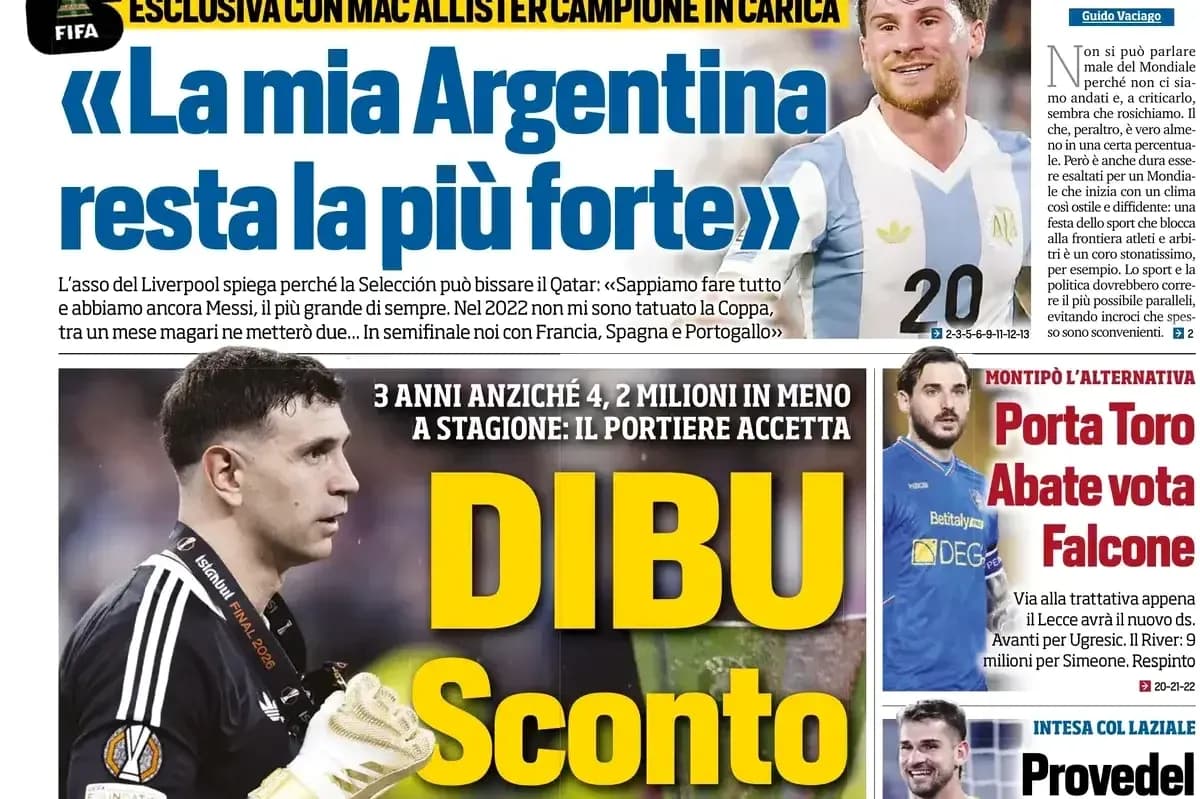
Messi’s reign under siege
Lionel Messi arrives as the defending champion, the man who finally lifted the trophy in Qatar and now guards it with the quiet menace of someone who knows what it costs to win.
“It will be tough to beat us,” he warns. No swagger, just certainty. Argentina come as holders, as reference point, as the team everyone must measure themselves against. Around Messi, the core remains hardened by the scars and glory of 2022. They know the route. They know the pressure. They know the price.
Yet the landscape has shifted. Lamine Yamal, the teenage phenomenon, carries Spain’s future on his shoulders. Kylian Mbappé, still stung by that night in Lusail, returns with a point to prove and a squad stacked with firepower. And then there is “our Carletto” – Carlo Ancelotti – a symbol of Italian excellence on foreign benches, one of three Italian coaches who will stand where the national team does not.
Spain step into the spotlight
Rodri doesn’t bother hiding. The Manchester City metronome, now the heartbeat of Spain, lays out his view in plain terms: the level has risen, and his Spain are favourites.
It is a bold claim in a tournament featuring the reigning champions Argentina and a France side overflowing with stars, but it reflects the confidence of a group that believes its blend of technique, youth, and tactical clarity can outplay anyone. Algorithms and models back them, too: the numbers point towards Spain as the team most likely to go all the way.
The question is whether the pitch will agree.
France: brilliance on the brink
France arrive with an attack that can terrify any defence. Mbappé leads a frontline loaded with pace, power, and finishing, supported by a squad that, on paper, looks almost unfair.
But there is a warning line running through this glitter. So many stars, perhaps too many. Managing egos, minutes, and expectations has undone great sides before. If Didier Deschamps finds the balance, France can steamroller the competition. If not, they risk becoming the latest super-team to crumble under its own weight.
The last dance for two giants
This is World Cup number 23. For two icons, it is also the last.
The tournament opens with the first of three ceremonies, a sign of the scale and ambition of this maxi American edition. Yet beneath the fireworks lies a more intimate storyline: legends preparing for their final bow on the biggest stage. Their names are not needed here; their careers have already written enough. This World Cup will either crown them one last time or close the book with a different champion lifting the trophy.
France and Argentina stand at the top of the pre-tournament hierarchy, but the cold eye of data keeps circling back to Spain. Between those three poles, the trophy will likely find its home.
Italy on the sidelines, Italians in the arena
The paradox is brutal. Italy are absent from the pitch, yet their fingerprints are all over the dugouts.
Carlo Ancelotti, Fabio Cannavaro, and Vincenzo Montella carry the tricolour into this World Cup from the technical area. Three different stories, three different paths, one shared responsibility: to show that Italian football still shapes the game, even when the national team stays at home.
The world is there. The Azteca is ready. The first whistle will echo across three continents.
And as the ball rolls in Mexico City, one question will hang over the next month of football: will this World Cup confirm the old order of Messi and Mbappé, or will it belong to the new faces who have only ever known them as giants to be toppled?




