VAR Decision on Nottingham Forest Goal Controversy
New footage has finally delivered the answer Peter Bankes always believed he had – and the one Neco Williams was certain did not exist.
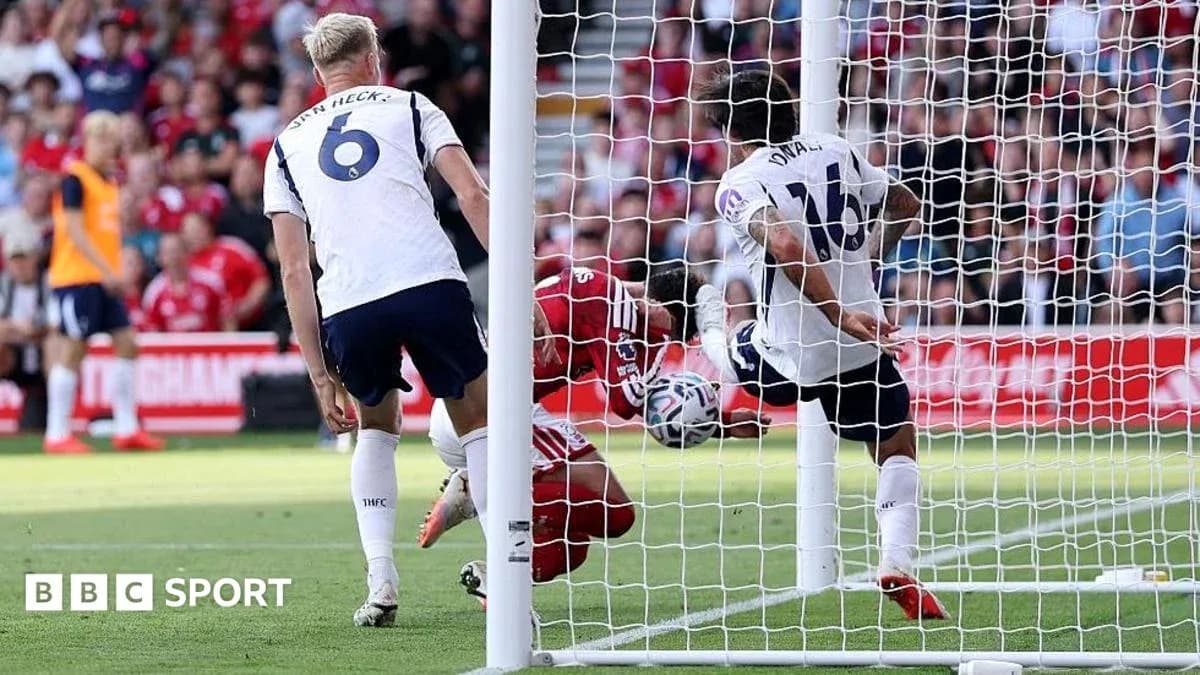
Days after Nottingham Forest’s disallowed goal in the 0-0 draw with Tottenham Hotspur, a fresh camera angle has emerged showing the ball striking Williams’ left arm and then his right forearm before he forces it over the line in the 67th minute. The clip backs up the video assistant referee’s call to chalk the goal off for accidental handball.
It doesn’t end the row. It deepens it.
VAR proved right – but with the wrong tools
Bankes, operating as VAR, intervened at the time and ruled out the goal, convinced he had seen enough to judge that Williams had handled. His conviction has been under heavy fire ever since, from the Forest dressing room to pundits’ studios.
Now, technically, he has been vindicated. The new angle clearly shows the contact. Yet there is a crucial twist: this camera was not available to him during the match.
The VAR hub only had access to the broadcast cameras that feed live coverage. The decisive angle came from one of several cameras that record but do not transmit as part of the match feed. Bankes instead based his decision on what he could see: the movement of Williams’ shirt as the ball appeared to brush his right forearm.
For Forest supporters, that detail will sting. The call was ultimately right, but made on incomplete evidence. The anger is unlikely to fade.
Williams’ certainty meets cold evidence
Williams and head coach Oliver Glasner were unwavering after the final whistle. They insisted there was no proof of handball, that the ball had not touched an arm at all.
"I've seen the images and the replays and at not one moment did I think I handballed it," Williams told Sky Sports. He doubled down: "At not one moment can you tell that has clearly hit my arms, because it never. I knew straight away I've headed it down in between my arms. It didn't hit my arm."
The new footage shows something very different. The ball does not touch his head. It hits his left arm, then his right forearm, and then goes in.
Given how quickly the incident unfolded, it is at least plausible Williams did not feel the contact or misread what happened in the chaos of the box. But inside Pro Ref – the rebranded refereeing body formerly known as PGMOL – there is irritation that his absolute certainty helped fuel a storm that is now being dismantled by the evidence.
The feeling within the organisation is simple: if Williams had not been so emphatic, the criticism of Bankes would not have been as fierce.
Nottingham Forest have been approached for comment.
‘Clear and obvious’? Not this time
A big chunk of the debate has revolved around that familiar phrase: “clear and obvious”. Glasner referenced it. Williams posted about it on X. Many assumed the VAR needed clear and obvious evidence of a mistake by the on-field referee to intervene.
That logic does not apply here.
“Clear and obvious” only governs subjective calls – the kind that send the referee to the pitchside monitor for a second look: penalties, red cards, that sort of thing.
This was different. Attacking handball before a goal is treated as a factual offence. For those, the VAR does not ask whether the on-field referee made a clear and obvious error. They ask a simpler question: do I have proof an offence occurred?
If the answer is yes, the goal goes. Bankes believed he had that proof from the angles available. Pro Ref, BBC Sport understands, is fully satisfied with that judgement.
Not everyone is. Danny Murphy, speaking on Match of the Day, captured the unease.
"It's a really tricky one," he said. "Maybe it could be a tiny bit on his sleeve or right forearm. But is it clear and obvious? No. That's the answer."
Murphy’s language reflects the wider discomfort: even when VAR thinks it is dealing in facts, football still sees shades of grey.
When ‘factual’ still feels subjective
This is where VAR runs into a problem it can never quite escape. Even so-called factual interventions rely on human interpretation of pictures, angles and replays. One VAR’s “proof” is another’s doubt.
There is a recent example at the very top level. Benjamin Sesko’s goal for Manchester United against Liverpool last season raised similar questions. The ball appeared to brush the Slovenia striker’s fingertips on its way in, but VAR Stuart Attwell decided he could not be certain and allowed the goal to stand.
Referees’ chief Howard Webb later admitted the ball “probably does hit the hand” yet defended the decision: “the VARs need to see that conclusively”. Attwell did not feel he had that. Bankes did in Williams’ case.
Same law. Same technology. Different judgement.
A law under pressure
Webb has already identified attacking handball as an area crying out for change. During pre-season briefings he was candid: if it were up to him, goals like Williams’ would not be ruled out on the basis of such forensic analysis.
"The problem is the law forces VARs on every goal to look at what body part the ball went in off," Webb said.
His vision is simpler. Only punish an attacker who deliberately handles the ball or makes themselves “unjustifiably big”. Strip away the microscopic inspections. Let more goals stand. Let VAR check and move on.
"It is a law I would definitely look to change," he added. Pro Ref and the Premier League plan to lobby for that shift.
If that campaign succeeds, the Williams incident will feel like a relic of a stricter era – a goal scrubbed off by a law the game no longer wants.
VAR’s lighter touch, heavy fallout
This season, VAR is already being run with a lighter hand. There have been only two subjective interventions so far, at a rate of 0.06 per game, down from 0.15 last season. Fewer trips to the monitor. Fewer stoppages.
Yet the mood music around VAR remains hostile. Every intervention in a big moment is magnified by tribal loyalties and years of built-up distrust.
Bankes has spent a bruising few days at the centre of that storm, utterly convinced he was right, yet hammered from all sides. Now the new footage backs him. The call was correct. The process, in the eyes of many, still wasn’t.
And that is the heart of the matter for the Premier League and Pro Ref: even when VAR gets to the right answer, can it ever convince the people who feel the goal – and maybe the game – has been taken away from them?