Valencia vs Rayo Vallecano: A Tactical Stalemate in La Liga
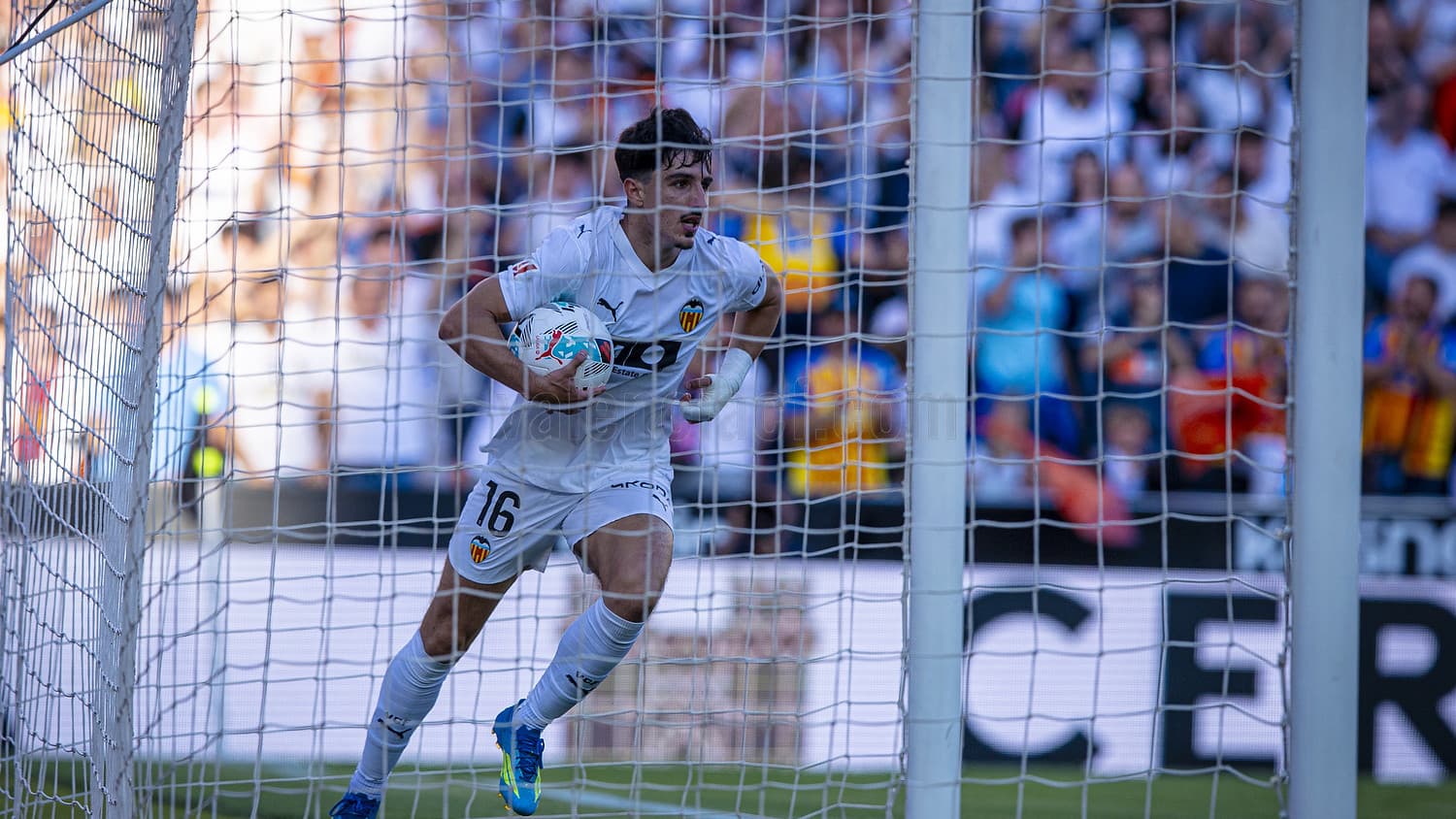
The late-season sun dipped over Estadio de Mestalla as Valencia and Rayo Vallecano walked out knowing this was less about survival and more about identity. Following this result, the table says mid‑table security – Valencia 11th on 43 points, Rayo 10th on 44 – but the 1‑1 draw felt like a snapshot of two very different footballing projects converging in Round 36 of La Liga.
I. The Big Picture – Two mid‑table sides with very different scars
Valencia’s campaign has been streaky and fragile. Overall they have 11 wins, 10 draws and 15 defeats from 36 matches, with 39 goals scored and 51 conceded. That goal difference of -12 underlines a side that leaks too much for a team with European ambitions. At home, though, Mestalla still gives them an edge: 7 wins, 6 draws and 5 losses, scoring 24 and conceding 22. They are not dominant, but they are competitive.
Rayo Vallecano arrive as one of La Liga’s draw specialists: overall 10 wins, 14 draws and 12 defeats, with 37 goals for and 43 against, a goal difference of -6. Their season has been built on a solid base at home and a more fragile version of themselves on their travels. Away, they mirror Valencia’s inconsistency: 4 wins, 4 draws and 10 defeats, with 15 goals scored and 28 conceded. Both sides average 0.8 away goals and 1.6 away goals conceded, a symmetry that framed this as a contest of who could bend their identity least.
On the tactical board, this was a meeting of familiar shapes. Valencia leaned again into their most-used system, the 4‑4‑2 that has started 22 times this season. Rayo responded with their own signature, the 4‑2‑3‑1 that has been deployed in 22 league games. It produced a first half that matched the scoreboard: 1‑1 at the break, 1‑1 at full time, two systems cancelling each other out more than breaking each other open.
II. Tactical Voids – Injuries, suspensions and the gaps they leave
Both coaches came into this fixture managing significant absences that shaped the patterns we saw.
Valencia were without L. Beltran (knee), J. Copete (ankle), M. Diakhaby (muscle) and D. Foulquier (knee). That stripped depth from the spine and the defensive rotation. Without Diakhaby and Copete, Carlos Corberan leaned heavily on C. Tarrega and E. Comert at centre‑back, with Josè Gayà anchoring the left side. The absence of Foulquier reduced options at full‑back and in the wide defensive roles, increasing the physical load on Renzo Saravia and Gayà to cover long distances in the 4‑4‑2.
Rayo’s list was equally disruptive: I. Akhomach (muscle), A. Garcia, Luiz Felipe and D. Mendez (all injuries) plus Isi Palazón suspended after a red card. The loss of Luiz Felipe and D. Mendez narrowed Inigo Perez’s choices in central defence, pushing Nobel Mendy into a leading role at the back. The suspension of Isi Palazón, a player who has combined 3 goals, 3 assists and a high foul count with 10 yellow cards and 1 red this season, removed both a creative spark and a chaotic pressing presence from the right side.
Disciplinary trends also hung over the fixture. Valencia’s yellow cards show a late‑game surge: 22.86% of their bookings come between 76‑90', with another 15.71% between 91‑105'. Rayo’s discipline is stretched across the match but spikes between 46‑75', where 38.38% of their yellows arrive, and they are particularly vulnerable to reds late on – 33.33% of their red cards fall between 91‑105'. In a tight game, both managers knew the final quarter‑hour could tilt on temperament as much as tactics.
III. Key Matchups – Hunter vs Shield, Engine Room battles
Hunter vs Shield
Rayo’s attacking reference for the season has been Jorge de Frutos. With 10 league goals and 1 assist, plus 47 shots (26 on target), he has been their most reliable finisher. Even when not starting, his profile – 27 key passes and 55 dribble attempts – shapes how defences prepare for Rayo’s right‑sided and central threats.
Up against that, Valencia’s “shield” is a unit rather than an individual star. Overall they concede 1.4 goals per game, but at Mestalla that drops to 1.2. Gayà’s presence at left‑back is central: across the season he has made 69 tackles, 7 blocked shots and 23 interceptions. His duel volume (208, with 123 won) underpins Valencia’s ability to hold a medium block and spring from it. In this match, his responsibility stretched beyond defending R. Nteka’s movements into the channels; he also had to manage Pacha’s wide runs from Rayo’s left, a constant test of his timing and stamina.
Engine Room – creators vs enforcers
In midfield, the game’s narrative revolved around two creative hubs: Luis Rioja and Javi Guerra for Valencia, and Rayo’s double pivot of O. Valentin and G. Gumbau.
Rioja arrived as La Liga’s joint‑top assist provider for Valencia with 6 assists, adding 2 goals and 37 key passes from 798 total passes at 79% accuracy. His 61 dribble attempts, with 35 successes, make him the winger who bends Valencia’s rigid 4‑4‑2 into something more fluid. Guerra mirrors that influence from central zones: 6 assists, 29 key passes and 942 completed passes at 81% accuracy, plus 28 tackles, 6 blocked shots and 23 interceptions. He is both architect and firefighter.
Rayo’s response lay in the structure of their 4‑2‑3‑1. O. Valentin and G. Gumbau, sitting as the double pivot, were tasked with screening the spaces between the lines, tracking Guerra’s forward runs and closing the lanes Rioja loves to attack from the left. Behind them, Nobel Mendy’s profile as a defender who has blocked 21 shots and made 21 interceptions this season gave Rayo an aggressive last line. His willingness to step out and engage between the lines was vital to preventing Valencia’s front two, Hugo Duro and Javi Guerra (pushed higher here), from combining cleanly.
IV. Statistical Prognosis – What this draw tells us about both projects
Following this result, the numbers still paint two sides with similar ceilings but different paths to get there. Valencia’s overall scoring rate of 1.1 goals per game, with 1.3 at home, suggests they need efficiency rather than volume; their defensive average of 1.4 goals conceded overall (1.2 at home) keeps them in games but rarely allows them to cruise. Their perfect penalty record – 5 scored from 5, 0 missed – underlines a team that, when chances are clear, can be ruthlessly clinical.
Rayo’s season has been defined by balance and risk management. They average 1.0 goals scored overall and concede 1.2, with a particularly tight home defence (0.8 conceded) but a looser structure away (1.6 conceded). Their own penalties are flawless too – 3 scored from 3, 0 missed – but the bigger story lies in their disciplinary edge: Pathé Ciss, with 2 red cards and 8 yellows, and Mendy, with 8 yellows and 1 red, embody a side that defends on the front foot and lives close to the line.
In xG terms, both profiles hint at narrow margins rather than blowouts. Valencia’s modest scoring and concession averages point to matches decided by a single moment of quality or a single lapse. Rayo’s draw‑heavy record reinforces that picture: they are hard to finish off, but rarely overwhelming.
This 1‑1 at Mestalla, then, felt less like a missed opportunity and more like a fair reflection. Valencia’s 4‑4‑2, driven by the craft of Rioja and Guerra and the industry of Gayà, met Rayo’s 4‑2‑3‑1, anchored by Mendy’s aggression and the structure of their double pivot. The table will remember it as a point each; the tape will remember it as a study in two mid‑table identities, both searching for the extra layer of attacking clarity and defensive control that could turn nights like this from stalemates into statements.