USA Dominates Paraguay 4-1: Tactical Breakdown of a 4-2-3-1 Formation
USA’s 4-1 win over Paraguay at SoFi Stadium was built on structural control and vertical aggression from a 4-2-3-1 that consistently overloaded central and half-space zones. Mauricio Pochettino’s side translated 65% possession and a 16-9 shot advantage into a 3-0 half-time lead, then managed the game with enough attacking threat to add a late fourth despite a brief Paraguayan resurgence.
USA’s positional play was clear from the opening minutes. The back four of Alexander Freeman, Chris Richards, Tim Ream and Antonee Robinson held a high line, with Tyler Adams and Malik Tillman as a double pivot. Adams anchored centrally, screening Paraguay’s front two and providing rest defense, while Tillman operated as the more progressive No. 8, stepping between Paraguayan lines. Ahead of them, Sergiño Dest, Weston McKennie and Christian Pulišić formed a fluid band of three behind Folarin Balogun, constantly rotating to unbalance Paraguay’s flat 4-4-2.
The early own goal by Damián Bobadilla underlined USA’s territorial dominance: sustained pressure forced Paraguay deep, with their midfield four collapsing towards their own box. USA’s 13 shots inside the box show how often they penetrated the last line rather than settling for speculative efforts; the front four repeatedly created overloads on the left, where Pulišić and Robinson combined to drag Juan Cáceres and Diego Gómez out of shape. When Paraguay tried to squeeze inside, Dest and Freeman provided width on the right, allowing diagonal switches that stretched Gustavo Alfaro’s compact block.
USA’s passing structure was both patient and purposeful. With 596 total passes and 508 accurate (85%), they circulated the ball until a vertical lane opened, then punched passes into Balogun’s feet or into the half-spaces for McKennie and Tillman. The disallowed Balogun goal at 28’ was a warning of the threat in behind; three minutes later, the same verticality was rewarded when Balogun, assisted by Pulišić, finished to make it 2-0. His second, at 45+5’ from a Tillman assist, again came from USA’s ability to pin Paraguay’s back four and find the striker between center-backs after sustained pressure.
Out of possession, USA’s 4-2-3-1 converted into a 4-4-2 press, with McKennie stepping up alongside Balogun. Adams’ yellow card for “Roughing” at 59’ reflected his role as the primary disruptor of Paraguayan transitions, accepting tactical fouls to protect the high line. Paraguay’s 0.51 xG against 0.51 xG of their own attacking output shows they created little from open play; their single shot on goal was efficiently finished by Mauricio at 73’, assisted by Julio Enciso, but it was one of very few clean entries into the USA box.
Paraguay’s 4-4-2 struggled to progress the ball under USA’s press. Their 320 passes (230 accurate, 72%) and only 35% possession highlight how often they were forced long or into low-value wide areas. Antonio Sanabria and Enciso were frequently isolated against USA’s center-backs, with Andrés Cubas and Bobadilla pinned deep by USA’s No. 10 and wingers. When Paraguay did advance, it was usually through Miguel Almirón drifting inside from the right, but his yellow card for “Diving” at 53’ captured a broader frustration: he was more often forced into individual solutions than supported by synchronized movements.
Gustavo Alfaro’s adjustments after the break were an attempt to inject ball-carrying and pressing energy. Mauricio (IN) came on for Bobadilla (OUT) at 46’, then Alex Arce (IN) for Sanabria (OUT) at 62’, followed by Ramón Sosa (IN) for Almirón (OUT), Gustavo Velázquez (IN) for Cáceres (OUT), and Alejandro Romero (IN) for Diego Gómez (OUT) between 79’ and 80’. These changes shifted Paraguay towards a more aggressive, front-foot approach, with Mauricio and Sosa attacking the half-spaces and Arce offering a more direct target. The goal at 73’ came in this window of renewed intensity, but structurally Paraguay still lacked stable progression patterns; their 5 blocked shots reflect a reliance on hurried efforts under pressure rather than crafted chances.
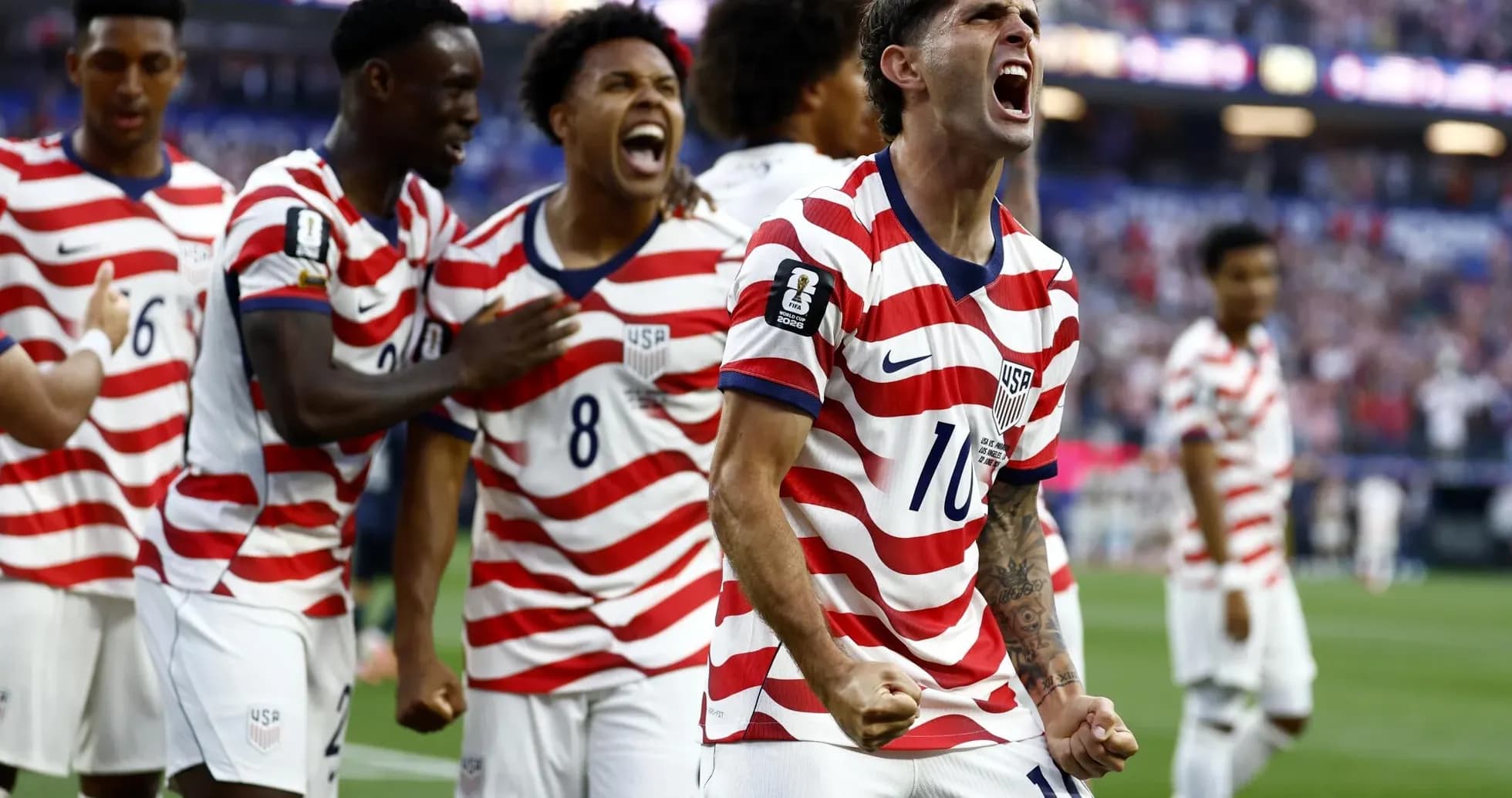
Pochettino’s in-game management was geared towards maintaining control while refreshing the front line. Sebastian Berhalter (IN) for Pulišić (OUT) at 46’ rebalanced the midfield, effectively turning the double pivot into a more conservative trio in some phases. Later, Tim Weah (IN) for Dest (OUT) and Ricardo Pepi (IN) for Balogun (OUT) at 72’ added vertical running and pressing energy, while Giovanni Reyna (IN) for Tillman (OUT) at 82’ provided fresh creativity between the lines. Reyna’s late goal at 90+8’, assisted by Freeman, was emblematic: even in game-management mode, USA still committed full-back overlaps and third-man runs to exploit a stretched Paraguayan defense.
In goal, Matthew Freese (USA) was largely protected by the structure in front of him, facing only one shot on goal and making 1 save. Orlando Gill (Paraguay), by contrast, had to deal with 6 shots on goal and made 3 saves. The negative goals prevented figure for Paraguay, combined with USA’s 1.27 xG and four goals scored, suggests that USA’s finishing quality and Paraguay’s defensive errors outstripped the underlying chance quality.
Discipline also shaped the tactical tone. Paraguay accumulated five yellow cards — Cáceres (“Tripping”), Almirón (“Diving”), Diego Gómez (“Holding”), Arce (“Roughing”), and Junior Alonso (“Holding”) — a reflection of repeated late or desperate interventions as USA broke lines. USA’s single booking, Adams for “Roughing”, aligned with a controlled aggression within a clearly defined role.
Statistically, the game reads as a comprehensive USA performance: higher xG (1.27 vs 0.51), more shots (16 vs 9), more shots inside the box (13 vs 4), and a decisive passing and possession advantage. Paraguay’s 5 blocked shots and 1 corner suggest sporadic pressure but not sustained territorial control. Tactically, USA’s 4-2-3-1 provided superior structure in all phases, while Paraguay’s 4-4-2 never fully solved the pressing puzzle or found consistent ways to connect their forwards to midfield.