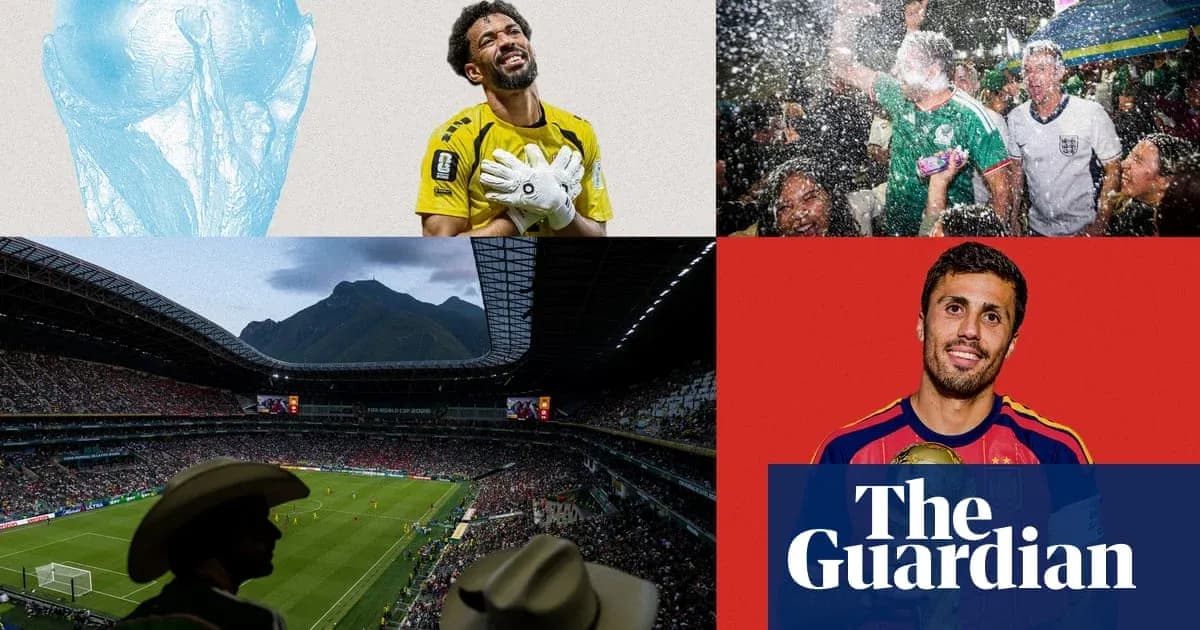
The Unpredictable World Cup: Chaos and Glory
This was the World Cup where chaos kept beating the storyboard. A month when Mexico turned the Azteca into a pressure cooker, Cape Verde rewrote the underdog manual, and even Germany managed to lose a penalty shootout. The goals were spectacular, the stars mostly delivered, and yet the enduring images came from the margins: a 40‑year‑old without a club becoming a cult hero, stadium workers playing barefoot on pristine pitches, and a tiny Atlantic nation making giants sweat.
By the end, the tournament felt less like a neatly packaged global event and more like a series of fever dreams stitched across three countries.
Matches that bent reality
Ask a dozen reporters to pick the match of the tournament and you don’t get consensus. You get a collage.
For pure, old‑fashioned jeopardy, Paraguay 1-1 Germany in the last 32 takes some beating. Not because of the goals – there weren’t many – but because of what followed. Germany do not lose penalty shootouts. They just don’t. Yet here they imploded in spectacular fashion, history shrugging its shoulders as Paraguay held their nerve.
Elsewhere, Algeria 3-3 Austria belonged to a different universe entirely. This was supposed to be a biscotto, the kind of mutually convenient draw that sends both sides through and no pulses racing. For long stretches of the second half, that’s exactly what it threatened to be. Then stoppage time ripped up the script. Six goals, shifting incentives, and a finale so bizarre it felt detached from the rest of the competition. Not the best game in terms of quality. Probably the weirdest.
Some matches were about place as much as play. Mexico 2-3 England at the Azteca had been circled from the moment the draw dropped. The stadium, awesome in the truest sense, delivered the setting; the teams supplied the tension. England, under Thomas Tuchel, walked into the most intimidating cauldron of the tournament and somehow walked out with a 3-2 win, clinging on after Mexico produced their best 45 minutes of football all World Cup. For those inside, it was cortisol in 90-minute form – thunderstorm delay, exhaustion, and a performance from Jude Bellingham that briefly made England believe this might finally be their time.
It wasn’t, of course. It never is. England’s story wove through other instant classics: the borderline hilarious 4-6 defeat to France, a wild, defence-optional carnival; the 1-2 loss to Argentina, more predictable in its cruelty, more familiar in its narrative arc. They were the tournament’s great entertainers and its great nearly-men.
Argentina, though, supplied the most gripping comebacks. Their 3-2 win over Egypt in the last 16 looked, for an hour, like the night the defending champions died. Two goals down, staring at their flights home, they needed Lionel Messi to drag them back from the brink. He did, of course. A late, Messi‑inspired turnaround flipped the tie in normal time amid refereeing controversy and Egyptian disbelief.
Then came Argentina 3-2 Cape Verde, a match that veered from improbable to unforgettable. Cape Verde, debutants with a veteran goalkeeper and a fearless attitude, pushed the world champions to the edge. Sidny Lopes Cabral bent an equaliser into the top corner in extra time, a long‑range thunderbolt that stunned Emi Martínez and briefly froze an entire stadium. For sheer drama and disbelief, it rivalled anything this World Cup produced.
Cape Verde’s 2-2 draw with Uruguay in Miami showed the other side of their story: not just moments of magic, but discipline, organisation, and a collective attitude that turned them into one of the neutrals’ favourite sides.
Scattered across the map were other cult fixtures. France’s 4-6 shootout with England, where defending took the night off. Egypt 1-1 Iran in Seattle, where Iran’s stoppage‑time “winner” was ruled out before they twice hit the woodwork in the dying minutes, a cruel end for an unbeaten side already battling obstacles off the pitch. Cape Verde 2-2 Uruguay. Mexico 2-3 England. Argentina 3-2 Egypt. Argentina 3-2 Cape Verde. This was a tournament that refused to settle on a single defining epic and instead offered a dozen different versions.
Rodri’s World Cup – with cameos from giants
In a competition stacked with star power, one midfielder quietly took control of the whole thing.
Rodri was the outstanding player for the best team. Spain reverted to a more possession‑driven model and he became their metronome, the fulcrum around which everything turned. Capitán, líder, leyenda, as one observer put it. When games teetered, when pressure needed evading or counters snuffing out, no one showed their quality more consistently. The Golden Ball felt less like an award and more like formal recognition.
He wasn’t alone, of course. Kylian Mbappé finished with the Golden Boot, inflated slightly by that wild third‑place game, but for long stretches he looked like the tournament’s most devastating forward, spearheading what seemed the best team until Spain stopped them in the semi‑final.
Erling Haaland left with something different: a short but credible Golden Boot tilt, a historic Norwegian run to the quarter‑finals, and a soaring profile in a market that adores superstars. His second goal against Brazil – a precise, low strike from outside the box to seal a famous upset – distilled his tournament into one moment: power, accuracy, and ruthless timing.
Messi, chasing one more defining World Cup, didn’t dominate every minute but still bent key games to his will. His role in Argentina’s comeback against Egypt, his record‑breaking goals against Austria in Dallas, turned early group fixtures into rolling pilgrimages.
Jude Bellingham justified every word of hype and then some, dictating England’s tempo and driving them through games in a way that made pre‑tournament doubts about his inclusion look absurd. Michael Olise shimmered, majestic even in frustration, though he left a hat‑trick against England on the table.
There were quieter, more romantic stories too. Vozinha, Cape Verde’s 40‑year‑old goalkeeper without a club, played like a man determined to squeeze a lifetime’s worth of acclaim into one month. He shut out and frustrated far richer, more vaunted opponents, his performances turning into a genuine fairytale that needed no marketing gloss. Pau Cubarsí, still a teenager, looked entirely at home on the biggest stage. Roberto “Pico” Lopes, the Shamrock Rovers defender, threw himself in front of everything for Cape Verde, building a legacy that might never bring a big move but will echo in Dublin and Praia alike.
This was a World Cup where the biggest names largely showed up. Haaland, Mbappé, Messi, Bellingham, Olise, Rodri. Yet when the dust settled, it was the Spain captain, sitting deep, recycling possession and killing games, who stood tallest.
Goals that stopped time
Every tournament has its showreel. This one had a clear centrepiece.
Sidny Lopes Cabral’s equaliser for Cape Verde against Argentina will live wherever World Cup folklore is kept. A full‑back‑turned‑winger, in extra time of a knockout tie, stepping into a long‑range strike that curled between a flying Emi Martínez and the far post. The ball’s flight seemed to hang in the air. The reaction made it even better: Cabral, hands to his head in disbelief, then scanning the stands to find his girlfriend and celebrate. A jaw‑dropper, a “where were you?” moment, and for many, the undisputed goal of the tournament.
Around it clustered a supporting cast of brilliance. Eldor Shomurodov’s instinctive lob from a tight angle for Uzbekistan against DR Congo – a finish so odd and satisfying it demanded replays. Julián Álvarez, mostly subdued, ripping a vicious, swerving long‑range effort in extra time against Switzerland in Kansas City, igniting a stadium that had turned into a cauldron.
Kerim Alajbegovic, just 18, danced through defenders for Bosnia and Herzegovina and, off balance, lashed in from outside the box against Qatar, a goal that matched the pre‑tournament buzz around him. Johan Manzambi’s slaloming run and perfectly weighted pass for Breel Embolo’s opener against Algeria turned a simple assist into a mini‑masterpiece.
Wilson Isidor’s strike for Haiti against Morocco, hammered from distance with a purity that drew comparisons with any World Cup goal, ever. Harry Kane’s second against DR Congo, Haaland’s clincher versus Brazil, even a disallowed rocket from Uzbekistan that never made the scoresheet but stayed in the memory.
Plenty of balls were “smacked” from range, some flattered by the physics of the Adidas Trionda. Cabral’s was different. Nobody wanted to downgrade that one.
The human side of a sprawling show
Away from the cameras, this World Cup lived in smaller moments.
Eloy Room, 37 and in goal for Curaçao against Ecuador, broke the record for most saves in a 90‑minute World Cup match, then laughed that he now needed a statue back home. Senegalese journalists quietly sharing a packet of malted milk biscuits during the anthem before their team’s collapse against Belgium. Nestory Irankunda reviving Tim Cahill’s iconic corner‑flag celebration for Australia, a symbolic handover from one generation to the next.
There were the pilgrimages: early Argentina games that felt like rolling Messi worship sessions; the first visit to the Azteca for some, who emerged deafened and dazed after Mexico’s win over Ecuador; the view from Monterrey’s stadium, so spectacular it became its own recommendation.
There was farce, too. Standing knee‑deep in floodwater in Monterrey waiting for a bus after retrieving a mislaid iPad, only to lose it again a week later in Houston. Watching Scotland finally end a 28‑year World Cup exile, running out to “Scotland the Brave” on bagpipes in Foxborough – and then seeing everything unravel once the whistle blew.
In press boxes and hotel lobbies, the tournament took on its own life: explaining to a mariachi in a giant sombrero how third‑place teams could still qualify; shouting “Paraguay. Number 10. Cover his mouth. Decision is RED CARD”; misidentifying Robbie Williams as Kevin Pietersen; playing eight‑a‑side with Danny Cipriani, who once trained alongside Harry Kane at Tottenham.
And then there was Vozinha’s mother, who somehow made it from Cape Verde to North America to watch her 40‑year‑old son play at a World Cup. No marketing department could script that, either.
Hosts under the microscope
Three countries shared this World Cup. None experienced it in quite the same way.
In the United States, curiosity turned into something more substantial. Stadiums filled. Strangers on the street wanted to talk football. For journalists used to covering the nation’s “third‑to‑fifth” sport, the sheer scale of interest felt like a jolt of electricity in a country wrestling with its own political storms. The US team played some of the prettiest football the nation has ever produced, only to falter against Belgium and leave with a sense of opportunity missed.
The welcome, almost everywhere, was warm. Hotel staff, bartenders, even reality TV personalities leaned into the idea of hosting the world. Yet the experience came with caveats. Endless travel between far‑flung venues. Stadiums miles from city centres. Public transport that barely existed in some host cities. The ever‑present expectation of tipping. And hanging over the football side, the stench of the Folarin Balogun reprieve, a decision many saw as the US administration bending the tournament’s course with Fifa’s compliance.
Canada embraced its moment. Toronto buzzed as the national team finally played a World Cup match on home soil, the 6-0 demolition of Qatar in Vancouver showcasing a side that was both thrilling and hungry. Around Canada Day, locals wanted reassurance: did they now count as a real football nation? The answer, on this evidence, was yes.
Mexico, for many, was the heartbeat. Fervent, febrile, fascinating. A football culture that deserved more of the spotlight than it sometimes got. The Azteca was everything promised and more: magical, monumental, deafening. Mexico barnstormed through Group A, outclassed Ecuador, and then ran out of ideas in the last half-hour against England, but their run turned them into one of the tournament’s great bandwagon teams. Even in defeat, their fans stayed welcoming.
Across the three hosts, the organisational story was mixed. US stadiums were first class, but Fifa’s decision to take direct control of tournament operations, sidelining a traditional local organising committee, offered a cautionary tale. The scale was immense, the logistics brutal, the sense of “whirled” in the World Cup inescapable. Cities such as Vancouver and Seattle, with downtown grounds and genuine soccer traditions, felt built for this. Others, like Dallas and San Francisco, hosted the party without ever fully joining it.
Yet from Kansas City to Miami, from Toronto to Mexico City, one thing held: people wanted visitors to know they were welcome – and that whatever else was happening in their countries, this was different.
The tournament that wouldn’t behave
By the end, this World Cup had delivered almost too much: a German penalty collapse, a Cape Verde miracle, a Messi rescue act, a Rodri masterclass, Mbappé and Haaland trading blows, England oscillating between farce and glory, and a goal from Sidny Lopes Cabral that seemed to hang in the air for ever.
It didn’t tidy itself into a single narrative. It sprawled, it contradicted, it surprised. It felt, in other words, like football at its most alive.
The question now is simple. After a World Cup that refused to behave, who really wants it to go back to normal?