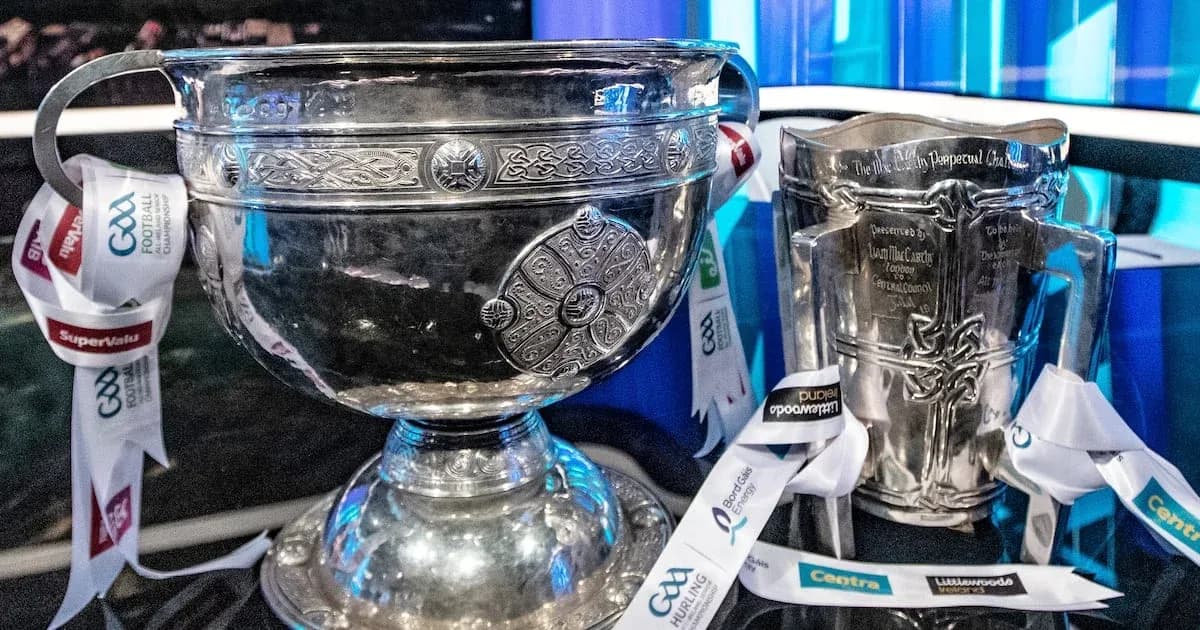
Understanding All-Ireland Final Ticket Distribution
Outside Croke Park, the soundtrack never changes.
“Anyone buying or selling tickets?”
The chorus rises on Jones’s Road every July, a mix of hope, desperation and pure chance. But when it comes to the All-Ireland finals, the GAA’s stance is blunt: if it’s not from an official source, don’t touch it. No matter how close to throw-in, no matter how persuasive the seller.
These are not ordinary match tickets. They never even reach a general sale.
A national occasion, not just a county day
For the All-Ireland hurling and football deciders, every single ticket is channelled through the GAA’s own ticketing office. From there, the lifeblood of the organisation – the county boards and clubs – take over.
County boards receive the bulk of the allocation. They then carve it up among their clubs, with the two counties contesting the final naturally handed the largest slices. But this is not a closed shop. Every club in the country, from the smallest rural outfit to the biggest urban powerhouse, gets something.
Size, membership, codes played – football, hurling, or both – all come into play when those envelopes are filled. Crucially, it doesn’t matter if your county’s season ended in June. The All-Ireland finals are treated as national occasions, belonging to the entire association, not just the last two teams standing.
Croke Park can hold 82,300, but 82,006 tickets are actually distributed for each final. Every year, that number proves nowhere near enough.
Demand doesn’t just outstrip supply. It dwarfs it.
Who actually gets in?
Strip away the premium and corporate seats – 10,528 of them – and you’re left with 71,478 tickets to be spread across the GAA world.
The detail sits in black and white in the director general’s annual report. The latest breakdown, in the 2025 report, covers the 2024 All-Ireland finals and shows where those precious stubs end up.
County allocations dominate: 59,212 tickets go directly to the counties.
Beyond that, the spread tells the story of a modern, sprawling organisation:
- Provinces – 380
- Overseas units – 480
- Ard Chomhairle/Iar Uachtarán – 800
- Camogie – 140
- Ladies football – 100
- Rounders & handball – 212
- Sponsors – 1,250
- Press – 258
- TV & radio – 74
- Schools and education bodies – 1,666
- Third-level (colleges & universities) – 240
- Croke Park residents – 200
- Match officials & national referees panel – 228
- Health bodies & Sport Ireland – 60
- Match Day/Vertigo – 148
- Staff & subcommittees – 820
- Jubilee teams – 70
- Go Games – 188
- Term tickets – 2,358
- Season tickets – 2,594
In earlier years, the GAA also published the specific allocations for the two counties in the final, each typically landing in or around 13,000 tickets. That figure can swell slightly. Tickets left unused by counties not involved are re-routed towards the finalists, a late windfall when other areas can’t take up their full share.
It’s a complex ecosystem, but one with a clear priority: counties first, and especially the ones who’ve fought their way to the last Sunday.
The cost of the golden ticket
Getting in isn’t cheap anymore.
In 2024, the GAA raised All-Ireland final prices again. A stand ticket now costs €100, with terrace spots at €55. The last increase came in 2019, when prices jumped to €90 for the stand and €50 for the terrace.
For many, it’s still non-negotiable. You pay it, or you don’t go. The final is that simple, that rare.
Inside the scramble: clubs under siege
As the days tick down to Sunday, the real drama often plays out far from Croke Park – in clubhouses, WhatsApp groups, and committee rooms.
Once the county board allocation lands, each club is left to decide how to divide its own precious bundle. There is no universal rulebook. Some clubs run internal draws. Others prioritise long-standing members. Some ringfence tickets for players, coaches, and volunteers.
And then there’s fundraising.
All-Ireland tickets are prime raffle material. One pair can transform a club lotto night or a fundraising drive. Elsewhere, creativity takes over. In Limerick, the county board has launched a competition for the most imaginatively decorated home or business in the build-up to their All-Ireland hurling final against Galway, with two tickets to Sunday’s game on offer. Paint your gable wall, drape your shopfront in green and white, and hope.
Meanwhile, club secretaries brace themselves. This is peak “special request” season – the cousin flying home, the neighbour who “hasn’t missed a final in 30 years”, the former player looking for a favour. Every phone call feels urgent. Every email is marked “important”.
This is where relationships are tested, and where volunteers truly earn their keep.
Will a spare ticket surface before Sunday? Officially, no. Realistically, tickets change hands quietly every year. But if you’re banking on a miracle outside the ground, you’re gambling against the odds and against GAA advice.
Who counts as “in” on the big day?
For the players and backroom teams, the question is different. They don’t worry about queues or allocations. According to Croke Park, anyone who is part of the official county panel is accredited in advance and gains access.
Where they are stationed depends on their role.
Managers and selectors patrol the sideline. Analysts and statisticians work from a dedicated stats box in the lower Hogan Stand. High above them, in the upper Hogan, seats are reserved for those running the cameras, the laptops, the live coding that now shapes in-game decisions.
It’s a reminder that the modern All-Ireland final is no longer just 30 players and a ball. It’s a full operation, layered across the stadium.
And outside, on Jones’s Road, the same question will echo again this weekend.
“Anyone buying or selling tickets?”
For most, the answer has already been decided, long before they ever see the stadium lights.