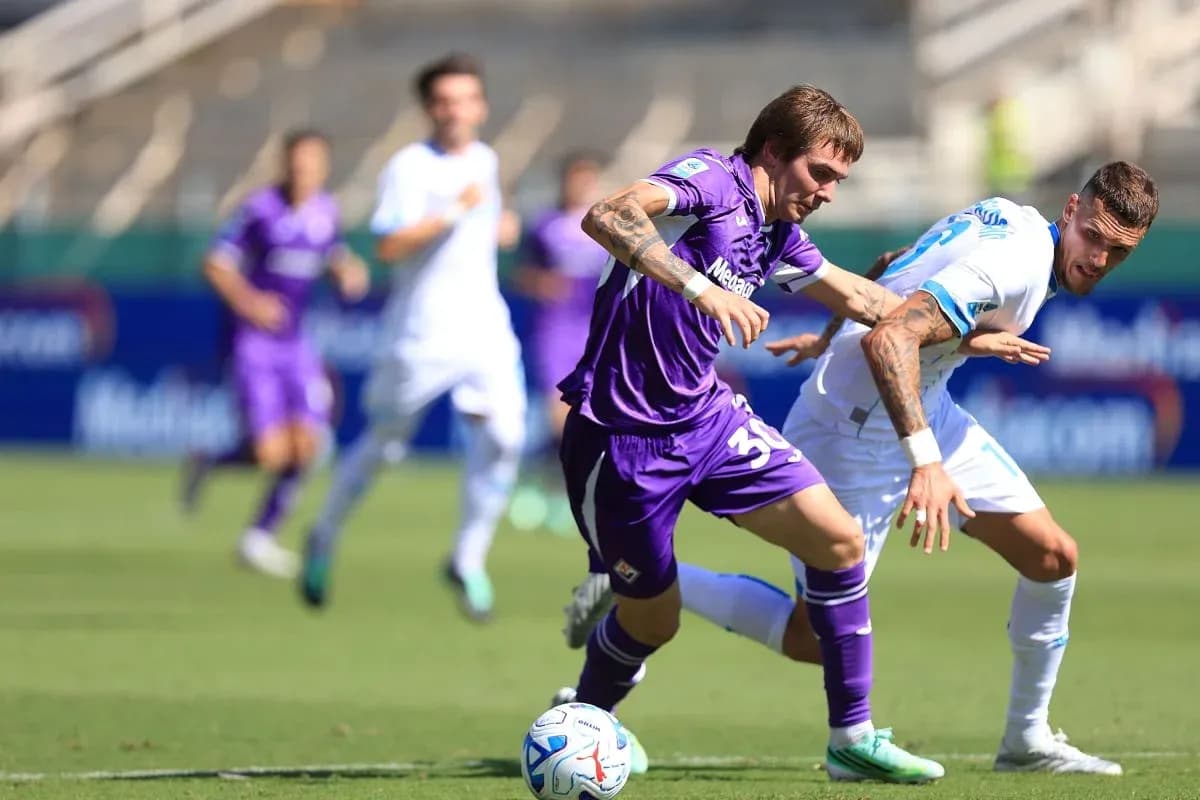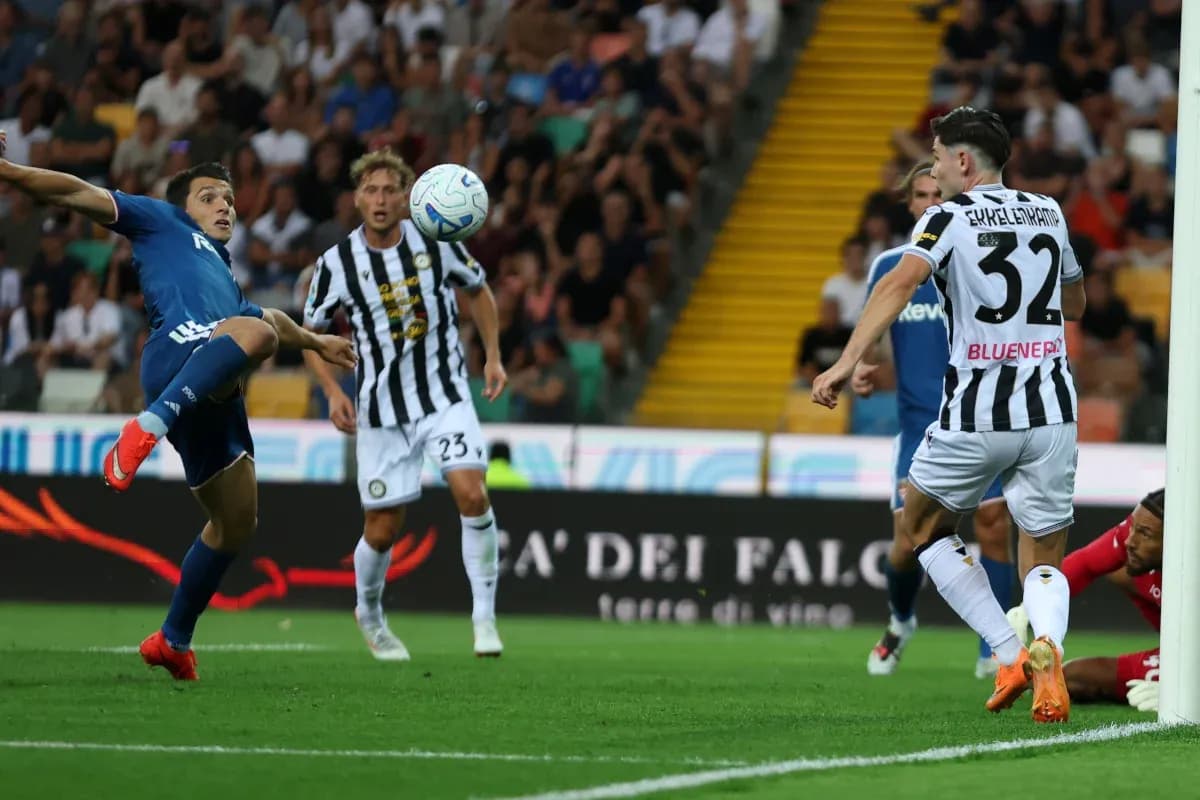
Udinese and Como Share Points in Serie A Opener
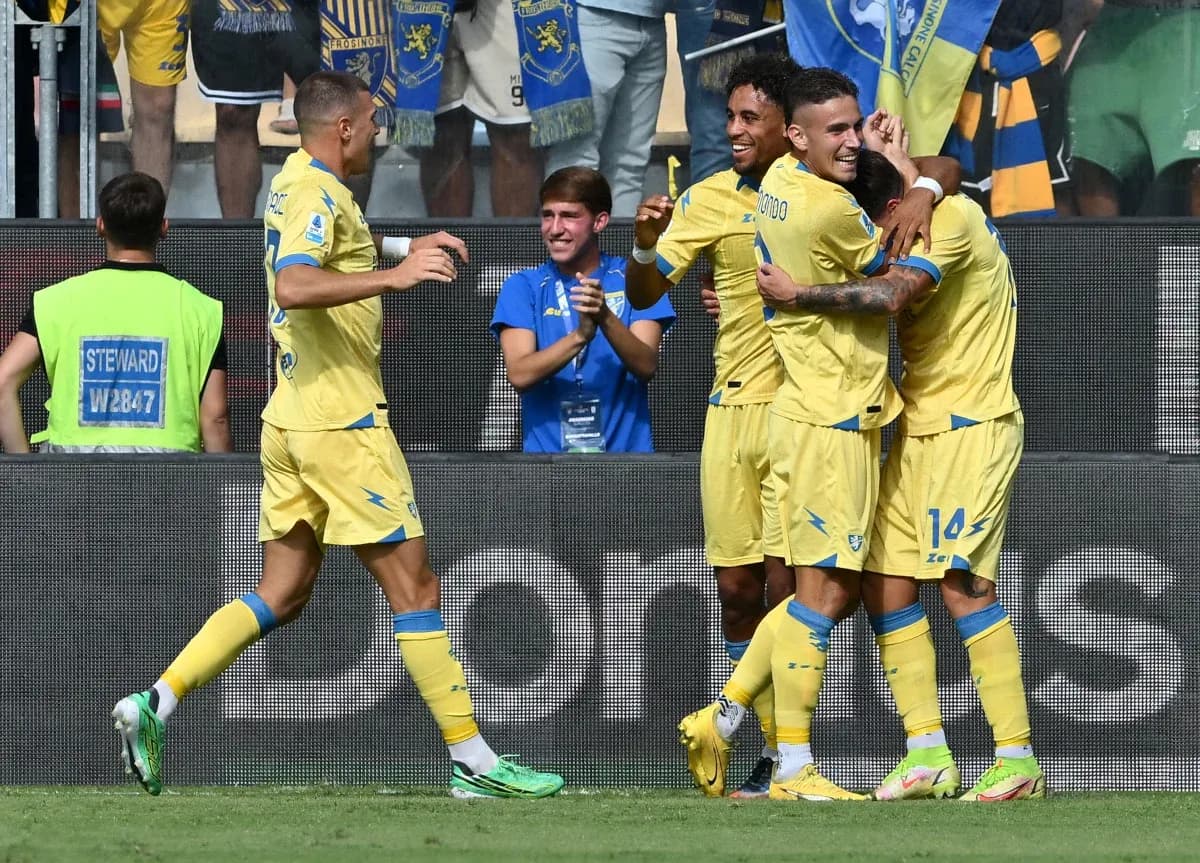
Under the late-summer light at the Bluenergy Stadium – Stadio Friuli, Udinese and Como opened their Serie A campaigns with a 1–1 draw that felt less like a conclusion and more like the first chapter of two evolving tactical stories. Following this result, both sides sit on 1 point from 1 match, each with a goal difference of 0 after scoring 1 and conceding 1 overall. Udinese occupy 9th, Como 8th, but the table is merely a sketch; the real definition came from their structures and the personalities inside them.
I. The Big Picture – Systems with clear identities
Kosta Runjaic set Udinese up in a 3-4-2-1, a shape that immediately framed the match as a duel between width and control. With M. Okoye behind a back three of J. Abankwah, M. Palma and O. Solet, the Friulani built from a compact base. The wing zones belonged to M. Vojvoda on the right and H. Kamara on the left, flanking a double pivot of J. Karlstrom and J. Piotrowski. Ahead of them, N. Zaniolo and J. Ekkelenkamp floated as dual tens behind lone forward I. Gueye.
Como, under Cesc Fabregas, answered with a 4-2-3-1 that spoke of control through the middle and calculated pressure. J. Butez started in goal, shielded by a back four of Y. Couto, J. Ramon, T. Chalobah and A. Valle. The double pivot of M. Perrone and L. Milla acted as the stabilising axis, with an attacking trio of N. Paz, M. Baturina and J. Rodriguez supplying A. Douvikas up front.
Statistically, both teams begin the season with similar profiles: 1 match played in total, 0 wins, 1 draw, 0 defeats. Udinese have scored 1 and conceded 1 at home, averaging 1.0 goals for and 1.0 against at Friuli. Como mirror that away: 1 match on their travels, 1 goal scored, 1 conceded, with the same 1.0 averages. The symmetry on the scoreboard, though, disguises different paths to that parity.
II. Tactical Voids – Absences and discipline
Udinese’s squad sheet bore several important absences. A. Buksa was unavailable, listed as inactive, while G. Chakvetadze missed out with a foot injury. A. Zanoli’s knee injury removed another option for the flanks, and C. Kabasele’s suspension for a red card further trimmed Runjaic’s defensive choices. The result was a back three that leaned on the youthful energy of Abankwah and Palma and the physical presence of Solet, but lacked an experienced organiser like Kabasele.
Como’s list was shorter but significant: J. Addai, sidelined with an Achilles tendon injury, deprived Fabregas of another attacking profile who could have stretched Udinese’s back line or offered a different threat between the lines.
Disciplinary trends already offer a glimpse of Udinese’s edge. In total this campaign, they have received yellow cards concentrated in three distinct windows: 33.33% between 16–30 minutes, another 33.33% between 31–45, and 33.33% in the 91–105 period. That pattern suggests an aggressive mid-half intensity and a tendency to commit late fouls as legs tire or game states become frantic. Como, by contrast, have yet to register a card in any time band, reflecting either control, caution, or a match where they were rarely forced into desperate defending.
III. Key Matchups – Hunter vs Shield, Engine Room battles
Hunter vs Shield
For Como, the hunter is clear. A. Douvikas has already announced himself among the league’s forwards. In total this campaign he has 1 goal from 1 appearance, playing all 90 minutes as Como’s number 9. He fired 3 shots, all on target, and while his overall rating of 6.6 suggests room to grow, the numbers underline his threat: whenever Como manage to feed him, he works the goalkeeper.
Udinese’s shield against that kind of striker is not a single player but a collective of Okoye, Solet, Palma and Abankwah. Abankwah, in particular, offered glimpses of a modern, proactive defender: in total this campaign he has 2 tackles and, crucially, has blocked 2 shots. Those blocks are not incidental; they are the last line of resistance against forwards like Douvikas who look to shoot early and often.
On the other side, Udinese’s most direct hunter so far has been Kamara. From left wing-back, he has scored 1 goal in total this campaign, with 3 shots and 2 on target, and a 7.6 rating. His output transforms the 3-4-2-1 from a defensive shell into a dynamic, wing-driven system. Como’s shield on that flank is a combination of Y. Couto and the nearest central midfielder sliding across. If Kamara continues to time his surges beyond Zaniolo and Ekkelenkamp, Como’s right side must be perfectly synchronised to avoid being overloaded.
Engine Room – Playmaker vs Enforcer
The heart of Udinese’s structure is the Karlstrom–Piotrowski axis. Piotrowski, in particular, has been both metronome and disruptor. In total this campaign he has completed 30 passes with 96% accuracy, added 1 key pass and drawn 3 fouls, while also committing 1 and collecting a yellow card. He is the classic Serie A midfielder: tidy, combative, and constantly walking the disciplinary line.
Opposite him, Como rely on the control of Milla and Perrone. While the raw seasonal data offers no detailed breakdown yet, their role in a Fabregas side is obvious: receive under pressure, break lines with vertical passes, and protect the central corridor. The duel between Piotrowski’s intensity and Milla’s composure will shape how often Como can find Baturina and Paz between the lines.
Behind them, Ekkelenkamp operates as Udinese’s creative connector. In total this campaign he has 1 assist, 30 passes at 70% accuracy, 1 key pass, 4 tackles and 3 interceptions. Those defensive numbers are as telling as the assist: he is not just a creator but also the first presser, tasked with harrying Como’s build-up and then turning regained possession into immediate threat.
IV. Statistical Prognosis – Margins, mentality, and what comes next
In total this campaign, both sides share identical headline numbers: 1 match, 1 goal scored, 1 conceded, 0 clean sheets, and no penalties awarded or missed. Neither can claim ruthlessness yet; instead, they present as balanced, still-forming sides whose tactical frameworks are clearer than their cutting edge.
Without xG data, we lean on structure and early patterns. Udinese’s 3-4-2-1 has already produced a goal from wide and an assist from a pressing ten, suggesting that their main offensive value lies in coordinated overloads rather than individual brilliance. Their yellow-card distribution hints at a team that plays on the edge, especially in mid-half phases, which can help sustain pressure but risks dangerous free-kicks and suspensions over time.
Como’s 4-2-3-1, meanwhile, has already yielded a goal from its lone striker and a steady, card-free discipline. Their away record so far – 1 draw on their travels with 1 goal scored and 1 conceded – portrays a side capable of managing hostile environments without losing structure. If Fabregas can sharpen the supply lines into Douvikas and coax more final-third productivity from Baturina and Paz, Como’s offensive ceiling looks high.
Following this result, the prognosis is of two teams on parallel but distinct trajectories. Udinese appear built for controlled aggression, with Kamara and Ekkelenkamp as tone-setters and Piotrowski patrolling the middle. Como look like a possession-minded, striker-focused unit, still learning how to turn territorial balance into sustained threat.
The margins, as the 1–1 scoreline suggests, will be fine. In the weeks ahead, the contest between Udinese’s wing-driven surges and Como’s central composure will become a recurring tactical theme. For now, the draw in Udine stands as a fair reflection: two systems, both coherent, both promising, and both still a step away from being truly decisive.