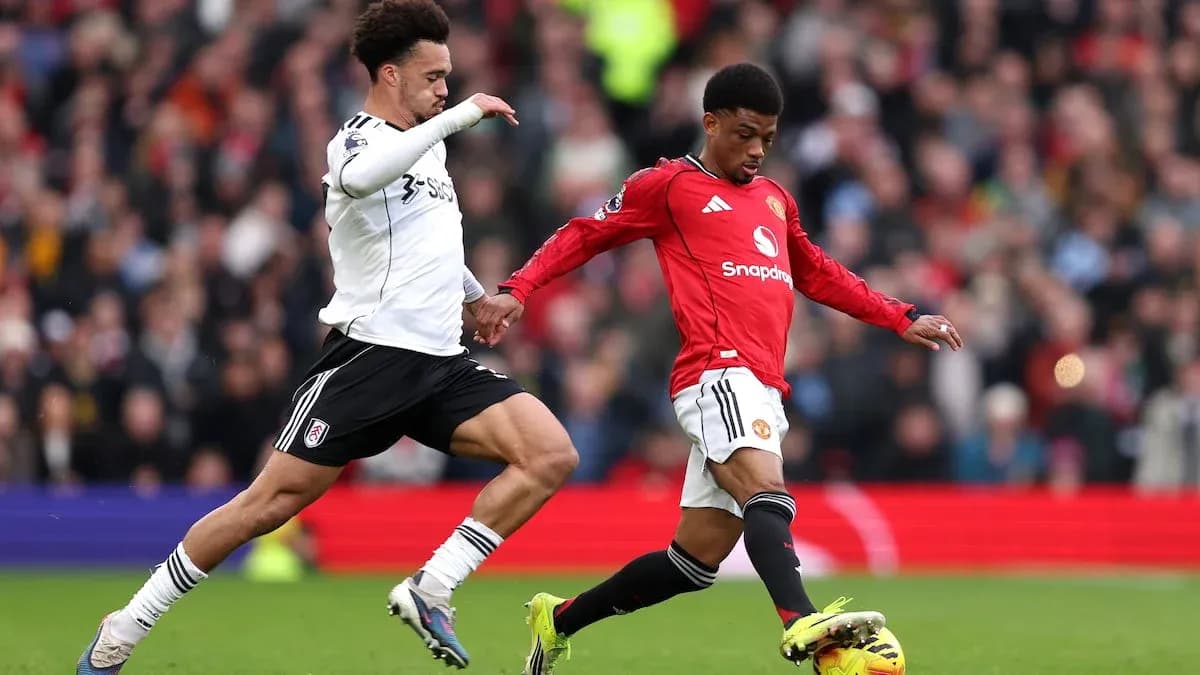
Tottenham Hotspur Struggles Continue in 3-2 Loss to Aston Villa
The afternoon at Tottenham Hotspur Stadium closed with a raw, uneasy truth for the home crowd. Tottenham, rooted to 20th in the Premier League on 2 points with a goal difference of -6 heading into this game, were beaten 3-2 by an Aston Villa side that arrived in London sitting 16th with 4 points and a goal difference of -5. On paper it was a meeting of strugglers; on the pitch it became a study in how two managers tried to bend the same formation to their will, with one edging the key battles in both boxes.
Both sides lined up in a 4-2-3-1, but the personalities inside those shapes could not have been more different. For Tottenham, Roberto De Zerbi leaned into technical control and ball progression from deep: A. Kinský in goal behind a back four of Pedro Porro, J. van Hecke, M. van de Ven and A. Robertson. In front of them, R. Bentancur and S. Tonali formed a double pivot designed to dictate tempo rather than simply screen. Ahead, a fluid trio of Sávio, Mateus Fernandes and Omar Marmoush supported D. Solanke as the lone striker.
The selection was heavily shaped by absences. De Zerbi was without D. Kulusevski, M. Mudryk, W. Odobert, Richarlison and X. Simons, all listed as missing this fixture. That stripped Tottenham of natural wide scorers and one‑v‑one chaos on the flanks. In response, the coach built a side that tried to create superiority between the lines rather than rely on explosive wingers. Sávio and Marmoush, both starting from nominal wide positions, were asked to drift inwards and combine, leaving Porro and Robertson to provide width from full-back.
Yet the season’s numbers framed a harsher reality. Heading into this game, Tottenham had played 5 league matches without a win, with 0 victories in total, 2 draws and 3 defeats. They had scored just 2 goals overall, both at home, for an average of 0.7 goals at home and 0.0 on their travels, 0.4 in total. Defensively they had conceded 8 in total, with 5 at home and 3 away, averaging 1.7 goals against at home and 1.5 away, 1.6 overall. This is a side that can keep the ball but struggles to convert territory into end product, and that fragility reappeared here.
Aston Villa, under Unai Emery, mirrored the 4-2-3-1 but with a more vertical edge. Z. Suzuki started in goal, protected by a back four of A. Wan-Bissaka, V. Lindelöf, T. Mings and M. Ruggeri. B. Kamara and João Gomes anchored midfield, allowing a creative band of J. McGinn, J. Manzambi and E. Buendía to orbit behind N. Jackson.
Villa’s season profile suggested a team with more punch but even greater volatility. Heading into this game, they had 1 win, 1 draw and 3 defeats from 5, scoring 4 goals in total (1 at home, 3 away) at an average of 0.5 at home and 1.0 away, 0.8 overall. They had conceded 9 in total (3 at home, 6 away), an average of 1.5 at home and 2.0 on their travels, 1.8 overall. The away data painted a clear picture: Villa are more dangerous going forward on their travels, but they live on the edge defensively.
In that context, the “Hunter vs Shield” duel was less about a single marksman and more about unit dynamics: Villa’s away attack, averaging 1.0 goal per game, against a Tottenham home defence conceding 1.7 per match. The 3-2 scoreline simply confirmed what the numbers foreshadowed – if Villa could connect their transitions, Tottenham’s back line would bend.
Individual personalities sharpened that narrative. For Villa, McGinn arrived as one of the league’s key creative hubs: 2 assists in 5 appearances, 6 key passes, and 118 total passes at 73% accuracy. He is also a tone‑setter without the ball, with 5 tackles and 5 interceptions, and a disciplinary edge – 2 yellow cards already. He embodies the duality of this Villa: creative but combustible. João Gomes, meanwhile, carried the stain of 1 red card and 1 yellow in just 2 appearances. His 9 tackles and 3 interceptions underline his capacity to disrupt, but his 5 fouls committed and that dismissal show how often he walks the line.
Those traits intersect with Villa’s broader card profile. Across the season, 45.45% of their yellow cards have come in the 91-105 minute band, with additional spikes at 31-45 minutes (18.18%) and 76-90 minutes (18.18%). This is a team that grows more frantic as matches stretch, and the red card logged between 31-45 minutes this season reinforces the risk of emotional spillover just before half-time. Against Tottenham’s own yellow‑card pattern – 40.00% between 46-60 minutes and 20.00% in each of the 0-15, 31-45 and 76-90 bands – the match was always likely to have a bruising, stop‑start middle period and a ragged finale.
Tactically, De Zerbi’s structure placed enormous responsibility on Bentancur and Tonali in the “Engine Room”. They had to progress play through Villa’s first line while also tracking McGinn’s late surges and João Gomes’ aggressive stepping out. Behind them, van de Ven’s recovery pace and van Hecke’s positioning were meant to guard the large spaces left by Porro and Robertson when they advanced. The problem, as the season data hinted, is that Tottenham’s central block has not been watertight enough to justify such aggressive full-back positioning.
Emery, by contrast, set his “Shield” to bite. Kamara and João Gomes were tasked with squeezing Tottenham’s double pivot, funnelling possession into riskier central lanes where McGinn and Buendía could counterpress and immediately spring Jackson into the channels. With Villa’s away attack already averaging more goals than their home output, the plan was clear: accept that they would concede territory, but bet that transitions would yield more than enough chances against a home side averaging only 0.4 goals per game overall.
The disciplinary undercurrent added another layer. With no penalties awarded or missed by either side in the league so far, the margins were always likely to come from open play and set-pieces rather than spot-kicks. Villa’s late‑game yellow surge suggested that if Tottenham could drag the contest into a chaotic final quarter, they might find a way back. They did score twice, but the structural issues that had defined their season – blunt finishing, soft defending at key moments – remained.
From a statistical prognosis, the 3-2 Villa win fits the profiles. A Villa side that concedes heavily but scores more away than at home found just enough incision against a Tottenham team that, heading into the game, had failed to score in 4 of their 5 league matches and conceded 8 times. Until De Zerbi finds a reliable source of goals to replace the absent wide forwards and tightens the spaces around his double pivot, Tottenham’s elegant structure will remain vulnerable to exactly the kind of vertical, transition‑heavy assault that Emery’s Villa executed in north London.