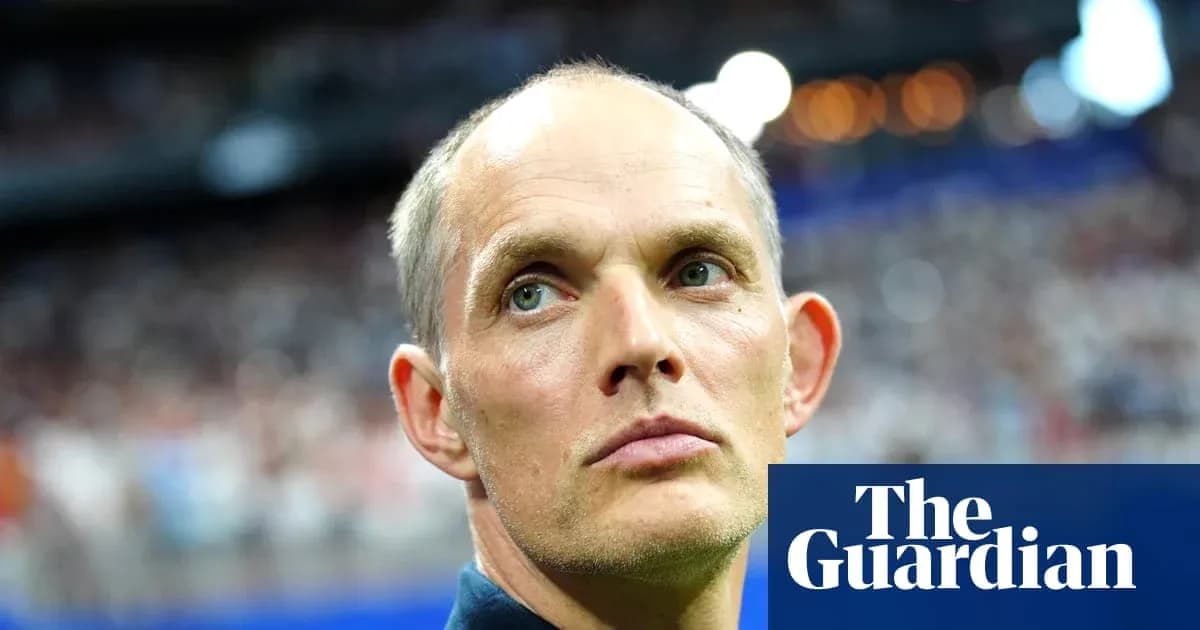
Thomas Tuchel Reflects on England's World Cup Collapse Against Argentina
Thomas Tuchel says he will “carry the scar” of England’s World Cup semi-final collapse against Argentina – and he is not backing away from the substitutions that enraged a nation. He just knows he made them too soon.
The England head coach has revisited that night in Atlanta in a new documentary on the England app, offering the clearest window yet into his thinking as a 1-0 lead turned into a 2-1 defeat and another World Cup dream died in the final minutes.
“We were waiting for death,” Tuchel admits, describing an England side unable to live with Argentina’s relentless attacking surge after Anthony Gordon’s hour‑mark opener. The plan, shaped by fatigue and by the success of a back five in previous knockout wins over Mexico and Norway, was to dig in, shut the game down and ride it out.
Instead, it blew up in his face.
Enzo Fernández and Lautaro Martínez struck late to flip the tie and deny England a first World Cup final appearance since 1966. The inquest has not stopped since.
“You can try to kill me here. But it’s my scar, it’s not your scar,” Tuchel says. “No one is more hurt than me, no one wanted it more. They can endlessly torture you and think: ‘If I had done different substitutions, then we would have won the match.’ You just don’t know it.”
The turning point came almost immediately after Gordon’s goal. England retreated. Djed Spence had to produce a desperate, last‑ditch tackle. Jordan Pickford made a crucial save. The team staggered into the hydration break hanging on.
That was when Tuchel made the call that has stalked him ever since: taking off his goalscorer Gordon and sending on defender Ezri Konsa to lock in a back five.
From the outside, it looked like fear. Tuchel insists it was a response to chaos.
“Argentina then play very, very quickly. Sorry for the language, [they played] fuck‑it football: ‘We have nothing to lose. Let’s fuck it,’” he says. Wave after wave of changes from the opposition, all geared towards attack, pushed him towards what he believed was the only logical solution.
“I think from what I saw and the experience, the information and the level of craziness Argentina put in – change after change after change, it was just one offensive change after the other. That was my solution to the problem.
“That’s what the intervention of a coach is. I try to help, you don’t implement anything for your ego or whatever. You just try to help.”
Tuchel describes watching that huge chance for Argentina just before the water break and feeling the ground shift beneath him. “A key moment if I look back at it and what happened to my decision-making, we conceded a big, big chance right before the water break. And I thought: ‘We will not survive. This is waiting for death. We don’t have ball possession, we’re not defending good, we’re not defending properly in our 4-4-2. We need help.’”
So he ripped up the 4-4-2 and went to a 5-3-2, then later a 5-4-1, trying to close the flanks and pack the box.
“I changed to a 5-3-2, we changed the structure. Because I believe we can handle the width better and we still have three central defenders in the middle if crosses still fly in. We changed then to a 5-4-1. Even my mindset is maybe like: ‘Let’s just overcome it.’ And it’s too early. Too early for that mindset.”
That is the admission at the heart of it. Not that the idea was wrong, but that the timing was.
The fallout was brutal. Calls for Tuchel to be sacked swelled in the days after the defeat. Accusations of negativity, of inviting pressure, of betraying England’s attacking talent, all landed on his doorstep.
He is not hiding from any of it. He is also not rewriting the story to please anyone.
“Of course you could [have made attacking changes],” he says. “No one knows what would have happened. We could have done it and maybe lost 2‑1 and could have gone: ‘Is he crazy? He finished the game against Norway with a back five, why didn’t he finish the game with five?’”
That is the fork in the road he keeps returning to. Stick with the open 4‑4‑2 and risk being overrun by what he calls Argentina’s “fuck‑it football”, or double down on the structure that had taken England this far and trust it one more time.
He chose the latter. Argentina ripped through anyway.
Tuchel will carry that decision, and that night, into every big game England play from here. The question is whether the scar hardens into the edge this team needs, or whether it becomes the shadow that follows them into the next tournament.