Switzerland vs Algeria: A Clash of Tournament Identities
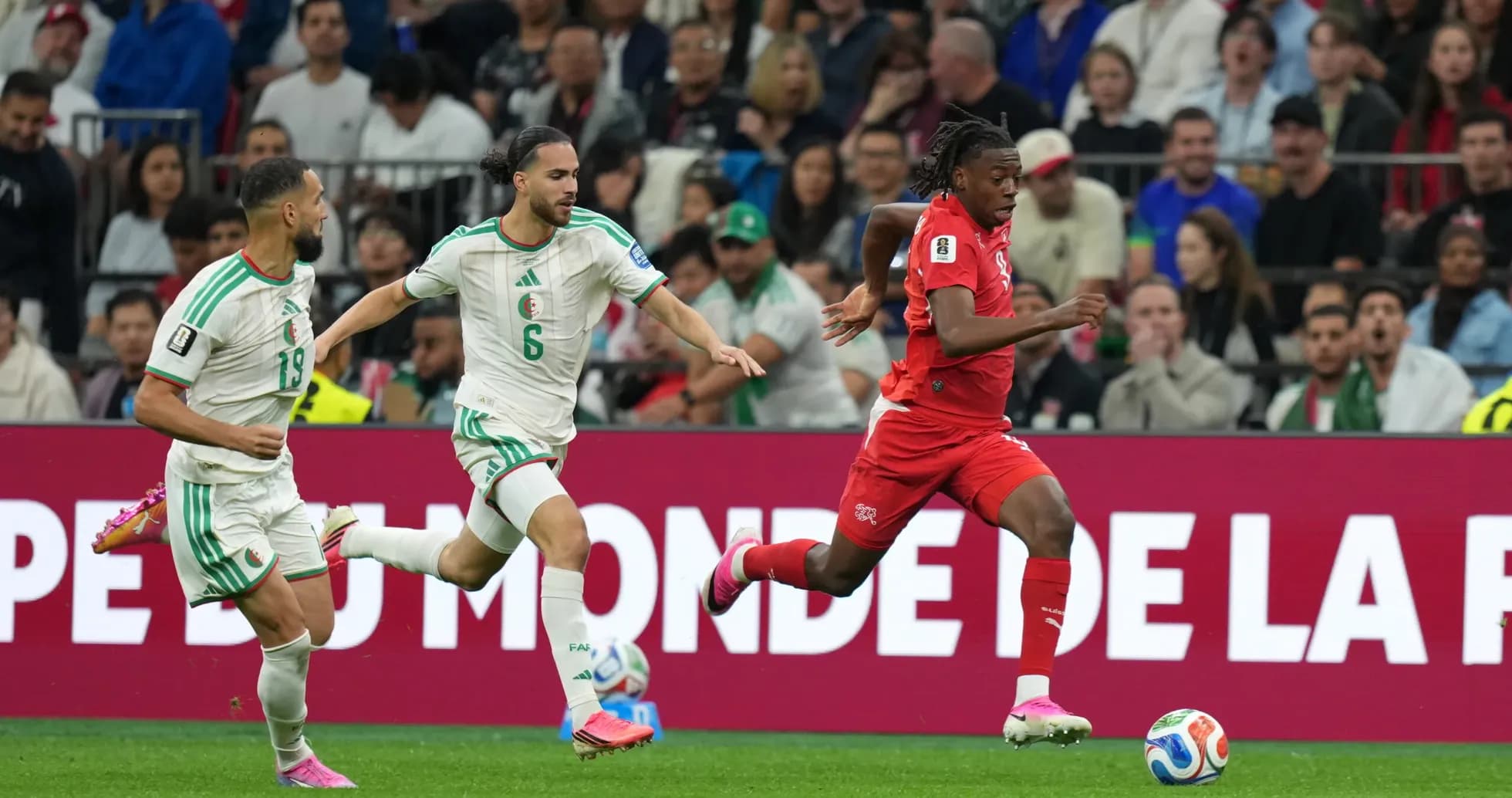
Under the closed roof of BC Place, this Round of 32 tie always felt like a clash of identities as much as a knockout match: Switzerland, the quietly efficient tournament machine, against an Algerian side still trying to reconcile its attacking talent with a fragile defensive record. Ninety minutes later, the scoreboard – 2-0 to Switzerland, after a 1-0 half-time lead – told a story of control, structure, and a Swiss squad built precisely for this kind of elimination football.
Coming into the knockout phase, Switzerland’s overall numbers already hinted at a side calibrated for tournament play. Across the campaign they had played 4 matches in total, winning 3 and drawing 1, with no defeats. Overall they had scored 9 goals and conceded 3, an overall goal difference of +6. At home in this tournament context – effectively neutral venues, but classified as home – they had played 3, won all 3, scoring 8 and conceding 2. The attacking profile was clear: an overall average of 2.3 goals scored per game, with 2.7 at home, backed by an overall defensive average of just 0.8 goals conceded per game. Add in a perfect record from the spot – 2 penalties taken in total, 2 scored, none missed – and you had a side that rarely wastes its big moments.
Algeria, by contrast, reached this stage as a talented but inconsistent outfit. Overall they had played 4 matches, winning 1, drawing 1 and losing 2. They had scored 5 and conceded 9 overall, for an overall goal difference of -4. On their travels they had played 3, winning 1 and losing 2, with 2 goals scored and 6 conceded; their away average of 0.7 goals scored per game and 2.0 conceded captured the imbalance. There had been no penalties to lean on – none taken, none missed – and, crucially, no clean sheets in total. For a knockout against a side as ruthlessly efficient as Switzerland, that defensive frailty was always going to be a fault line.
The lineups underlined the contrast. Murat Yakin doubled down on Switzerland’s best structure, rolling out a 4-2-3-1 that has been his most-used shape this tournament. Gregor Kobel stood in goal behind a back four of Denis Zakaria, Nico Elvedi, Manuel Akanji and Ricardo Rodriguez – a blend of aerial authority and ball-playing calm. In front of them, Remo Freuler and Granit Xhaka formed a double pivot designed to suffocate transitions and recycle possession with minimal risk.
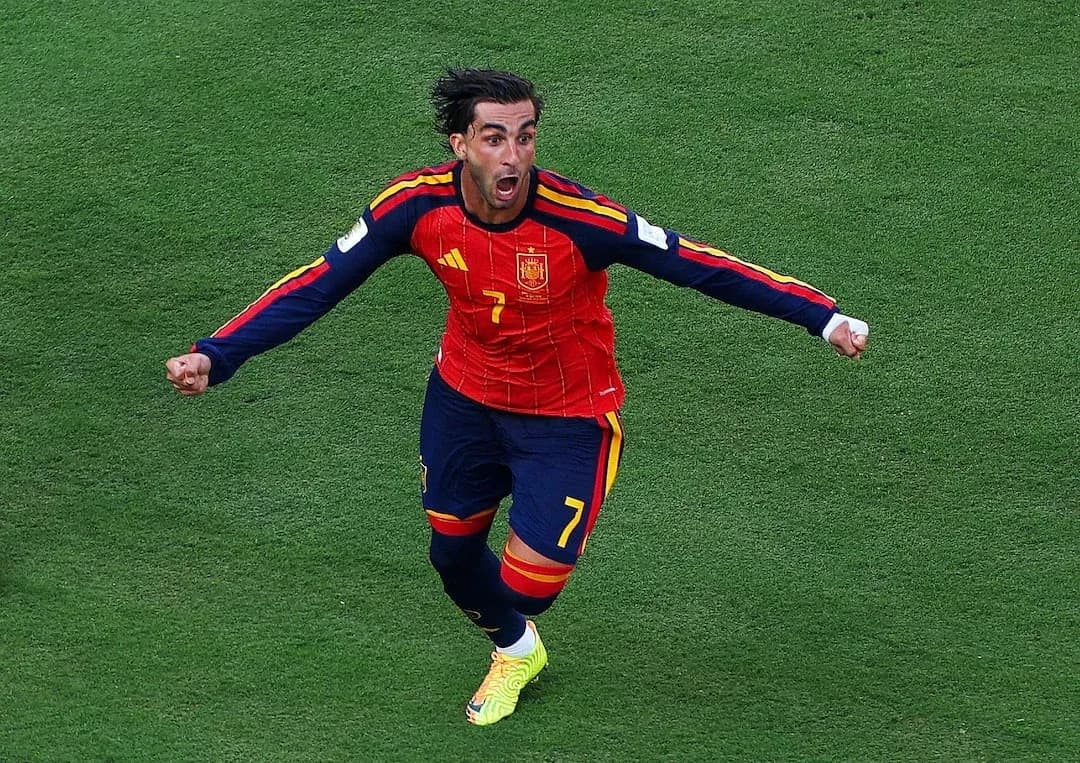
Ahead of that platform, the three behind the striker were the real story. Dan Ndoye on the right, Ruben Vargas on the left, and Johan Manzambi central as the nominal number 10: three runners, three pressers, three players who could all arrive in the box. Breel Embolo, leading the line, brought his typical blend of power and selfless movement. Between them, this attacking band embodied Switzerland’s tournament DNA: not flamboyant, but relentlessly functional.
Manzambi, in particular, came into the tie as one of the emerging stars of the World Cup. Overall, he had 4 appearances with 2 starts and 200 minutes, producing 3 goals and 2 assists. He had taken 4 shots in total, 3 on target, and created 3 key passes from 55 total passes at 78% accuracy. His dribbling profile – 14 attempts, 5 successful – spoke of a player willing to take risks between the lines, while his duels (31 contested, 9 won) and balanced foul profile (3 drawn, 3 committed) showed he was no luxury playmaker. He was both hunter and connector.
Behind him, Xhaka and Freuler were the metronomes and the shields. Switzerland’s card distribution this tournament told its own story: all of their yellow cards had come between 31-45 minutes (66.67%) and 61-75 minutes (33.33%). This is a side that manages early phases calmly, then raises the intensity as the half and the match approach their most dangerous moments. It is controlled aggression, timed rather than chaotic.
Algeria’s 4-3-3, under Vladimir Petkovic, was built to give their stars as many touches as possible in advanced zones. Lukian Zidane started in goal, with a back four of Rayan Belghali, Aissa Mandi, Ramy Bensebaini and Rayan Ait-Nouri. In midfield, Ramiz Zerrouki, Nabil Bentaleb and Farès Chaibi formed a technically gifted trio, tasked with progressing the ball through Swiss pressure.
Up front, the names were heavyweights: Riyad Mahrez from the right, Houssem Aouar from the left, and I. Maza through the middle. On paper, this was a front line capable of punishing any lapse. In practice, it was always going to depend on whether Algeria could protect them with a solid platform. Their overall defensive record – 9 conceded in 4, with an overall average of 2.3 goals against per game – suggested otherwise. Even their “biggest” away win, 1-2, was offset by a 3-0 away defeat that encapsulated their volatility.
Both teams carried absences, but Switzerland’s felt more manageable. L. Jaquez missed out with a muscle bruise, while Algeria were without A. Benbouali due to a wound. Neither was central to their side’s tactical core as defined by this tournament’s data and lineups; the real absences for Algeria were structural, not individual.
In the “Hunter vs Shield” matchup, Switzerland held the upper hand. Their leading attacking figures – Manzambi with his 3 goals and 2 assists, Embolo with 2 goals and 2 assists and a penalty scored – were supported by a system that consistently generates chances. Embolo’s wider tournament numbers reinforced that: 4 appearances, all as a starter, 347 minutes, 6 shots in total with 4 on target, 8 key passes from 49 passes, and 3 successful dribbles from 3 attempts. He had also drawn 8 fouls in total, a magnet for contact and a reliable outlet under pressure.
Set against that, Algeria’s defensive averages and lack of a single clean sheet in total made this an uphill task. Their card profile mirrored Switzerland’s in timing – yellow cards concentrated between 31-45 minutes (66.67%) and 61-75 minutes (33.33%) – but without the same defensive payoff. Aggression without control tends to invite punishment, and against a side as efficient from the spot and in open play as Switzerland, that was always dangerous.
In the engine room, Xhaka and Freuler versus Bentaleb and Zerrouki was the key duel. Switzerland’s overall defensive record – just 3 goals conceded in 4 matches, 2 at home – owed as much to their midfield structure as to their back line. Algeria needed Bentaleb’s passing and Zerrouki’s balance to break that screen and find Mahrez and Aouar in advanced pockets. Too often this tournament, though, their transitions had been stretched, leaving their back four exposed.
Following this result, the statistical prognosis that had hovered over the tie felt vindicated. Switzerland’s superior overall xG profile – implied by their 2.3 goals scored per game and low concession rate – married with a defensive unit that had already kept 1 clean sheet in total and never conceded more than once away. Algeria, with 2 matches in total where they failed to score and an overall concession rate of 2.3 per game, were always likely to need an outlier performance to survive.
Instead, they ran into a Swiss squad that played to type: structured in the back, cold-blooded in the final third, and anchored by a new creative hub in Johan Manzambi and a seasoned spearhead in Breel Embolo. In a World Cup where chaos often reigns, Switzerland’s order once again proved a winning formula.