South Africa's World Cup Journey: From Tears to Triumph
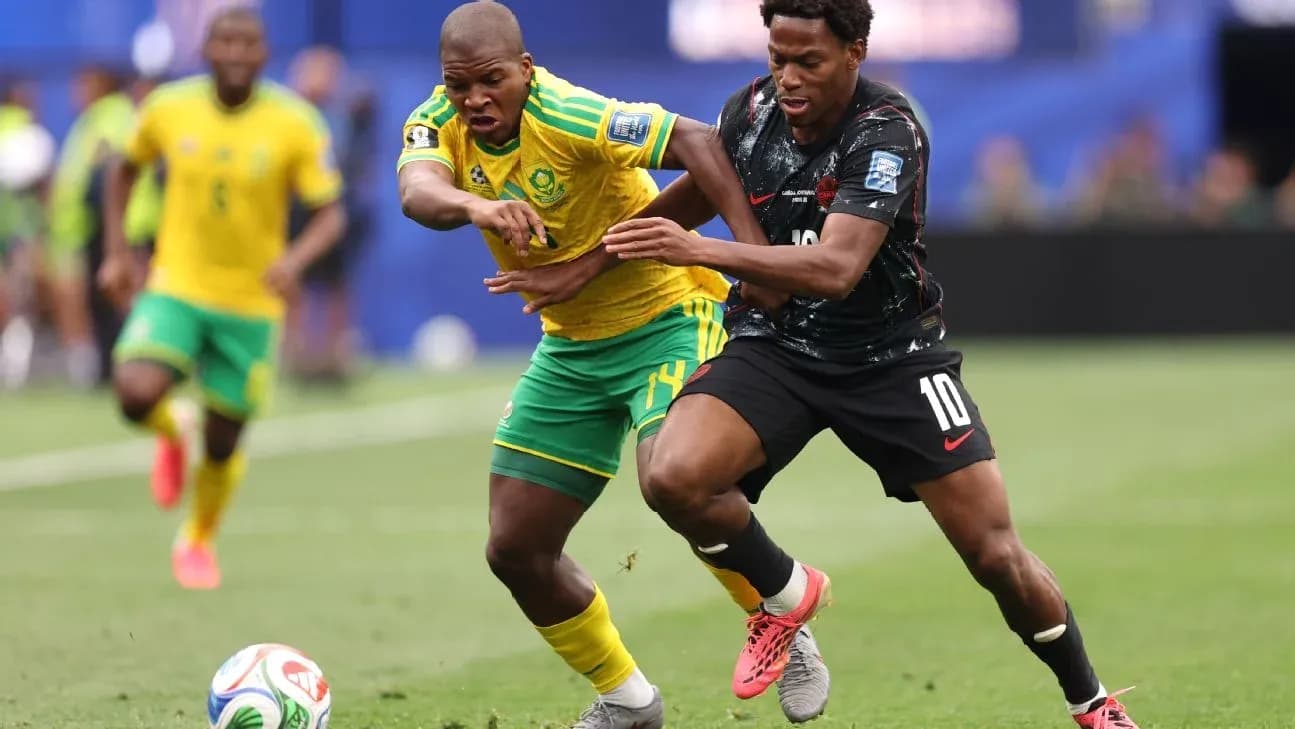
South Africa leave with tears in their eyes, not their heads bowed. A 1-0 defeat to Canada in the round of 32 ended their World Cup, but it did something else too: it opened a door that had been jammed shut for 16 years.
For the first time, Bafana Bafana reached the knockout stages of a World Cup. For the first time in a long time, the country can look at its national team and see more than nostalgia. It can see a plan.
Centre-backs for a generation
If there is one department South Africa can stop worrying about, it is the heart of their defence.
Mbokazi and Okon did not just start at this World Cup; they owned their roles. Mbokazi, in particular, emerged as one of the standout centre-backs in the entire tournament, reading danger early, stepping into tackles with authority, and carrying himself like a player who belongs on the biggest stage.
Behind them, the queue is already forming. Olwethu Makhanya, Khulumani Ndamane, Tylon Smith, Malibongwe Khoza, Aden McCarthy and others are pushing hard, ready to step in if either Mbokazi or Okon – “TLB” to those who know him best – ever need replacing, whether for a game, a campaign, or a cycle.
Whether Hugo Broos remains in charge or a new man takes the reins, the next World Cup cycle starts with a rare luxury for any international coach: a settled, high-ceiling core at centre-back and genuine competition snapping at their heels.
Mofokeng, the one that could explode
If there was a frustration for many Bafana supporters in 2026, it was the sense that Relebohile Mofokeng stayed on the leash.
The Orlando Pirates attacking midfielder never quite became a go-to option for Broos, even as fans raved about his talent. Yet context matters. Mofokeng is only 21. His story is not late; it is just beginning.
His performance in the 1-0 win over South Korea said everything about his ceiling. On that night, he did not look overawed or out of place. He looked like he belonged among global stars, demanding the ball, carrying it through pressure, and asking questions of defenders who had never heard his name before kick-off.
A move to Belgium’s Royale Union Saint-Gilloise is widely reported to be close. If it happens, it will offer exactly what he needs: a platform in Europe, a tougher weekly environment, and the kind of spotlight that can turn potential into a fully formed international weapon.
By 2030, South Africa might not be asking whether Mofokeng should play. They might be building the entire attack around him.
Homegrown, and good enough for the world
One of the quiet triumphs of this World Cup for South Africa came from a simple truth: you do not have to leave home to become a world-class competitor.
Teboho Mokoena, the heartbeat of Mamelodi Sundowns’ midfield, translated his domestic dominance onto the global stage. Thalente Mbatha, the Orlando Pirates midfielder, matched the intensity and tempo of the world’s best. On the flanks, Sundowns fullbacks Khuliso Mudau and Aubrey Modiba ran tirelessly, defended bravely and attacked with purpose.
Behind them all, Ronwen Williams reminded everyone why his name has travelled so far without him ever leaving South African club football. The captain produced big saves in big moments, the sort that keep tournaments alive and reputations intact.
These players are adverts for the South African Premiership. Of course, it would help the national team if more young talents test themselves abroad, sharpened by different styles and higher intensity. But this World Cup proved something important: staying in South Africa does not have to cap a player’s ambition. The domestic game can produce, and sustain, genuine global competitors.
Maseko, and the goal that changed everything
Then there is Thapelo Maseko, whose story reaches beyond tactics and formations.
At 20, he scored his first Bafana goal at the 2023 Africa Cup of Nations, staged in early 2024. Hugo Broos liked him, trusted him, saw something others did not always see. But club football can be a brutal place.
After swapping SuperSport United for Mamelodi Sundowns, Maseko slipped out of favour. Under Miguel Cardoso, who took over in December 2024, he drifted to the margins, often shunted to the reserves. In January 2026, just five months after he had gone public on social media about losing his love for football, he left on loan to AEL Limassol in Cyprus.
That move saved him.
By March, he was back in the Bafana fold. This month, he etched his name into South African football history. His strike against South Korea did not just win a game. It pushed South Africa into the World Cup knockout rounds for the first time ever.
For a country wrestling with its own belief, Maseko’s journey – from disillusionment to redemption on the biggest stage – offered something rare: proof that a career, and a dream, can be rebuilt.
Money, survival, and a chance to plan
While the players fought on the pitch, another battle raged in the background: the future of South African football itself.
SAFA’s finances have been under heavy scrutiny. Late payments to players after the African Nations Championship, operating expenses repeatedly outstripping revenue, and an organisation stuck in survival mode rather than long-term planning.
The World Cup has not magically fixed that. But it has changed the equation.
Just by reaching the group stage, SAFA were due at least $9 million in performance-based payouts, excluding preparation fees. By pushing into the round of 32, Bafana added another $2 million, banking $11 million in total from their run.
That is more than a number on a balance sheet. It is breathing space.
With a credible World Cup performance behind them and a knockout appearance on the record, SAFA suddenly become a more attractive proposition for sponsors. Negotiations that once felt like uphill battles can now be held with a highlight reel playing in the background and a nation re-engaged with its team.
The money will not erase past mismanagement. It will not, on its own, build academies, fix structures or guarantee progress. But it can strengthen the safety net for clubs, development programmes and the national teams in the short term, buying time for better decisions.
The real test starts now. Can SAFA move from firefighting to forward planning? Can they turn this World Cup from a beautiful chapter into the foundation of something bigger?
South Africa leave this tournament with a broken heart, a reinforced spine, a rising playmaker, a redeemed winger, and an association handed a second chance.
What they do with that chance will define whether this World Cup was a turning point, or just a brief, brilliant interruption to the old story.