
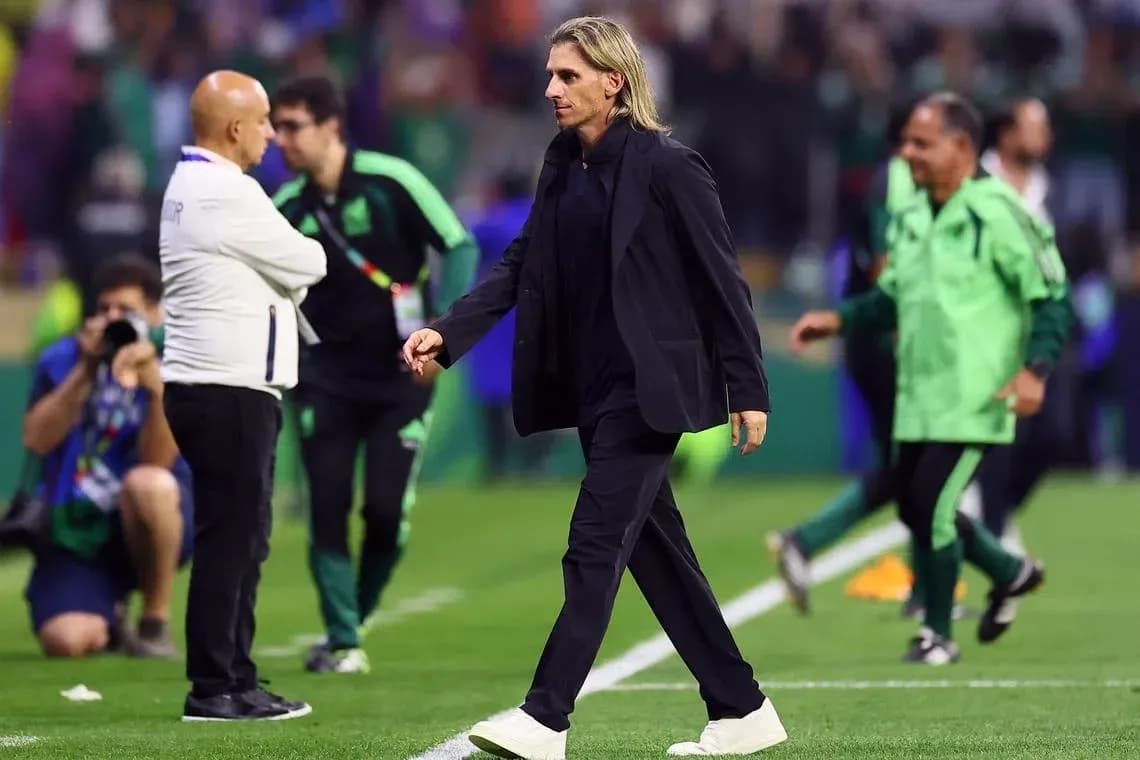
Sebastian Beccacece Says Goodbye After Ecuador's World Cup Exit
MEXICO CITY, June 30 – The noise inside the Azteca would have swallowed a lesser farewell. Sebastian Beccacece chose to walk straight into it.
Minutes after Ecuador’s World Cup ended with a 2-0 defeat to Mexico in the round of 32, the Argentine stepped in front of the microphones and closed the book on his time in charge, admitting he had not lived up to the promise he set when he took the job.
Their exit cut sharply against the mood that had carried Ecuador into the knockouts. A dramatic comeback win over Germany had injected belief, the kind of belief that makes a young squad feel bulletproof. Mexico tore that feeling away before halftime.
Mexico flew out of the blocks and imposed themselves from the first whistle, riding the roar of a deafening Azteca Stadium. Ecuador never settled. The Mexican defence, still unbreached at this World Cup, looked exactly that: flawless.
“We were outplayed in the first half,” Beccacece said, the assessment as blunt as the scoreline.
The damage was done early. Ecuador chased, Mexico controlled, and the tie tilted one way. The energy that had fuelled Ecuador’s surge against Germany ran into a green wall.
After the interval, the pattern shifted. Ecuador began to hold the ball, to move it with more purpose, to probe rather than simply survive. Possession finally arrived, along with a sense that they might drag themselves back into the contest. Mexico, though, refused to crack.
“We fought back, but we couldn't find the goal that would have given us a boost,” Beccacece admitted.
Every Ecuador attack seemed to die on the edge of the box, smothered by that disciplined Mexican back line. The clock became the enemy. So did the memory of the promise Beccacece had made.
“Our contract ended with the World Cup. I don't think we were able to achieve the feat we promised: to make this the best World Cup ever. Today it's my turn to say goodbye,” he said.
He did not dress it up. The target had been clear; the outcome was not enough. So was the consequence.
“That's why I have to leave. I would have liked to continue because what I received from the players and the management warranted the possibility of continuing. But I understand how this works and it hurts, but I think the decision was clear.”
No blame, no deflection. Just a coach accepting that the project, as he defined it, had fallen short.
If the night hurt, he refused to let it stain the bond with his squad. This Ecuador side, the youngest in the country’s history, had carried his ideas and his ambition to the world stage. When asked about his legacy, he pushed the spotlight away.
“The legacy is from the players, because they have been the youngest team of Ecuador,” he said.
He lingered on what came after the final whistle. Not the tactical autopsy, not the missed chances, but the human moments in the dressing room.
“I have no complaints, only gratitude to the people and the players,” he said. “I received so much gratitude and affection from the bottom of my heart. The boys gave me two beautiful hours after the match and that's what we're left with.”
In the end, that was his last act as Ecuador coach: not a tactical tweak or a substitution, but a goodbye rooted in appreciation. The scoreboard belonged to Mexico. The future, now, belongs to those young Ecuadorian players who must carry that legacy into the next cycle without the man who helped shape it.




