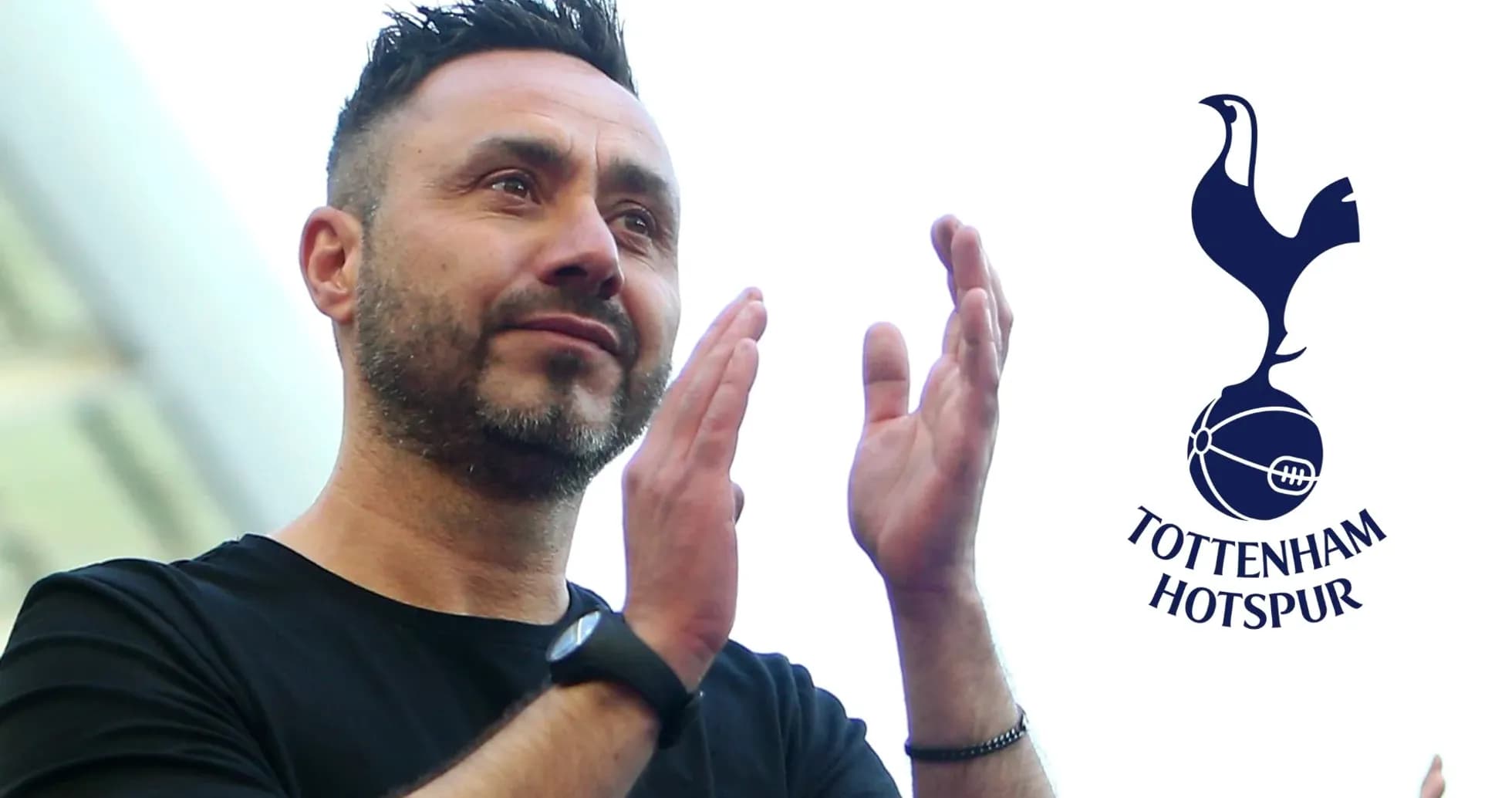
Roberto De Zerbi: The Key to Tottenham's Revival
In modern football, the dugout is no longer the true seat of power. Recruitment departments, data cells and global scouting networks now shape squads, while head coaches are often handed players and told to make it work.
Tottenham, though, stand at a point where that model might not be enough.
A new market window has swung open and the machinery is already whirring: scouts compiling lists, analysts matching profiles, executives weighing fees and wages. Names will be pushed towards the boardroom table at Spurs, players who supposedly fit the club’s philosophy and the demands of the Premier League.
But it is Roberto De Zerbi who must turn those names into a team.
He is not a coach built for the background. The Italian is intense, demanding, unafraid to say exactly what he thinks. He wants control of the details and expects those around him to follow a plan drawn in his ink, not someone else’s template.
Tottenham have effectively handed him the keys after two seasons spent skirting disaster. Successive 17th-place finishes, two relegation battles that frayed nerves and patience alike, have dragged a club of Spurs’ stature into territory it should never recognise as home. They have turned to De Zerbi to drag them out of it.
For Brad Friedel, the former Spurs goalkeeper, the route back is clear: give De Zerbi the power to shape the dressing room.
Speaking to GOAL in association with MrQ, Friedel dismissed the idea of a third straight survival scrap in 2026-27. “Nope, they’ll flip the script now. They have the right guy in De Zerbi,” he said. The caveat came quickly. “I just hope they let him get who he wants in the summer. I know they’re going to have to do it financially prudent. I know they bring in a great deal of revenue, but let De Zerbi get what he wants to a point, at least.”
That is the tension at Tottenham now. Fiscal caution on one side, a manager with a clear and forceful vision on the other.
Friedel laid out a simple formula. If Spurs plan to bring in six players, he argued, half of them should be “solely De Zerbi’s guys” – footballers chosen primarily because the head coach wants them, not because they tick boxes on a spreadsheet. “He knows what he wants. He knows how he wants his teams to play,” Friedel said.
There is evidence to trust that judgement. De Zerbi has already shown he can walk into a damaged squad and keep it standing. He inherited a group with one of the highest injury records among key players and, as Friedel put it, “the lowest confidence level of any team in the Premier League” – and still found a way to survive.
It was not comfortable. Tottenham stayed up “by the skin of their teeth”, Friedel noted, helped in part by the Aston Villa team selection on the decisive day they faced each other. But they stayed up. In a season that chaotic, that counts.
For Friedel, the lesson is obvious: stop complicating the picture. “Don’t overcomplicate things. De Zerbi is a good coach, and he knows, in his system, how he wants to play,” he said. Recruit for that system. Back the blueprint. Then see how quickly the mood can change.
Because buried beneath those relegation battles is still a club with the infrastructure, revenue and reach of a heavyweight. Friedel believes that if Spurs align their transfer work with De Zerbi’s demands, the climb could be sharp rather than slow. “I think you could actually see a very quick resurrection in them into the top six,” he said.
Tottenham have gambled on a strong-willed coach to wake a sleeping giant. The next few weeks will show whether they trust him enough to let him choose the tools for the job.