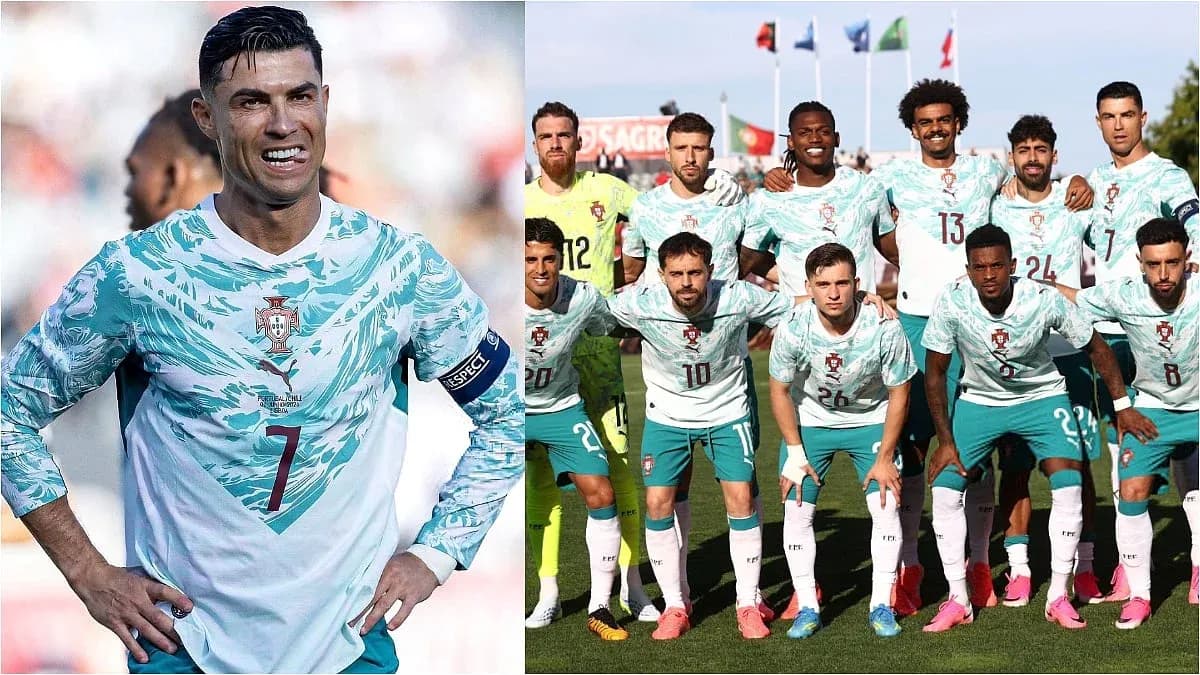
Portugal vs Croatia: World Cup 1/16 Final Tactical Overview
Portugal face Croatia at BMO Field in Toronto in a high-stakes World Cup 1/16 final. Both sides advanced as group runners-up — Portugal from Group K with 5 points and a +5 goal difference, Croatia from Group L with 6 points and a neutral goal difference — so this knockout tie is season-defining: defeat ends their World Cup campaign immediately, while victory keeps a realistic path open towards the 1/8 final and deeper into the tournament.
Head-to-Head Tactical Summary
The recent head-to-head record is dense and competitive, with five meetings between 2020 and 2024 across the UEFA Nations League and friendlies:
- 18 November 2024, Stadion Poljud (Split), UEFA Nations League League A - 6: Croatia 1–1 Portugal (HT 0–1). Portugal led at the break but Croatia recovered to share the points, underlining their resilience at home.
- 5 September 2024, Estádio da Luz (Lisbon), UEFA Nations League League A - 1: Portugal 2–1 Croatia (HT 2–1). A high-tempo first half decided the game, with Portugal edging it and then managing the second period.
- 8 June 2024, Estádio Nacional (Jamor, Oeiras), Friendly: Portugal 1–2 Croatia (HT 0–1). Croatia showed they can hurt Portugal away, striking first and holding off a late response.
- 17 November 2020, Stadion Poljud (Split), UEFA Nations League League A - 6: Croatia 2–3 Portugal (HT 1–0). Croatia started stronger but Portugal overturned the deficit, highlighting Portugal’s capacity to adjust and finish strongly.
- 5 September 2020, Estádio Do Dragão (Porto), UEFA Nations League League A - 1: Portugal 4–1 Croatia (HT 1–0). Portugal produced the most one-sided result in this sequence, with a dominant attacking display.
Tactically, these games show Portugal generally more explosive in attack, especially at home, while Croatia have repeatedly found ways to stay in matches and create scoring chances even when second-best for long spells.
Global Season Picture
- League Phase Performance: In the group stage, Portugal finished 2nd in Group K with 5 points from 3 matches (1 win, 2 draws, 0 defeats), scoring 6 goals and conceding 1, for a +5 goal difference. Croatia finished 2nd in Group L with 6 points from 3 matches (2 wins, 0 draws, 1 defeat), scoring 5 goals and conceding 5, for a 0 goal difference.
- Season Metrics: In the league phase, Portugal’s profile is that of a balanced but slightly attack-tilted side: 6 goals scored in 3 matches (2.0 per game) and only 1 conceded (0.3 per game), with 2 clean sheets and just 1 match without scoring. Their preferred setup is a 4-2-3-1 used in all 3 fixtures, suggesting structural continuity. Croatia, also in the league phase, have a more volatile profile: 5 goals scored and 5 conceded in 3 matches (1.7 for and 1.7 against per game), only 1 clean sheet and no matches without scoring, mixing a 4-2-3-1 (twice) with a 3-4-2-1 (once). Card-wise, Portugal’s yellow cards are spread across phases of the game (four yellows across different time ranges), indicating measured aggression, while Croatia’s yellows cluster late (between 61–75 and 91–105 minutes), hinting at rising intensity and fatigue in closing stages.
- Form Trajectory: Portugal’s form string in the group stage is “DWD” — an opening draw, a win, then a draw — pointing to an unbeaten but slightly inconsistent trajectory, combining control with occasional difficulty in killing games. Croatia’s “WWL” pattern shows they started strongly with back-to-back wins before a defeat, suggesting momentum that has recently stalled and a defense that can be exposed under pressure.
Tactical Efficiency
Across all competitions data is not provided, so the efficiency assessment aligns strictly with the group-stage picture. Portugal’s attack looks efficient relative to their risk profile: 2.0 goals per game in the league phase with only 0.3 conceded indicates a side that converts a solid share of its chances while maintaining defensive stability. Their consistent 4-2-3-1 and two clean sheets suggest a compact structure where the double pivot protects the back line, allowing the attacking four to operate with freedom without sacrificing control.
Croatia’s league-phase balance is more fragile: 1.7 goals scored but 1.7 conceded per match points to an open game model, with enough creativity to score in every match but with a defense that can be stretched, especially away from their more conservative 4-2-3-1 shape. Their clean-sheet count (1) and the fact they have not failed to score indicate a high-variance profile — matches tend to be decided by small margins and individual moments rather than systemic control.
In a pure “Attack/Defense Index” comparison, Portugal project as the more efficient unit: higher goal difference from similar sample size, more clean sheets, and fewer structural shifts. Croatia’s indices are more balanced but less efficient — they need to create more to achieve similar outputs and expose themselves more in transition, which is a risk against Portugal’s historically sharp transition play highlighted in the 4–1 and 3–2 Nations League wins.
The Verdict: Seasonal Impact
This 1/16 final is a clear inflection point for both national teams’ 2026 campaigns. For Portugal, an unbeaten group stage with 6 goals scored and only 1 conceded in the league phase sets an expectation of at least reaching the 1/8 final. Elimination here would turn a statistically dominant group performance into a failed World Cup run, raising questions about their ability to translate territorial and defensive control into knockout efficiency. Progression, by contrast, would validate their current 4-2-3-1 structure and confirm them as a credible contender for the quarter-finals and beyond.
For Croatia, who advanced with 6 points but a 0 goal difference in the group stage, this tie is a test of ceiling versus volatility. Another open, high-event match could either showcase their resilience and attacking quality or expose their defensive fragility at the highest level. A win would mark them as a dangerous bracket opponent despite the numbers, potentially reshaping expectations for their 2026 trajectory and giving them a platform to adjust their defensive structure before the 1/8 final. A defeat, especially if it comes via defensive lapses, would reinforce the narrative of a side that can compete with top teams but lacks the tactical efficiency to sustain a deep World Cup run.
In strategic terms, the result will either confirm Portugal’s data-backed status as a compact, efficient knockout operator or open the door for Croatia’s more volatile but battle-hardened profile to redefine the balance of power in the 2026 World Cup knockout tree.