
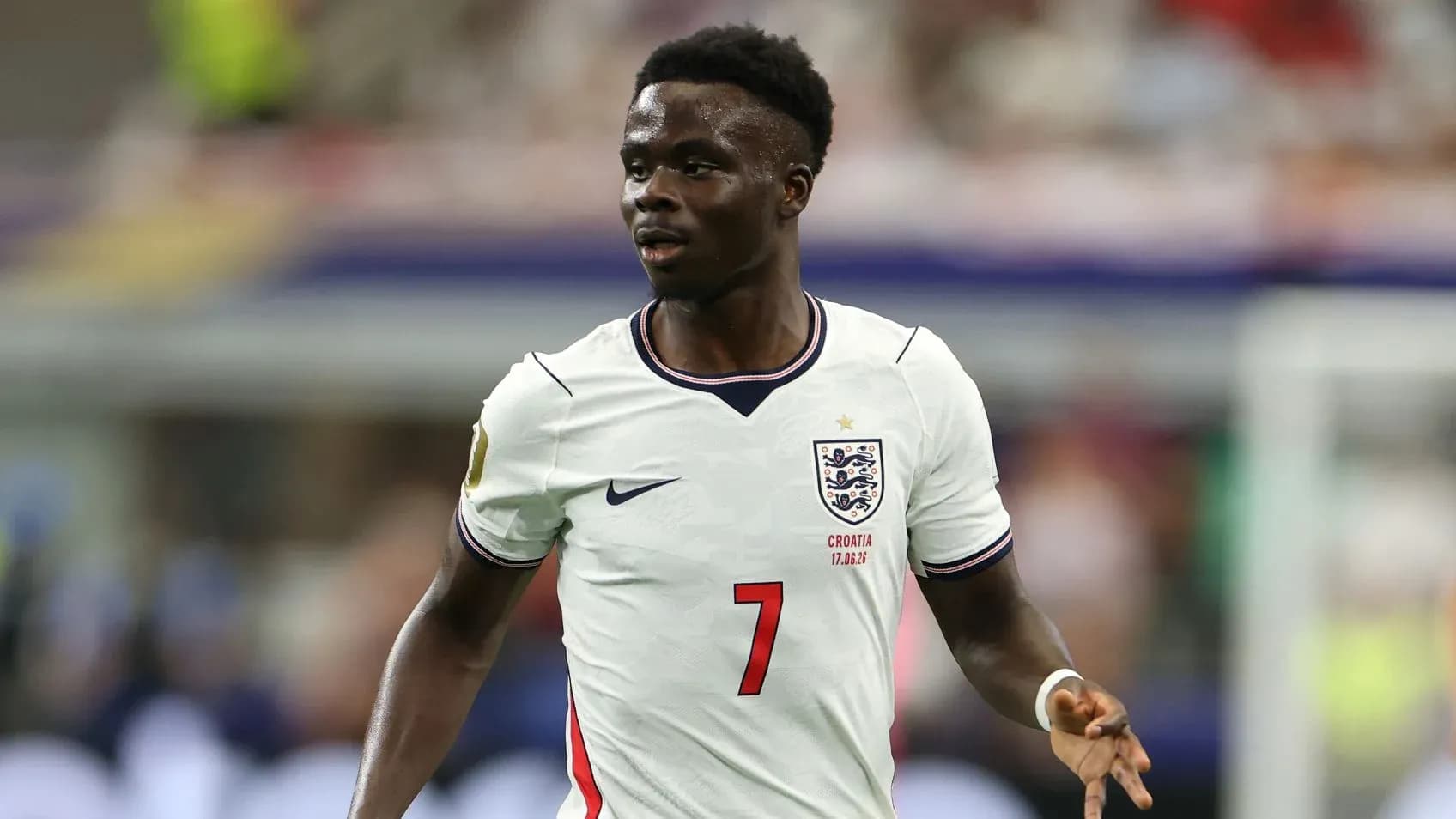
Gary Neville’s Warning on Bukayo Saka Highlights England’s Wing Problem
Bukayo Saka has always been England’s sunshine on the right flank. Right now, the clouds are gathering.
Gary Neville has sounded a stark warning over the Arsenal winger’s physical state, insisting the 24-year-old is a shadow of the player who usually lights up tournaments. Saka has been nursing a persistent Achilles problem, monitored closely by the FA throughout this World Cup in North America, and the strain is starting to show.
He has featured in all three group games, but only in carefully controlled bursts. Thomas Tuchel has kept him largely on the bench, rationing his minutes as England edged through the early stages.
“Bukayo Saka doesn’t look right at all,” he said. “He’s usually the boy that’s bubbling and smiling, he’s got that competitive edge to him, but he’s not right and that’s a concern to us, I think.”
That concern is shared by Ian Wright, and he has gone a step further. Wright openly questioned whether Saka should have been taken to the tournament at all, given the miles already on his legs after a punishing domestic season.
Saka himself had admitted before the competition that he was “happy to gamble” with his fitness. It shows. His Premier League minutes were carefully managed down the stretch, he has struggled to complete 90 minutes for months, and the sharpness that usually defines his game has dulled.
“We’re going into a World Cup, and still not starting the first few games, only starting when we’re three games in, and still isn’t looking like the Saka that we know – this guy needs a break,” Wright argued. It was less a throwaway line, more a plea.
Saka’s struggles are not happening in isolation. They sit inside a wider, more worrying picture for Tuchel: England’s wings have gone quiet.
Anthony Gordon and Noni Madueke have both been handed chances to change the tempo of games, to stretch teams, to provide the sort of incision that defines knockout football. The spark hasn’t come. England’s threat from the flanks has been muted, leaving too much creative burden on Jude Bellingham’s shoulders and too much hope pinned to Harry Kane’s finishing.
Roy Keane sees the danger clearly. For him, the drop-off out wide is the kind of fault line that tends to crack under knockout pressure.
“The wingers need to grab their opportunity. These players haven’t quite grabbed their opportunity yet,” he said. “In the group games, you can maybe slip up in one of them, but now at least one of them has to start turning up.”
That’s the reality as England head to Atlanta for a last-32 tie against DR Congo. On paper, it’s a favourable draw. On the pitch, it becomes a trap if the same patterns repeat: laboured build-up, reliance on individual brilliance, and too little incision from the players who should be stretching the game.
Beyond DR Congo, the bracket sharpens. A route that could run through Mexico or Ecuador, then Brazil in the quarter-finals, and potentially Argentina in the semi-finals, is already being mapped out in studios and dressing rooms alike.
“I think if we can get to Brazil we could probably beat Brazil,” he said. “But then I think we’d have problems after that. I said England would reach the semi-final from the start.”
Keane doesn’t bother with caveats. The mention of Argentina, and Lionel Messi’s reigning champions, brings a blunt verdict.
“England would have absolutely no chance of beating Argentina in the semi’s, I just can’t see it.”
That’s the backdrop to Tuchel’s biggest decision of the tournament so far. Does he keep rolling the dice on a half-fit Saka, the player who so often drags England up a level? Or does he finally give his weary winger the rest so many believe he needs and demand that Gordon, Madueke and the others seize a stage that won’t wait for them?
England’s World Cup ambitions may not be decided by Messi or Brazil’s stars. They might hinge on something far simpler: whether a winger finds his legs again in time, or whether someone else is finally ready to run with the shirt.




