Osasuna vs Espanyol: Tactical Analysis of La Liga Defeat
Osasuna’s 1-2 defeat to Espanyol at Estadio El Sadar was defined by territorial dominance from the hosts and ruthless efficiency from the visitors. In a La Liga fixture where Osasuna enjoyed 68% possession and generated 24 shots to Espanyol’s 7, Manolo Gonzalez’s side leaned on a compact 4-4-2 block, direct transitions, and a clinical set of attacking moments to secure three points. Alessio Lisci’s 4-2-3-1 controlled the ball and territory, especially after the break, but lacked penetration at key moments and was repeatedly punished in defensive transition and on Espanyol’s few forays forward.
Executive Summary
Espanyol struck first through C. Romero on 27 minutes, capitalising on one of their rare attacking phases to take a 0-1 lead into half-time. Osasuna’s territorial siege finally produced an equaliser on 49 minutes via V. Munoz, assisted by centre-back F. Boyomo stepping high into the attacking phase. However, Espanyol’s response was immediate: K. Garcia restored the visitors’ advantage in the 53rd minute, assisted by right midfielder T. Dolan, and from there Espanyol managed the game with disciplined defending and selective counter-attacks. Despite heavy pressure, Espanyol held on for a 1-2 away win in Regular Season - 37.
Scoring Sequence & Disciplinary Log
The game’s first key tactical moment arrived on 27 minutes: C. Romero, nominally Espanyol’s left-back in the 4-4-2, advanced to finish a rare attacking move for the visitors, giving Espanyol a 0-1 lead against the run of possession. His goal crystallised Espanyol’s plan: defend deep, then commit full-backs aggressively when space appeared.
Osasuna’s pressure finally yielded a breakthrough on 49 minutes. V. Munoz scored for the hosts, with centre-back F. Boyomo providing the assist. Boyomo’s involvement underlined Osasuna’s second-half shift: centre-backs stepping into midfield to create overloads and pin Espanyol’s lines back. The goal levelled the match at 1-1 and temporarily validated Lisci’s structural tweaks.
Espanyol replied almost immediately. In the 53rd minute, K. Garcia struck the decisive 1-2 goal, assisted by T. Dolan. From a tactical standpoint, it was a classic counter to Osasuna’s aggressive rest defence: Dolan exploited space in wide areas, and Garcia’s movement between centre-backs punished Osasuna’s advanced line.
Disciplinary events were few but tactically relevant. The card log, in strict chronological order:
- 11' Pol Lozano (Espanyol) — Foul
- 83' Iker Muñoz (Osasuna) — Foul
- 90' Antoniu Roca (Espanyol) — additionalInfo null (no stated reason)
Espanyol finished with 2 yellow cards, Osasuna with 1, total 3. Lozano’s early booking shaped his defensive aggression in midfield, while Iker Muñoz’s caution reflected Osasuna’s increasing desperation to regain the ball quickly late on. Roca’s late card came as Espanyol were trying to disrupt rhythm and close out the result.
Tactical Breakdown & Personnel
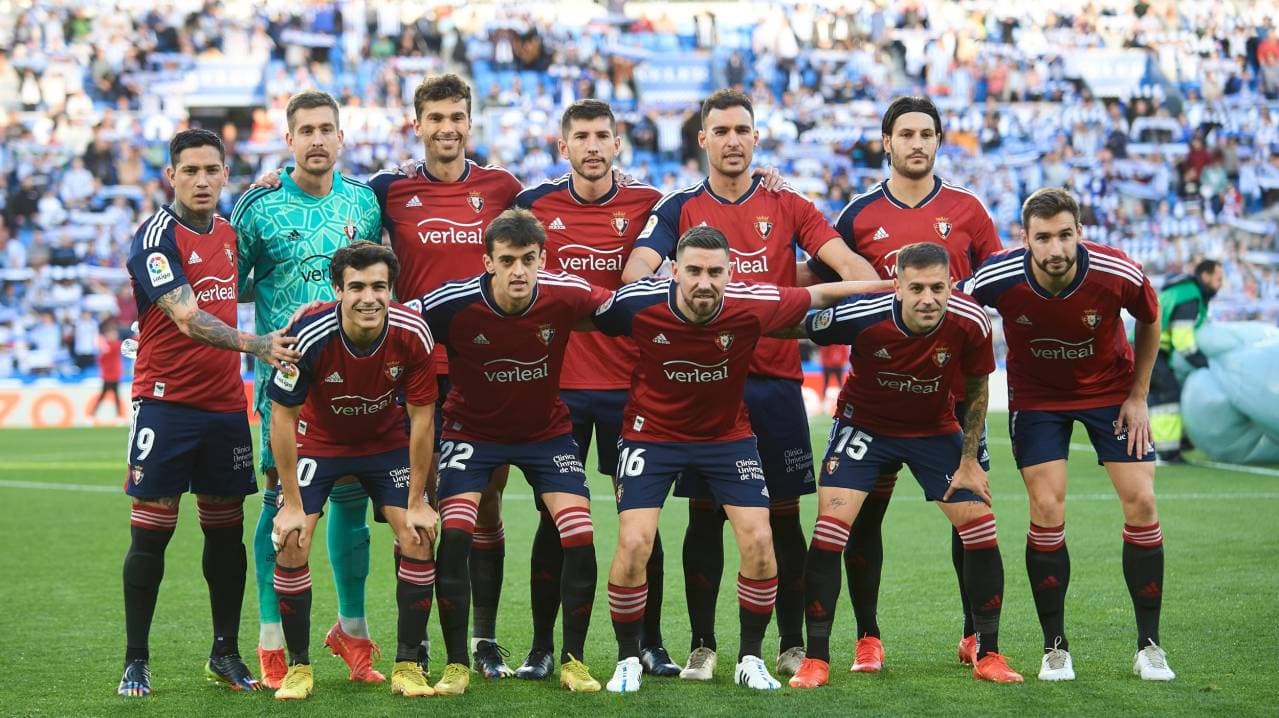
Osasuna lined up in a 4-2-3-1 with S. Herrera in goal; a back four of V. Rosier, A. Catena, F. Boyomo, and A. Bretones; a double pivot of L. Torro and J. Moncayola; R. Garcia, A. Oroz, and V. Munoz supporting lone striker A. Budimir. The structure was possession-oriented: 515 passes, 442 accurate (86%), and 68% of the ball. The hosts focused on building through the full-backs and double pivot, then pinning Espanyol’s block with a narrow attacking midfield three.
The shot profile tells the story of sustained pressure: 24 total shots, 18 inside the box, and 9 on target. The xG of 1.61 indicates they created enough to score at least once, which they did, but not enough to overwhelm Espanyol’s compact 4-4-2. Osasuna also forced 9 corners, a sign of territorial dominance, and kept their defensive discipline with just 10 fouls and 1 yellow card.
S. Herrera had a quiet but frustrating afternoon in terms of shot-stopping: only 1 recorded save, with goals prevented at -0.23, suggesting he conceded slightly more than an average keeper might from the chances faced. Defensively, Osasuna’s main issue was structural rather than individual: with full-backs and even centre-backs like Boyomo pushing high, the rest defence was repeatedly exposed to Espanyol’s direct attacks and early balls into the front two.
Espanyol’s 4-4-2, with M. Dmitrovic in goal; a back line of O. El Hilali, C. Riedel, L. Cabrera, and C. Romero; a midfield four of T. Dolan, U. Gonzalez, P. Lozano, and P. Milla; and a front pairing of Exposito and K. Garcia, was built to absorb and break. They completed 252 passes, 174 accurate (69%), reflecting a more direct and risk-accepting approach in possession. With just 7 shots (4 inside the box, 3 on target), their xG of 0.79 underlines how efficiently they converted limited opportunities.
M. Dmitrovic was central: 6 saves and goals prevented of -0.23. The negative goals prevented value indicates the model suggests he conceded slightly more than expected, but the raw volume of saves, combined with the pressure, made his performance tactically decisive in preserving the lead. Espanyol’s back four stayed narrow, forcing Osasuna wide and trusting Dmitrovic to handle crosses and low shots.
Substitutions further defined the tactical battle. For Espanyol, C. Pickel (IN) came on for P. Lozano (OUT) at 55', adding defensive solidity in midfield. Later, F. Calero (IN) replaced Exposito (OUT) at 64', effectively shifting Espanyol towards a more conservative shape, and R. Fernandez Jaen (IN) for K. Garcia (OUT) at 64' refreshed the pressing and counter threat. In the final phase, A. Roca (IN) for T. Dolan (OUT) and R. Sanchez (IN) for P. Milla (OUT) at 76' signalled a move to protect wide areas and disrupt Osasuna’s flanks, with Roca eventually booked at 90'.
Osasuna’s triple change on 58' — R. Garcia (IN) for A. Oroz (OUT), I. Munoz (IN) for L. Torro (OUT), and M. Gomez (IN) for J. Moncayola (OUT) — was a clear attacking gamble, adding fresh legs between the lines and more vertical threat. J. Galan (IN) for A. Bretones (OUT) at 67' and K. Barja (IN) for V. Rosier (OUT) at 78' further pushed the full-back zones higher, but also left more space for Espanyol to counter.
The Statistical Verdict
From a data standpoint, this was a classic case of dominance without reward for Osasuna. Their 68% possession, 515 passes at 86% accuracy, and 24 shots to Espanyol’s 7 show clear control of the game’s flow. The xG margin (1.61 vs 0.79) supports the narrative that Osasuna created more and better chances, but Espanyol finished more clinically and defended their box with greater clarity.
Espanyol’s 32% possession and 252 passes at 69% accuracy underline their direct, transition-heavy plan. With only 2 corner kicks and 13 fouls, they balanced aggression with enough discipline to avoid serious defensive breakdowns, despite 2 yellow cards. Osasuna’s single caution and relatively low foul count (10) suggest they tried to win the ball through structure rather than disruption, but that same structural ambition left them vulnerable to Espanyol’s few but decisive attacks.
In the end, Osasuna’s overall form on the day — in terms of control and chance creation — was strong, but Espanyol’s defensive index and efficiency in both boxes decided a tight, tactically nuanced 1-2 away victory.