
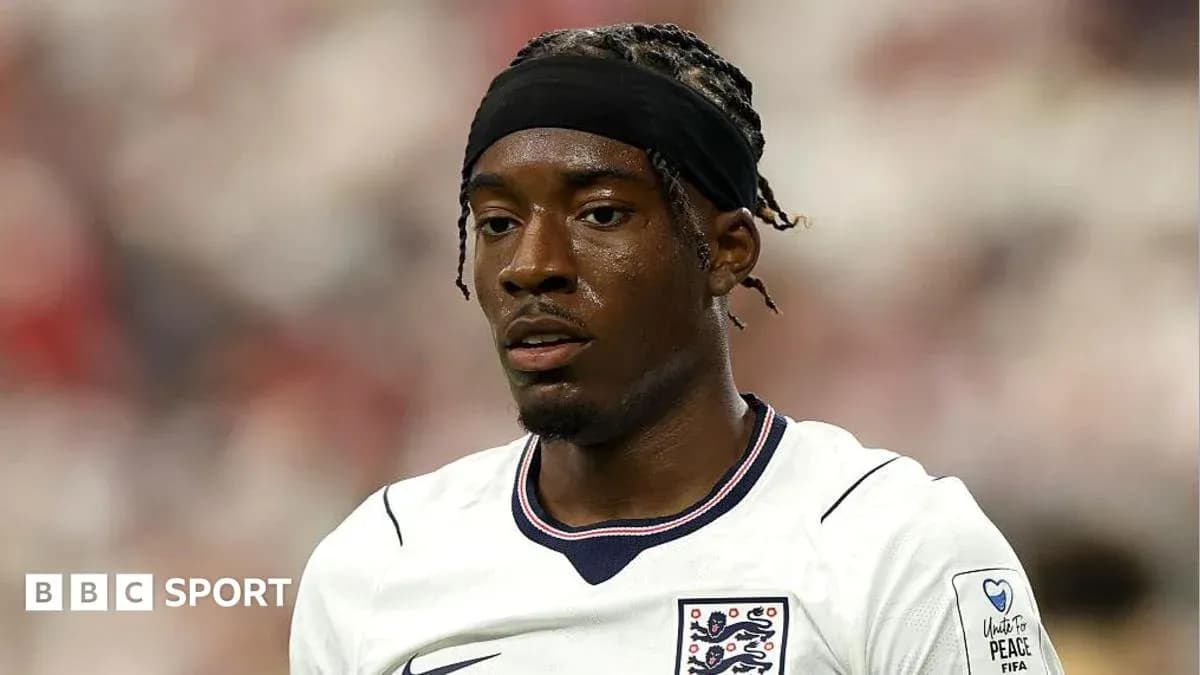
Noni Madueke's Rise: From Controversial Signing to England's Key Player
Noni Madueke walked out in Dortmund as England’s starting right winger and, for a moment, it felt like the end of an argument that had raged for a year.
Last summer, Arsenal paid about £50m to prise him from Chelsea. The reaction was brutal. A petition, a hashtag – #NoToMadueke – and a fanbase convinced the club had overpaid for a luxury they did not need.
Twelve months on, the picture could hardly be more different. Madueke is a Premier League champion, a key part of Mikel Arteta’s first title in 22 years, and now Thomas Tuchel’s trusted starter on the biggest stage of all. The winger who arrived under a cloud is suddenly central to two projects: Arsenal’s resurgence and England’s World Cup push.
From hashtag to headline act
Against Croatia, Madueke didn’t just start. He stamped his authority on the game.
He was one of England’s standout performers in the 4-2 win, constantly driving at defenders, constantly asking questions. His sharp movement and direct running brought the moment that tilted the tie: a burst into the box, a tangle of legs, and a penalty that Harry Kane buried to restore England’s lead.
Tuchel has been clear about what he wants this England side to be. He wants Premier League intensity in an international shirt: physical, aggressive, relentless runners across the pitch. Madueke fits that brief.
The 24-year-old’s relationship with Kane is already taking shape. England’s captain, now at Bayern Munich, dropped off the front line, Madueke sprinted beyond. The numbers told the story: Madueke played four passes into Kane – the joint-most of any England player, level with goalkeeper Jordan Pickford. When Kane had room, he looked early for the winger’s run in behind, twice trying to slide him clear of the Croatia defence.
Madueke finished with five touches in the opposition box, completed his only attempted dribble and, crucially, drew the foul that set England on their way. It was not a flawless performance, but it was full of purpose.
On the opposite flank, Anthony Gordon mirrored that energy, and England suddenly had two wingers stretching the game, pinning Croatia back and giving Tuchel exactly the wide threat he had built his system around.
A “unique” rivalry with Saka
All of this plays out against a backdrop that is as intriguing as it is unusual.
Madueke and Bukayo Saka are team-mates at Arsenal and rivals for the same position with England. Both prefer the right wing. Both like the ball at their feet, both want to decide matches. And both are now operating at the very top of the game.
Saka, dealing with an Achilles problem he has carried since March, still came off the bench to make his 50th England appearance in the win over Croatia. He called the situation “unique” and admitted he is not quite sure how the dynamic works, only that “it works” between them.
It does. Off the pitch, Saka refers to Madueke as his “brother”. On it, they are in direct competition.
Arteta spent last season wrestling with that puzzle and, by the end, found a way to fit them both into a title-winning side. Madueke often operated from the left, cutting inside onto his stronger foot, while Saka occasionally moved into the number 10 role, floating between the lines. The blend gave Arsenal a different kind of chaos in the final third and carried them to the championship.
Madueke’s raw numbers were solid rather than spectacular – eight goals and four assists in 43 appearances in all competitions – but that only tells half the story. He started just 16 league games, his minutes limited by Saka’s status and a knee injury, yet still managed to influence big moments.
In the Champions League final defeat to Paris St-Germain last month, he came off the bench for Saka and immediately injected life into Arsenal’s attack. It was a cameo that hinted at a player comfortable in the tightest of spaces and the tensest of occasions.
Tuchel will have noticed.
Tuchel’s template and Madueke’s moment
When the England manager named his World Cup squad, his praise for Madueke was pointed. He called him a “difference-maker”, highlighting his one-on-one ability and the chaos he can cause out wide. That was not a throwaway line; it was a clue.
Tuchel has built his plan around Kane, England’s record goalscorer and captain, and then looked for wingers who will run beyond him to stretch defences and create pockets for him to drop into. He wanted physically robust, powerful runners on the flanks. Madueke ticked every box.
The Croatia game was the first real test of that theory. The wide players pressed, chased, and repeatedly forced Croatia’s back line to turn towards their own goal. The penalty incident came from exactly that kind of movement: a winger attacking space, not waiting for the game to come to him.
For now, Saka’s Achilles problem has simplified Tuchel’s decision. The Arsenal star is not expected to start until England’s final Group L match against Panama in New Jersey on Saturday. That gives Madueke clear air – and another start against Ghana on Tuesday – to strengthen his case.
But the selection battle is coming. Arteta has shown there is a way to accommodate both. Tuchel, who has already borrowed heavily from Premier League rhythms, may yet borrow that idea too as the tournament deepens and games tighten.
Not just a back-up
The narrative around Madueke has turned sharply in a year. From a signing many Arsenal fans did not want, to a Premier League winner. From a squad option behind Saka, to England’s starting right winger at a World Cup.
He is still, in some ways, fighting for recognition. His league starts last season were limited. His role for England, once Saka is fully fit, is not guaranteed. But every time he steps onto the pitch, he chips away at the notion that he is simply the understudy.
Croatia felt like a statement. Ghana offers another stage. If Madueke keeps seizing these chances, the question will not be whether he can cover for Saka.
It will be how any manager leaves him out.




