Ghana vs England: Tactical Dilemmas and Key Players Ahead of World Cup Clash
Ghana escaped. Just.
Ranked 39 places below Panama, the Central Americans were supposed to be the underdogs. On paper. On the pitch, they bullied Ghana’s Black Stars for long spells of that World Cup opener, and Carlos Queiroz’s side staggered away with a 1-0 win that owed as much to tactical firefighting and sheer will as it did to any coherent plan.
Now comes England. Tournament favourites. Group heavyweights. And there will be no margin for muddled thinking.
This will be Ghana’s first competitive meeting with England, their only previous clash a 1-1 friendly draw at Wembley in 2011. The stakes this time are different. So must be the decisions.
The Jordan Ayew question
Jordan Ayew is the heartbeat and the headache.
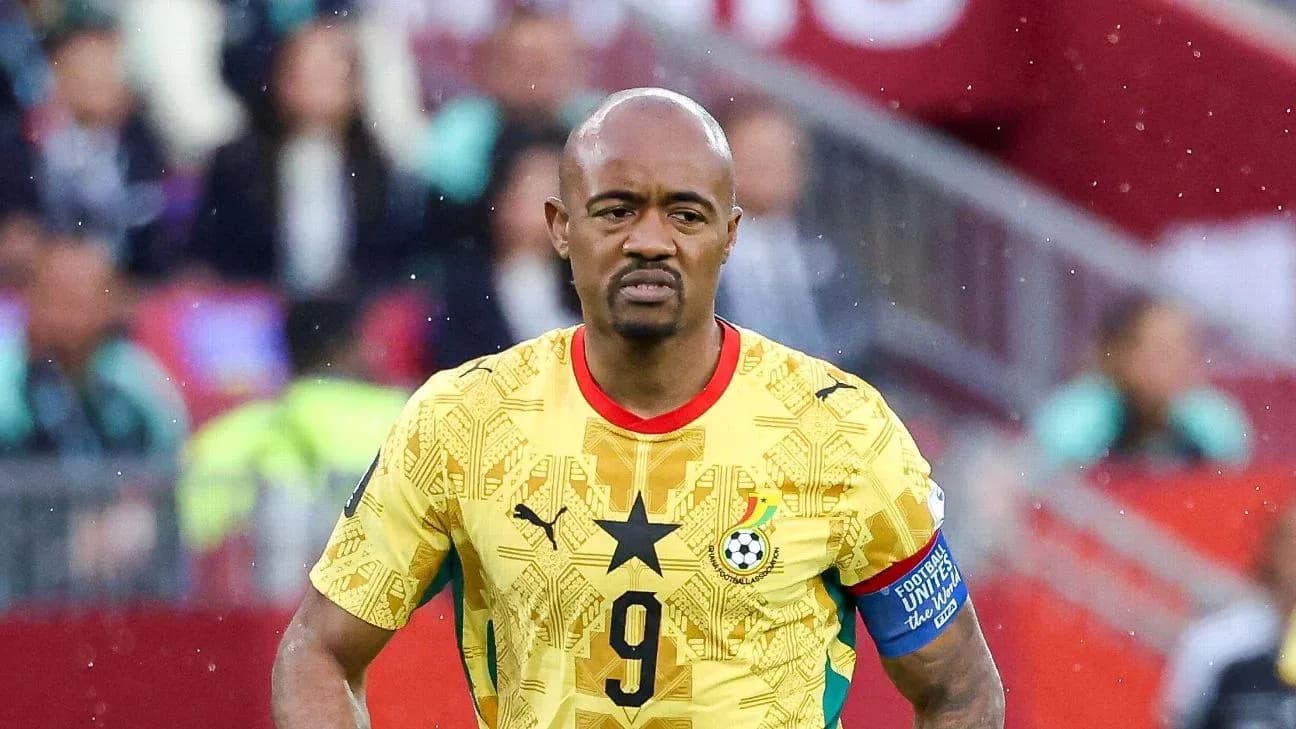
He is the captain, the most experienced player in the squad, the man who walked out against Panama to join an exclusive club of Ghanaians who have appeared at three World Cups, after 2014 and 2022. He carries more than 100 caps, deep institutional knowledge of the team and the game, and the weighty surname of Abedi Pele.
He also looked miles off the pace.
Against Panama, Ayew’s lack of speed was laid bare. When he did get on the ball, his choices often dragged Ghana backwards. One sequence summed it up: Antoine Semenyo slipped him a pass with space to attack. Semenyo burst forward, begging for the return. Ayew had time. He had angles. He had options. Instead, he dribbled into traffic and lost it.
Panama never made Ghana pay. England will.
A static centre forward against an England back line is a risk bordering on reckless. Brandon Thomas-Asante, who set up Caleb Yirenkyi’s winner, offers the opposite profile: quick, aggressive, eager to run in behind. He does not have Ayew’s experience, and though he plays in England, he has not yet faced the calibre of players he will see in this World Cup. That tension sits at the heart of Queiroz’s dilemma.
Bench your captain and you lose a voice, a reference point, a leader in the storm. Start him up front and you hand England’s defenders a comfortable evening.
There is a third way.
Ayew’s best moments against Panama came when he drifted deeper, linking play instead of trying to stretch the back line. From that advanced midfield pocket, his lack of pace matters less, his brain more. Between the lines, he can knit midfield to attack, find runners, and arrive late into space rather than chase into it.
A structure with Ayew as a No. 10, operating just behind Semenyo and one of Thomas-Asante or Abdul Fatawu, gives Ghana something sharper. Pace on the flanks and through the middle. Craft and experience feeding it. England’s fullbacks are a known point of vulnerability; asking Ayew to outrun them is a lost cause. Asking him to release the runners that can? That’s a plan.
Partey’s return: from survival to control
Ghana’s midfield against Panama never truly settled. Elisha Owusu struggled, swamped by pressure and by a shape that left him exposed. It was not all his fault, but the effect was brutal: Ghana chased the game instead of dictating any of it.
Thomas Partey changes that equation.
If fit and ready, Partey should come straight back into the XI alongside the impressive Yirenkyi. England’s midfield is elite and showed it by slicing Croatia apart in a 4-2 win. Jude Bellingham and Declan Rice dominated the game, driving through lines, dictating tempo, and punishing every lapse.
Without a player of Partey’s intelligence and authority, Ghana risk being dragged into a long, painful exercise in damage limitation. With him, they have a chance to slow the game down when needed, to hold the ball, to choose when to engage rather than constantly react.
Partey and Yirenkyi sitting together can crowd England’s central lanes, stop those effortless Bellingham surges, and force Rice to turn and defend instead of striding forward. That, in turn, frees Ayew higher up to connect play, instead of dropping so deep that Ghana’s attack becomes a rumour.
This is not about matching England man for man. It is about denying them the rhythms they enjoy and creating pockets of control in a game where Ghana cannot afford to be spectators.
Where England can be hurt
England scored four against Croatia and still walked off with questions hanging over their defence.
They conceded twice and could have shipped more. The flanks, in particular, looked fragile. Reece James was caught out for one Croatian goal, losing his man at the crucial moment. On the other side, Nico O’Reilly impressed going forward but still looks raw defensively, a “work in progress” in a position where errors are punished without mercy.
That is Ghana’s invitation.
Semenyo’s direct running can drag James and O’Reilly into uncomfortable one-on-one duels. Thomas-Asante’s pace and physical strength can spin defenders around, forcing them to turn and chase. Fatawu and Ernest Nuamah, attacking from wide areas, can stretch England’s back line until the gaps appear between centre backs and fullbacks.
Croatia’s most dangerous moments came when they attacked quickly, before England could settle into their defensive shape. Ghana have the tools to do the same: speed, physicality, and enough guile in the final third to turn broken play into chances.
What they cannot do is play safe, slow, and predictable. England’s defence looks most vulnerable when it is being run at, not when it is allowed to shuffle across and reset.
No more slow starts
Ghana spent the first hour against Panama on the back foot. They ceded possession, allowed chances, and let the game drift away from them.
Only when Queiroz changed the structure – pushing Semenyo centrally, increasing the press, and injecting energy from the bench – did the Black Stars finally grab control. The tempo went up. Panama started to creak. The goal eventually came.
Try that slow-burn approach against Thomas Tuchel’s England and the contest could be over by halftime.
England hit Croatia twice in the first half and looked most uncomfortable when pressed high and aggressively. When Croatia pushed up, England’s midfield and back line coughed up mistakes, and their defensive shape wobbled. But Croatia could not sustain that intensity.
Ghana must.
If they sit deep and invite pressure, Harry Kane and his supporting cast will not show the same wastefulness Panama did. Two early goals, and Queiroz will be left rearranging deckchairs.
The Black Stars need to start at the tempo they finished with against Panama, not build towards it. Turn the game into a physical grind, a running battle, a test of nerve and stamina. Make England suffer for every touch.
This cannot be a cautious sparring session. It has to be a war of attrition from the first whistle.
Survive the dead ball
England’s threat from set pieces has not gone away. On the opening matchday, they recorded the highest non-penalty expected goals and most shots on target from set plays. Kane’s second against Croatia came from a simple, brutal truth: he was left unmarked from a Rice corner and did what he always does.
Ghana cannot afford that kind of lapse.
Whether Lawrence Ati-Zigi recovers in time to start after his first-half collision against Panama or Benjamin Asare keeps the gloves, the basics must be non-negotiable: no free headers, no lost runners, no ball-watching on corners and wide free kicks.
The first layer of defence starts even earlier. Avoid silly fouls in those central areas where England can load the box. Close down without diving in. This is where Partey’s positional sense becomes vital, plugging gaps that Panama exploited too easily.
And if the worst happens? If a clumsy challenge leads to a penalty?
Kane’s reputation from the spot is built on more than power and placement. He studies goalkeepers, toys with them in the run-up, waits for the slightest movement. Asare and Ati-Zigi must do their homework in return. No guessing. No early commitment. Kane will be ready. Ghana’s keepers have to be as well.
After the Panama win, Queiroz framed the reality of this World Cup in stark terms. “We have to suffer; there is no other way,” he said, calling every result “very expensive” and insisting his players are ready to pay the price.
England will test that claim like no other. The question now is simple: can Ghana turn that suffering into a statement, or will this be the night their World Cup journey is brutally recalibrated?