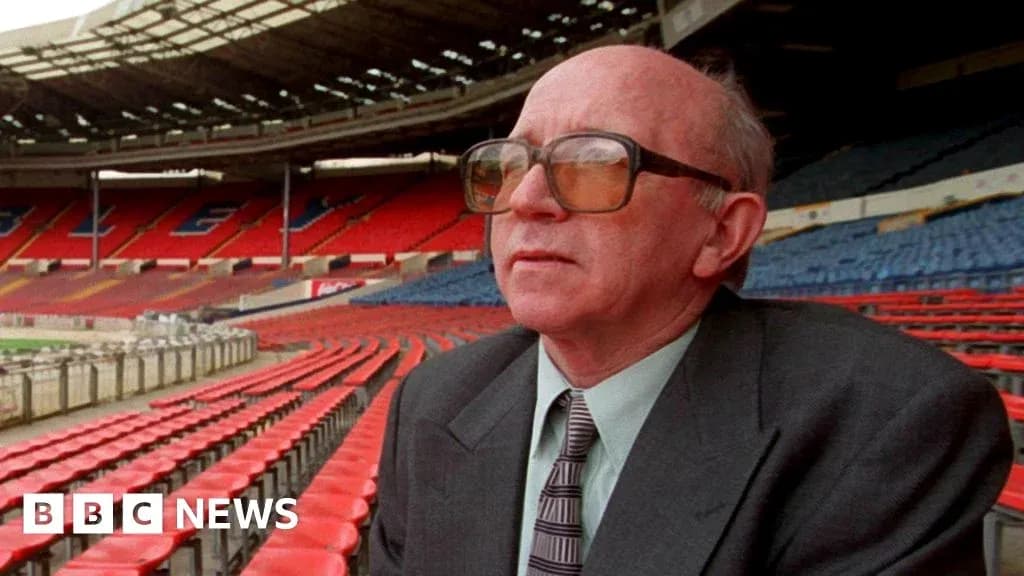
Nobby Stiles and the Concussion Crisis in Football
Nobby Stiles, the gap-toothed enforcer who danced with the World Cup in his hands in 1966, has become a central figure in football’s deepening concussion crisis after a coroner ruled that an inquest into his death must be held.
The 78-year-old former Manchester United and England midfielder died in 2020. A court has now heard he was suffering from chronic traumatic encephalopathy (CTE) – a degenerative brain disease linked to repeated head impacts – and a traumatic brain injury at the time of his death.
That combination has pushed his case back into the spotlight and into the legal system.
Coroner orders full inquest
Chris Morris, area coroner for Greater Manchester South, told Stockport coroner’s court that a full inquest was required after a brain specialist reviewed Stiles’s medical records.
He revealed that Stiles’s death had not been referred to the coroner when he died.
“For reasons not entirely clear to me,” Morris said, the case only came to the coroner’s office after Stiles’s family provided further information. Once the expert evidence landed, the picture changed.
Stiles’s death was found to have been contributed to by high-stage CTE, alongside what was described as “stage three limbic predominant age related TDP-43” and small vessel cerebrovascular disease.
“On the basis of that cause of death, particularly the inclusion of a traumatic injury included in the cause of death, I’m satisfied an inquest is required into the sad death of Mr Stiles,” Morris told the court.
The full inquest will be heard on Wednesday at the same court.
From World Cup hero to test case
Norbert “Nobby” Stiles was born in Manchester in 1942 and came to embody a harder, more unforgiving era of English football. A tough-tackling defensive midfielder, he won 28 caps for England, played nearly 400 times for Manchester United and formed part of the spine of the 1966 World Cup-winning side.
He was the man who shadowed Eusebio at Wembley. The man who danced on the pitch with the Jules Rimet Trophy and his boots in his hands. He was also a player from a generation that headed heavy, often waterlogged balls, in training and in matches, day after day.
That legacy now sits at the heart of a growing battle over what the game knew, and when.
Stiles’s family have campaigned since his death for football’s authorities to do far more for former players who, they argue, are living – and dying – with the consequences of their playing days.
Families take the game to court
His son, John Stiles, is head of Football Families for Justice (FFJ), a group pressing governing bodies to better support ex-professionals suffering with neurodegenerative conditions.
He is among dozens of former footballers and relatives suing the Football Association, the Football Association of Wales and the English Football League. The legal claim accuses those bodies of being “negligent and in breach of their duty of care” to players who spent years repeatedly heading the ball.
Lawyers for the families say football’s leaders knew, or should have known, that constant heading in training and games was likely to cause brain injuries – and that the dangers had been flagged for decades.
The sport’s authorities dispute that charge. In March, lawyers for The Football Association told the High Court that it has “not been established by science” that heading a ball, or “occasional” concussion, can lead to permanent brain damage.
That clash between lived experience and scientific certainty now runs through almost every major case.
A pattern that’s getting harder to ignore
Stiles’s inquest will not unfold in isolation. Earlier this year, an inquest into the death of Gordon McQueen, the former Scotland, Manchester United and Leeds United defender, reached a stark conclusion of its own.
McQueen, who died aged 70, was found to have suffered a brain injury to which heading the ball was “likely” to have contributed.
One case might be written off as tragic coincidence. Two, three, dozens? The pattern is becoming harder for the sport to look away from.
For Stiles, the fighter in England’s midfield, the battle now moves to a courtroom and a coroner’s bench. The verdict will not change his story on the pitch. It may yet change how football confronts the risks that came with it.