
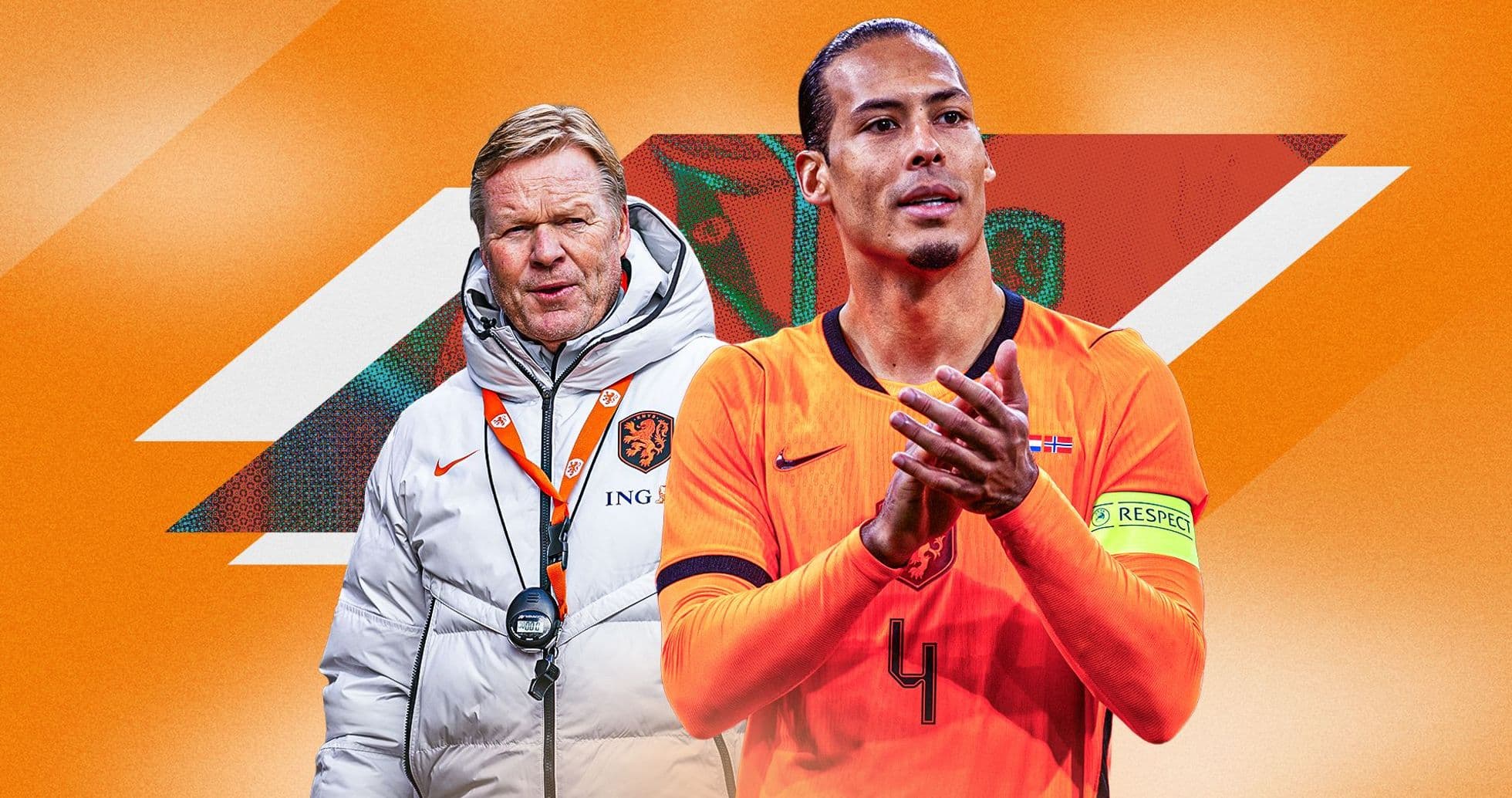
Netherlands: Dark Horses with a Serious Squad
The Netherlands arrive as they so often do: talked about, respected, but parked just outside the velvet rope of the true favourites. They sit in that familiar space between menace and mystery, the team no giant wants to meet in a knockout tie, yet rarely the first name tipped to lift the trophy.
This time, they wear the label of dark horses again. A dangerous one.
A Brutal Group, A Serious Squad
Japan, Sweden, Tunisia. It is a group that offers no soft landings, no guaranteed six-point stroll. Japan bring intensity and structure, Sweden a hardened tournament know-how, Tunisia a stubborn edge that can turn any game into a scrap.
Still, the Oranje walk into it as favourites to finish top. And you only need to glance down the spine of Ronald Koeman’s squad to see why.
Virgil van Dijk anchors the back line, still the reference point, still the voice that orders everything in front of him. In midfield, Frenkie de Jong remains the conductor, the player who can slow a storm or slice through it with a single pass. Ahead of them, Memphis Depay and Cody Gakpo offer a blend of experience, invention and cold finishing that few defences relish facing.
There is quality everywhere you look. But there are scars too.
Injuries, Omissions and Awkward Questions
Koeman will go into the tournament without several players he had every right to expect would be central to his plans. Xavi Simons, Jurrien Timber and Matthijs de Ligt have all been ruled out through injury, stripping the squad of versatility, composure and depth in two key lines.
Selection has sparked debate as well. Jeremie Frimpong, one of Europe’s most explosive wide defenders, is not on the plane. Nor is gifted midfielder Kees Smit, whose omission raised eyebrows among those who expected his creativity to be nurtured on this stage rather than left at home.
Then came the warm-up games, and with them, unease.
A shock defeat to Algeria in the first pre-tournament friendly jolted the mood around the camp. The response – a narrow win over Uzbekistan – steadied the result column but did little to calm the doubts. The performances felt scratchy, short of rhythm, short of conviction. For a nation that still measures itself against the ideals of total football, that always stings.
Koeman’s Second Act
Ronald Koeman knows exactly what that ideal looks like. He lived it. He also knows how unforgiving the Dutch conversation can be when the football does not match the philosophy.
His first spell in charge began in 2018, when he stepped in after Dick Advocaat’s resignation and signed a four-year deal. He rebuilt a side that had lost its way, guided the Netherlands to the 2019 UEFA Nations League final, and secured qualification for Euro 2020. The project looked stable, progressive, on track.
Then Barcelona called. Koeman went, and the Oranje moved on without him.
Two and a half years later, he was back. In 2023 he returned to replace Louis van Gaal and quickly steered the team to two more deep runs: a Nations League semi-final in 2023 and another at Euro 2024. On paper, the record speaks of consistency and competitiveness.
Inside the country, the verdict is more complicated.
Koeman has earned praise for trusting emerging talent, for refreshing the squad and giving the next generation a platform. At the same time, he faces criticism for a style that, at times, feels too pragmatic, too cautious, a step removed from the attacking, expressive Dutch school passed down from Rinus Michels and Johan Cruyff. The results are there; the romance is not always.
That tension will follow him into this tournament. So will the question: is this functional Oranje side built to survive, or to inspire?
Memphis, Still the Reference Point
Whatever shape Koeman chooses, one fact remains: this is still Memphis Depay’s team.
He no longer plays in Europe, and he is almost certainly approaching his final major tournament in orange, but his status has not dimmed. Depay is the all-time leading scorer in Dutch national team history, outstripping icons such as Robin van Persie, Dennis Bergkamp, Arjen Robben and Ruud van Nistelrooy with his 55 international goals.
That number is not a quirk of longevity. It is a record built on years of carrying responsibility in the most demanding moments.
In an era when the Netherlands lack a traditional, world-class No. 9, Koeman once again turns to Depay as his primary source of goals. The Corinthians forward drove the team through qualification and maintains an international strike rate of almost a goal every two matches. The one caveat sits there in the fine print: only six of those goals have come at major tournaments.
For the Dutch to go deep, that balance has to shift. Depay does not just need to lead; he needs to decide games when the stakes are highest.
The Rise of ‘Brobbeast’
Alongside him, a different kind of forward is emerging.
Brian Brobbey’s path has not been smooth. A product of Ajax’s famed academy, he moved to RB Leipzig and quickly found himself tagged as a flop, written off too early in a league that demands instant impact. That could have broken him. Instead, it redirected him.
His move to Sunderland has reignited his career. At 24, Brobbey has become a central figure in a resurgent Black Cats side, scoring seven goals in 31 Premier League games and helping drive a remarkable push into next season’s Europa League. The nickname ‘Brobbeast’ fits: he is powerful, aggressive, a handful for any centre-back.
But he is not just a battering ram.
Brobbey combines that strength with serious pace and an ability to lead the line on his own. He stretches defences, occupies both centre-backs, and has rediscovered the calm edge in front of goal that first marked him out as special. Once lazily dubbed “the new Romelu Lukaku”, he now stands as his own reference point, a player young forwards study rather than simply compare.
If Depay is the established star, Brobbey is the wild card that could tilt tight games.
A Dark Horse With Teeth
So where does that leave the Netherlands?
In a group that will test them physically and tactically, with a coach whose ideas divide opinion, missing key names but still rich in talent. They have a record-breaking forward chasing a defining tournament, a reborn striker ready to crash the party, and a core of elite players capable of strangling or slicing open any opponent.
They are not the favourites. They rarely are.
But for a nation that has built its footballing identity on challenging orthodoxy and unsettling the established order, that might be exactly where they want to be.




