Napoli's Late Collapse Against Inter Leaves Allegri Frustrated
Napoli walked out of San Siro looking like a team still trying to understand how a statement win had slipped straight through their fingers.
Two goals to the good, seemingly in command, and then everything collapsed.
They led 2-0 early in the second half, Matteo Politano and Rasmus Hojlund striking to silence the home crowd and tilt a chaotic night in Milan firmly in Napoli’s favour. Cristian Chivu’s Inter looked rattled. The champions were stretched, second to the ball, and short on ideas.
Then came the crack in the façade.
Allegri later called it a “too light” goal to concede, the moment that dragged Inter back into the contest and flipped the rhythm of the match. From there, the game ran away from Napoli. Inter surged, the noise rose, and the visitors’ composure drained with every attack.
The pressure finally told deep into stoppage time. At 1-2, Inter had Napoli pinned back and chasing shadows. In the 91st minute, Lautaro Martinez delivered the killer blow, completing a furious comeback and leaving the Neapolitans with nothing to show for an hour of almost total control.
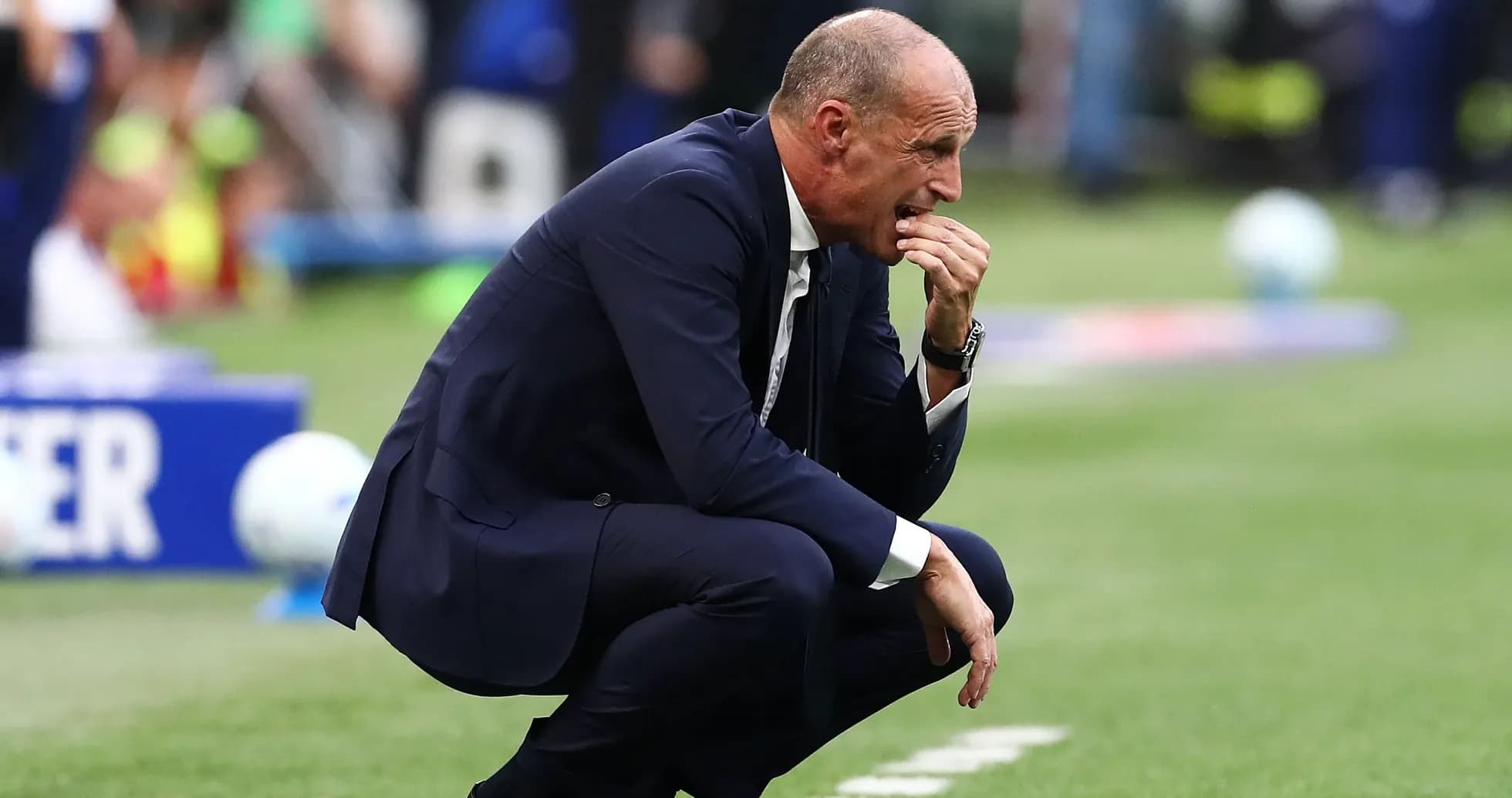
“For the spectators it was a fun match, for us a bit less,” Allegri admitted afterwards, the frustration obvious. “We were up 2-0, then we conceded a goal that was too light and Inter changed their rhythm, creating difficulties for us. On the decisive goal we thought the ball had gone out and we stopped, but football is like this: we could have scored, they did.”
That lapse in concentration on the winner cut deep. Napoli’s back line hesitated, expecting a whistle or a flag, and Inter simply played on. At this level, that kind of switch-off is fatal, and Allegri knows it.
Defensive alarm bells ringing
The defeat sharpened an uncomfortable trend. Napoli have now shipped five goals in just two league matches, and the coach did not hide his concern about the fragility without the ball.
For Allegri, the problem is not a broken system. It is focus, duels, and the way his players react when the temperature of the game suddenly rises.
“In this moment we are paying too much for every mistake: we have conceded five goals in two games and we must improve, without thinking that the solution is only to defend inside the area,” he explained. The structure, he insisted, was not the issue. “It remains a good performance, especially in terms of ball management.”
Napoli moved the ball with authority for long spells, controlling tempo and territory, but every error carried a brutal cost. Inter needed only a handful of openings to turn the match on its head.
Allegri tried to keep perspective. “We are only at the third matchday, the condition will grow. Now we must stay calm and think about the Champions League.” The message was clear: the panic button stays untouched, but the standards at the back must rise quickly.
Vergara impresses, Alisson still searching
Amid the wreckage of the result, Allegri still picked out individual performances worth building on. Antonio Vergara, handed responsibility as a left-sided central midfielder, earned particular praise.
“Vergara played very well as a left-sided central midfielder, with intensity and quality,” the coach noted, highlighting his energy and composure in a hostile setting. On a night when Napoli’s collective mentality wavered, the young midfielder’s personality on the ball stood out.
Alisson Santos, returning from a long injury lay-off, drew a more mixed review after his 80-minute shift before making way for Benoit Badiashile.
“Alisson, on the other hand, must manage some balls better, because in these games every play carries weight,” Allegri said. The caveat came quickly: “However, he is coming back from a long injury and still needs to find his best condition.”
It was a reminder that this Napoli side is still knitting together pieces – returning players, emerging talents, and a defensive line that has yet to find its old certainty.
Late changes, same outcome
As Inter pushed for the equaliser and then the winner, Allegri tried to tilt the details in his favour. Badiashile came on to add height and presence in the box, a logical move against a side that thrives on crosses and second balls.
“It didn’t influence things,” he reflected bluntly. “I put Badiashile on to help with headers, but football has no logic and we conceded two headed goals.”
The irony was brutal. The adjustment was aimed at exactly the threat that ended up deciding the game.
Gap opens, belief tested
The table already tells an uncomfortable story. After just three rounds, the gap between Napoli and Inter has stretched to six points. For a club with title ambitions, that is a jolt, even this early.
Allegri refused to be dragged into debates about the transfer market or long-term title talk. “Talking about the market now makes no sense,” he said firmly when asked about possible reinforcements before the window closes. “I have to analyze the performance of the team.”
He did not shy away from naming the benchmark. “Inter are the strongest team in the league, they are the favorites. We were equal to the strongest team.”
For an hour in Milan, Napoli were more than equal. They were superior. Then came one soft goal, one fatal pause, and a stoppage-time punch that turned a statement win into a damaging defeat.
The question now is simple: can this team turn those flashes of control into the ruthless, unflinching edge a title challenge demands, or will nights like this define their season?