
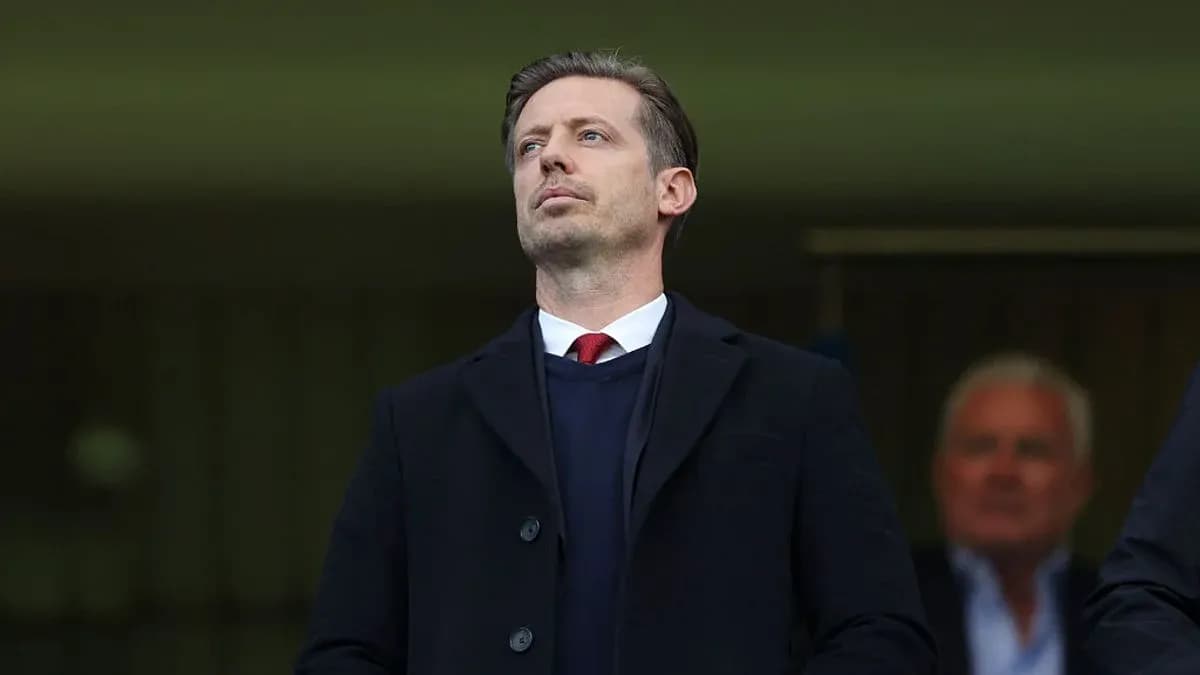
Michael Edwards' Liverpool Return: A Vision Unfulfilled
Michael Edwards’ second life at Liverpool was never meant to end like this.
The architect of the club’s modern recruitment machine returned in 2024 with a grand brief and an even bigger promise: help steer Liverpool through the post-Jurgen Klopp era and build a wider multi-club empire for Fenway Sports Group. Two years on, the empire never arrived. Edwards has gone instead.
A grand vision that never materialised
When Edwards first walked away in 2022, his legacy was secure. He had been the sporting director who helped deliver Mohamed Salah, Sadio Mané, Andy Robertson and the spine of a team that conquered Europe and ended Liverpool’s 30-year wait for a league title. His departure felt like the natural closing of a chapter.
His return was something else entirely. This was not a simple comeback to the sporting director’s chair. FSG created a new role — CEO of football — and placed Edwards above the club structure, working more closely with ownership than with the day-to-day at Kirkby or Anfield.
The hook was clear: a multi-club model. Liverpool would be the flagship, but not the only vessel. Edwards believed in that project. According to The Athletic, he was “very keen” for FSG to secure a second European club. It was a key part of why he said yes.
The purchase never came. The strategy drifted. And the frustration grew.
Promises, pressure and a quiet rupture
Edwards had been told that FSG intended to buy another European side. That commitment was central to his vision of how Liverpool and FSG could compete in a landscape increasingly shaped by multi-club networks and state-backed projects.
Instead, those plans stalled. Two years after his return, FSG still have no second club. What was once framed as the future of their football operation has, for now, been pushed to the sidelines. For a man who had been tasked with shaping that future, the shift cut deep.
The Athletic reported that Edwards’ frustrations with FSG’s failure to follow through on those plans were a driving force behind his decision to walk away, one year before the end of his contract and after signalling his intentions last year.
In public, he chose his words carefully.
“It has been a privilege to return to Fenway Sports Group and Liverpool Football Club at such an important moment,” he said in a statement. “I leave believing Liverpool is in a strong position, with outstanding people, a clear direction and the foundations in place for continued success.”
Then came the line that said everything without saying it outright.
“When I returned, I was excited not only by the opportunity to help guide Liverpool through an important period of transition, but also by the chance to help shape FSG’s wider football ambitions. While that broader project ultimately evolved differently to how we had originally envisaged, I am proud of the work our team undertook in presenting ownership with a broad range of thoughtful and well-developed options for the future.”
The vision was there. The options were there. The ownership did not move.
Hughes in, Hughes out
Edwards’ influence on Liverpool’s structure did not stop with his own job title. He moved quickly to bring in Richard Hughes as sporting director, a trusted operator he had admired for his work at Bournemouth.
Hughes arrived to front the recruitment operation for the post-Klopp rebuild, tasked with shaping the squad under a new head coach. At Bournemouth, Andoni Iraola did not hold full control over transfers while working alongside Hughes; at Liverpool, Hughes appeared to be the man with genuine authority over that department.
Now, even that pillar is shifting. Hughes is reportedly set to leave Liverpool at the end of the summer to join Al-Hilal, cutting short what was supposed to be a longer-term project on Merseyside.
In the space of a few months, the two key figures brought in to lead FSG’s revamped football structure are heading for the exit.
Back to Gordon, back to basics
With Edwards gone and Hughes expected to follow, FSG have turned back to a familiar figure. Mike Gordon, the group’s president and long-time key liaison with Liverpool, is understood to be resuming day-to-day control at the club. He has done the job before and knows the terrain as well as anyone within the ownership group.
It is a move that speaks to stability, but also to a certain retreat. The grand, outward-looking multi-club concept has been shelved in favour of the model that carried Liverpool through much of the Klopp era: Gordon overseeing operations, the club working within a single-club framework, and the focus trained squarely on Anfield.
Edwards, for his part, leaves with his reputation intact and his options open. After he first departed in 2022, Manchester United and Chelsea both tried to lure him. He resisted then. With his second Liverpool chapter now closed, the market will not have forgotten his track record.
He signs off with gratitude and diplomacy. “I’d like to thank Mike, John (Henry), Tom (Werner) and everyone across FSG and Liverpool for their support and friendship and, most importantly, the supporters, whose passion makes this club so special. I will always be grateful to have been part of its story.”
The story, though, has taken a turn FSG never intended. They brought Edwards back to build something bigger than Liverpool alone. In the end, the project shrank, the promises faded, and one of the game’s most respected operators chose to walk away.
The question now is simple: in an era dominated by sprawling football networks and aggressive expansion, how long can FSG afford to think like a one-club operation?




