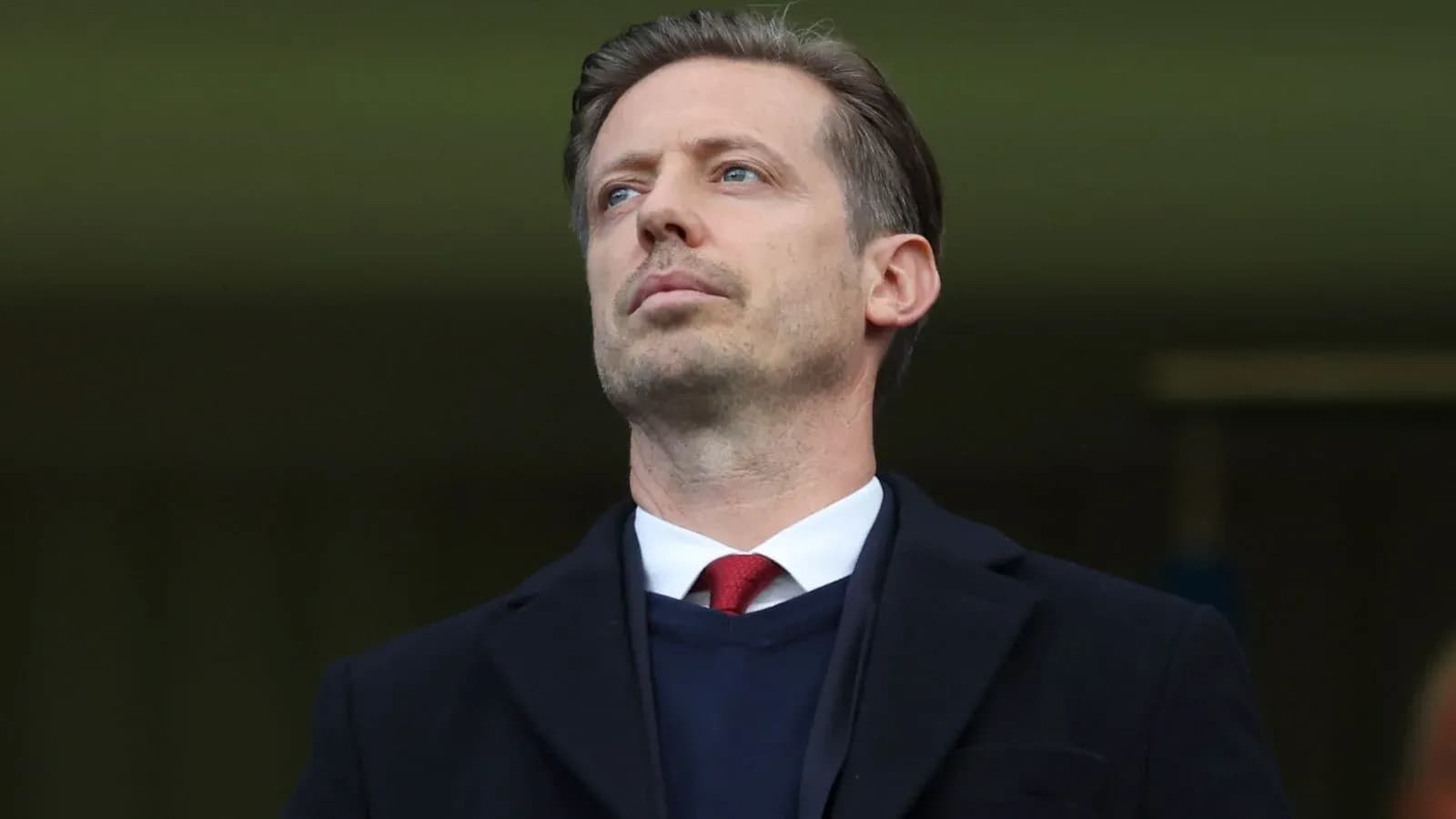
Michael Edwards Leaves Liverpool: A Transition in Leadership
Michael Edwards has stepped away from Fenway Sports Group and, with it, from Liverpool’s inner circle once again. This time, he goes not as the quiet recruitment guru of old, but as the man who briefly ran the entire football operation and helped steer the club through one of the most turbulent transitions in its modern history.
FSG confirmed on Monday that Edwards has left his role as chief executive officer of football in what they insist is a “planned transition”, ending his second spell at Anfield and drawing a line under a relationship that has shaped Liverpool’s recent era.
Architect of a modern Liverpool
Edwards first arrived in 2011, initially as performance director, before moving into the sporting director role in 2016. From there, his influence became unmistakable. Smart, data-led recruitment underpinned Liverpool’s rise under Jurgen Klopp, culminating in the 2019/20 Premier League title – the club’s first league crown since 1990.
He departed in 2022 with his reputation burnished, widely credited for the deals that brought in the core of that title-winning side. When he returned in March 2024, it was at a different level and at a very different moment. Klopp was on his way out, the squad was evolving, and FSG wanted a figure to oversee not just transfers but the entire football structure.
Edwards stepped in as CEO of football, charged with guiding Liverpool through a delicate handover from one era-defining manager to whatever came next.
Titles, change and a new direction
The immediate aftermath looked like a validation of that choice. Arne Slot arrived in June 2024 and delivered Liverpool’s historic 20th English league title in 2025, a landmark FSG made sure to highlight in their statement, noting Edwards’ role in the “continued evolution” of the club’s football operation during that period.
Behind the scenes, he helped put in place a new leadership structure and oversaw the appointment of a new head coach. The project, on paper, was clear: modernise, stabilise, and keep Liverpool competing at the very top while the club moved on from Klopp.
The story, though, did not settle neatly. Slot’s second season fell short of expectations. The title defence faltered, performances dipped, and the sense of inevitability around the Dutchman evaporated. By early June, Liverpool had turned to Andoni Iraola, making another sharp change in the dugout barely two years after Klopp’s departure.
For a club that had prided itself on continuity, the pace of change was suddenly jarring.
A controlled exit – and an uneasy backdrop
FSG framed Edwards’ departure as the natural end point of that restructuring process, saying his exit “marks the culmination of a planned transition following the completion of key strategic priorities.”
In their words, he had done what he came back to do: help reshape the football department, guide the club through a period of upheaval, and present ownership with a “broad range of thoughtful and well-developed options” for its wider football ambitions.
Edwards’ own statement struck a similar note. He called it “a privilege to return” at such a crucial moment and insisted he leaves believing Liverpool are “in a strong position, with outstanding people, a clear direction and the foundations in place for continued success.”
Yet the timing is hard to ignore. His departure lands just before the 2026/27 season and on the eve of a summer window in which Liverpool face one of the biggest rebuild questions of all: how to replace Mohamed Salah.
Unfinished business in the market
Salah’s looming exit – whether this summer or shortly after – hangs over everything Liverpool plan to do. Finding a forward who can shoulder that level of goals, influence and aura is a task that would test any recruitment department, even one as well-regarded as Liverpool’s.
The challenge may grow steeper. There is already speculation around the future of sporting director Richard Hughes, whose own position has been the subject of increasing noise. Should Hughes also move on, Liverpool’s hierarchy would face another jolt, just as Iraola tries to impose his ideas and the club attempts to refresh a squad that has already lived through one major cycle.
For a decade, Liverpool’s best work in the market often carried Edwards’ fingerprints. Now, as the club stares at its next big rebuild, he will not be in the room.
Legacy and the next chapter
Edwards leaves having twice shaped Liverpool’s direction from behind the scenes. First as the architect of a recruitment model that powered Klopp to the summit of English and European football. Then as the executive charged with reimagining what comes after.
He acknowledged that FSG’s broader football project “ultimately evolved differently” to the original vision, but stressed his pride in the work done to map out the future. He also reserved his final words for the supporters, calling their passion the thing that makes the club “so special” and saying he will always be grateful to have been part of its story.
That story now moves on without him. Iraola must stamp his authority on a squad in transition. FSG must prove their new structure can function without the man who once set the standard for Liverpool’s modern decision-making.
The title count stands at 20. The next phase will reveal whether the foundations Edwards helped lay are strong enough to deliver number 21 without him.