Mexico's World Cup Opener: A Carnival of Celebration
The warning signs were there long before a ball was kicked.
On the eve of Mexico’s World Cup opener, panic buying broke out on the pavements. Street sellers on Mexico City’s packed footpaths could barely keep up as last-minute shoppers scrambled for green jerseys, flags, anything with the crest. A spontaneous crowd swelled around El Ángel de la Independencia, that familiar golden monument suddenly wrapped in tricolour. Songs, drums, dancing. Car horns turned into an improvised brass section, blaring into the early hours.
If this was the warm-up, the main act was always going to be wild.
Paseo de la Reforma turns into a World Cup carnival
Mexico’s players did their part, taking care of South Africa 2-0 in the tournament’s opening match, the curtain-raiser for a World Cup spread across Mexico, Canada, and the USA. Two goals, three points, and a nation that never needs much of an excuse to throw a party had its perfect trigger.
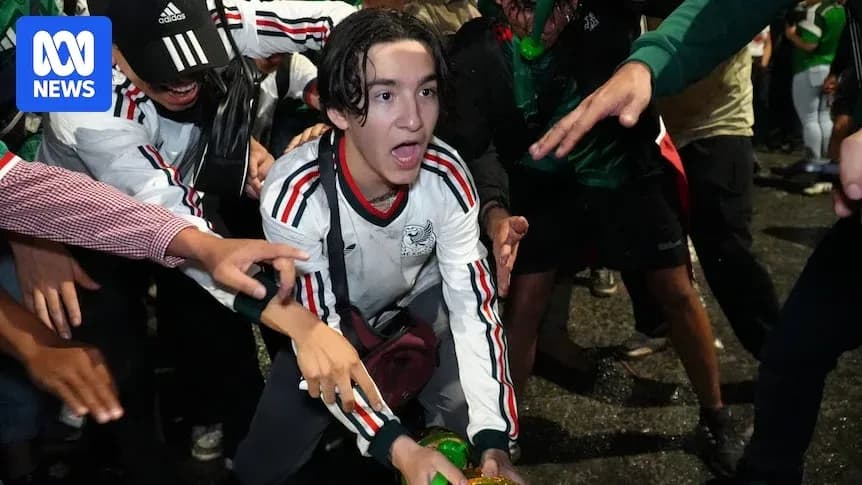
Once the final whistle went, the city moved as one. Fans poured down Paseo de la Reforma, the grand boulevard temporarily surrendered to football. Traffic gave way to humanity. The road became a river of green shirts, flags, and flares.
Beer flew in arcs through the night air. Cans popped, plastic cups emptied over heads in jubilant “beer showers.” Clouds of fake snow hissed from spray cans, coating hair and shoulders. Conga lines snaked past plastic World Cup trophies held aloft like the real thing, the make-believe silverware glinting in the streetlights.
Every few metres, another temptation: tacos sizzling on hotplates, street snacks passed from hand to hand, stalls heaving with scarves and souvenirs. Glow sticks painted neon streaks through the crowd, a moving constellation backed by a free concert that turned the avenue into an open-air stadium.
For an outsider, it might look like an overreaction to a group-stage win. For Mexico, this is muscle memory. This is what happens whenever the men’s national team delivers in a big game. They head to their own version of Fed Square — the monument on the roundabout, the default victory stage — and they stay. Hour after hour, song after song. The stamina is as impressive as anything on the pitch.
Shakira, a roar for Jiménez, and a teenager’s first taste
The party started early at the stadium.
Outside, traditional performers worked the queues, dancers and musicians whipping up the atmosphere as fans filtered in. Inside, the noise hit another level. Eighty thousand voices bounced around the stands during the opening ceremony, with Shakira — World Cup royalty by now — drawing a particularly loud chorus.
But those deep, chest-rattling roars were reserved for the goals.
When Raúl Jiménez rose to head home, the sound felt like a release years in the making. His comeback from that horrific head injury has been long and fraught; this was a moment that carried more than just a 1-0 scoreline. The celebration was part joy, part relief, part gratitude that he was even there to score it.
The second-half script delivered something different: a glimpse of the future. Seventeen-year-old Gilberto Mora stepped off the bench and straight into the nation’s imagination. As he jogged on, the reaction was instant. The crowd didn’t need prompting. His name rolled around the bowl of the stadium, a full-throated welcome usually reserved for legends, not teenagers.
It felt like a coronation in waiting. A fanbase telling a kid: this could be your stage.
Aguirre’s players feel the weight of the moment
On the touchline, Javier Aguirre knew exactly what his squad had walked into. He played in the 1986 World Cup on home soil; he understands the particular intensity of this kind of occasion.
“The start of the World Cup, is a brutal scenario, it makes your legs shake a little,” he said afterwards. The journey from the quiet of the training centre to the chaos outside the stadium hits hard. “You come from the training centre to here, the people, the fans are in the street and that tells the player, ‘Wow, wow, wow.’”
The numbers told their own story. “Never, never in 25 matches we had one case of cramps, today we had three players with cramps,” he said. “It’s a very strong emotional state.”
The players now have to come down from that high, bottle it, and turn it into something calmer, more controlled, for the next group game. For them, the message is clear: breathe, reset, move on.
The supporters are under no such obligation.
“It means everything. It means a lot,” one fan said in the middle of the celebrations. “It’s putting us back on the map. It shows that Mexico is present in the world of football.”
Infantino gets his wish… for now
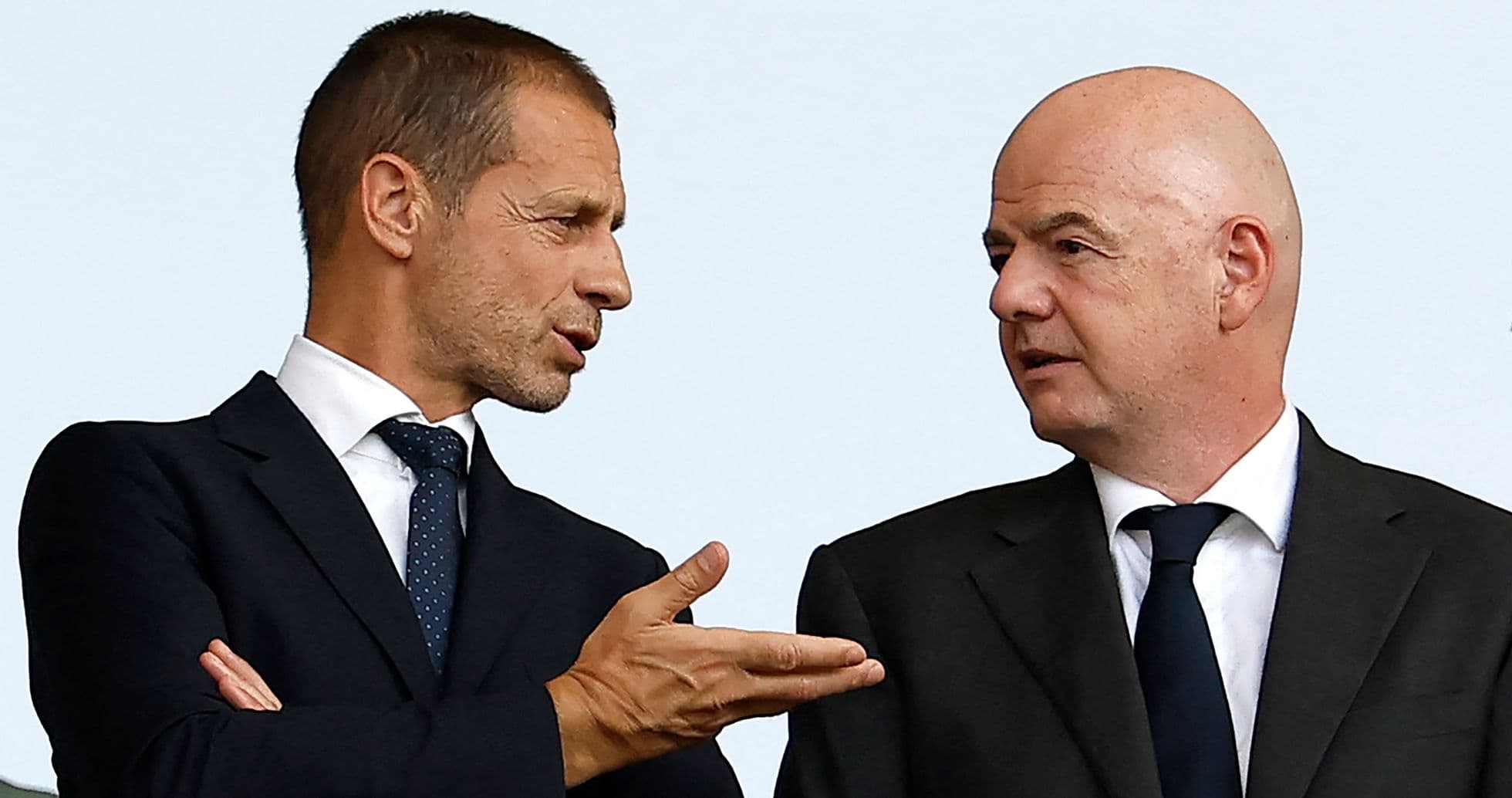
Somewhere in a VIP box, Gianni Infantino will have allowed himself a satisfied smile.
The FIFA president had spent the previous day lamenting the barrage of criticism aimed at his organisation in the build-up. His plea was almost comic in its phrasing, as he borrowed the language of an early-2000s teenager and asked the world to “chillax.”
Now the football has started, and his wish has, temporarily at least, been granted. The “chill pills,” as he might put it, have been swallowed in Mexico City. The party has drowned out the noise.
But only for a while.
This is a World Cup with a split personality. Mexico lives and breathes the game. Across the border, “soccer” still fights for oxygen. In Canada and the United States, the sport will draw huge crowds when the giants roll into town, when the stars align and the names on the billboard glow. The question is what happens when it’s not Brazil or Argentina on the marquee, when it’s a so-called lesser fixture and ticket prices remain sky-high.
Another shadow hangs over the US leg of the tournament. How visible will Immigration and Customs Enforcement — ICE — be around matches? Will its presence chill the mood in certain communities, even as FIFA tries to sell a festival of unity?
Those questions will not go away just because the ball is rolling and Paseo de la Reforma is bathed in green. The scrutiny will circle back. It always does.
For one night, though, Mexico didn’t care. The streets answered in song, the monument wore a flag, and a nation reminded the world that when El Tri win, the party is as much a part of the story as the scoreline.