
Lionel Messi's World Cup Journey: A Legacy Beyond Trophies
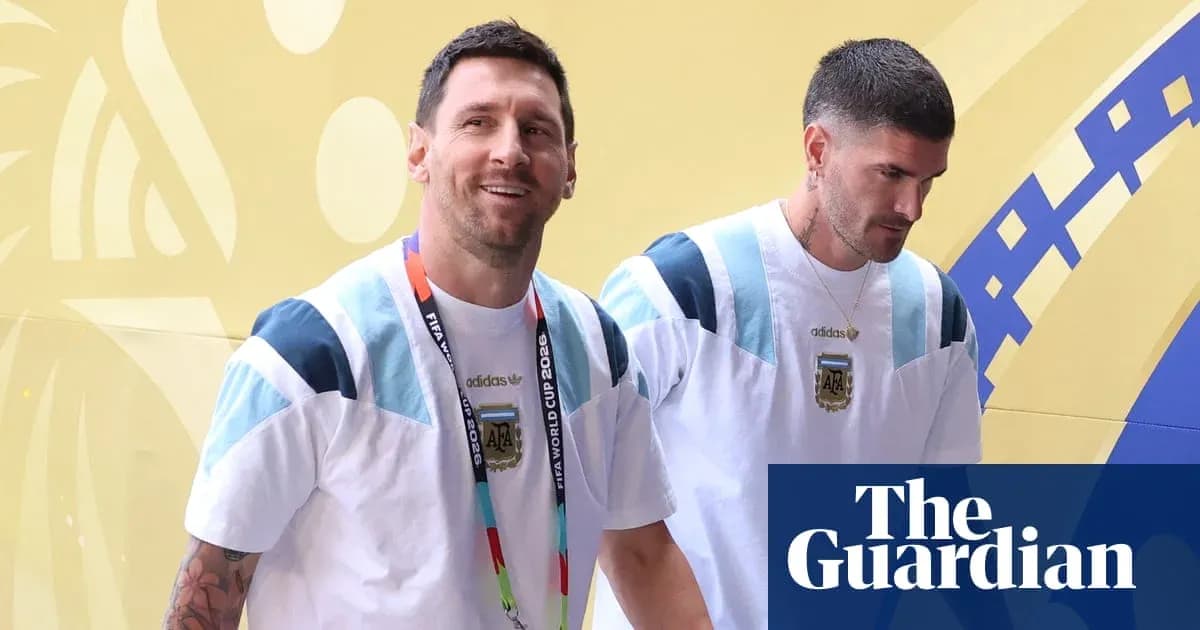
Lionel Messi’s last World Cup? If it was, he walked off without a trophy, but with a tournament that still bent itself around him.
The numbers alone are absurd for a 39-year-old who barely pretended to defend: eight goals, four assists, the most progressive passes of any player, per Futi. Argentina gave him total freedom and he treated the World Cup like a personal canvas, drifting into pockets, slowing games down, then ripping them open.
He dragged Argentina back against Cape Verde in a 3-2 win, took control against Egypt with an assist and an equaliser, then twisted the knife versus England, creating both of the Albiceleste’s late goals. Whenever Argentina seemed to be slipping, he appeared on the ball, shoulders loose, scanning, dictating.
Then came the final. And the lights dimmed.
Across 139 tense minutes, Messi completed just 28 of 39 passes, took a single shot and never really got his hands on the game. No Golden Ball, no Golden Boot, no World Cup. Yet even in failure, he stretched a World Cup legacy that lives in a different stratosphere to almost everyone else.
The lieutenants and the grinders
Rodrigo De Paul did what Rodrigo De Paul does. He started all but two of Argentina’s games, including 70 minutes against Spain, snarling around midfield, recycling possession, and doing the running Messi no longer does. He was never going to own the headlines, but Argentina do not reach a second straight final without his work in the shadows.
Across the bracket, Stephen Eustáquio was the heartbeat of Canada’s run. Cross after cross, chance after chance: 2.76 chances created and 0.36 expected assists per 90, plus 46 progressive passes – sixth-most in the entire tournament. Then came his moment. Last-32, South Africa, the clock dying. He stepped onto a loose clearance, cushioned it on his chest and guided a half-volley into the bottom corner. Canada’s first-ever World Cup knockout win, sealed by the midfielder who had just come off a loan at Los Angeles FC before returning to Porto.
On the other side of that knockout drama, Mbekezeli Mbokazi emerged as South Africa’s revelation. Just 20, the Chicago Fire defender and former Orlando Pirates captain arrived as the youngest player in Bafana Bafana’s squad and played like one of its oldest. Calm, commanding, and ruthless in duels, he impressed enough that his Transfermarkt valuation more than doubled from $4m to over $9m by the time the tournament ended.
Paraguay’s edge, New Zealand’s hope
Paraguay spent the World Cup without the ball. Their average possession was 29%, dead last in the tournament, and that shaped everything for Matías Galarza. The midfielder started all but their opener, still finding a way to score the winner against Turkey and lay on Julio Enciso’s goal against Germany in the knockouts. In a side built to suffer, he showed he could still leave a mark.
Behind him, Andrés Cubas set the tone. Paraguay’s destroyer played every minute of their five matches, anchoring a defence that took Germany to penalties and restricted France to a single goal. In that quarter-final, the Vancouver Whitecaps midfielder won seven of 12 duels, made seven tackles, three interceptions, and even found time for a skirmish with Kylian Mbappé. He was the hinge on which their resistance swung.
For New Zealand, Finn Surman was the breakout. The 22-year-old Portland Timbers centre-back launched himself into last-ditch tackles and vital clearances, looking like one of the All Whites’ best players in his first two games. He even popped up at the other end, scoring their only goal in a 3-1 defeat to Egypt. The future of their back line suddenly looks a lot clearer.
At the other end of the age spectrum, Michael Boxall endured a rough farewell. One of the tournament’s oldest players, the Minnesota United defender looked a half-step behind on almost every goal New Zealand conceded. It was a harsh World Cup for an old warrior.
USMNT: fine margins and brutal nights
Sebastian Berhalter became one of Mauricio Pochettino’s trusted bench options, appearing in every US game. His one start, though, exposed the squad’s soft underbelly. Deployed as a No 6 in a team short of true defensive midfielders, the Vancouver Whitecaps man struggled to plug all the gaps. Even so, he left a mark with a goal and an assist and is reportedly heading for Middlesbrough with his stock quietly improved.
Tim Ream’s story cut the other way. For a moment, it looked as if time had stood still since Qatar. Then Belgium arrived and ripped that illusion apart. In a 4-1 hammering, the 38-year-old Charlotte centre-back was punished twice by an in-form Charles De Ketelaere. On the opener, Ream lost him completely as the forward poached from close range. Minutes after the US equalised, De Ketelaere climbed above him at the back post to restore Belgium’s lead. One bad night, two searing images.
In goal, Matt Freese can point to a single error rather than a full collapse. The NYC FC keeper made nine saves in four games, passed the ball cleanly and generally looked secure. Yet his tournament will be remembered for one poor game and one decisive moment that went wrong. Matt Turner had no such nuance to cling to: handed the start against Turkey, the New England Revolution No 1 conceded three times and did not make a single save.
Miles Robinson barely featured, a clear sign of Pochettino’s lack of faith in his defensive reserves. The FC Cincinnati centre-back’s only minutes came in a dead rubber at the end of the group stage. Max Arfsten’s involvement was even more fleeting: the Columbus winger entered in the 90th minute of the 4-1 loss to Belgium and did not touch the ball.
Cape Verde’s steel and Australia’s new blood
For Cape Verde, Steven Moreira was the quiet pillar. While Sidny Lopes Cabral drew more attention, the Columbus defender held the back line together through gruelling clashes with Spain, Uruguay and Argentina, helping push a remarkable campaign right to the brink of something historic.
Australia’s midfield, by contrast, was defined by subtlety. Aiden O’Neill, so often understated for New York City FC, replicated that role for the Socceroos. He kept the ball moving, stitched attacks together and walked away with a Superior Player of the Match award against Paraguay, then backed it up with another strong display against Egypt.
Behind him, the future arrived early. Lucas Herrington, just 18 and the youngest player in Australia’s squad, forced his way into the side and started the final two matches. Composed for his age, the Colorado Rapids centre-back looked like he belonged. Kai Trewin also seized his chance, replacing the injured Jordan Bos at half-time of the knockout tie with Egypt and helping drag the game all the way to penalties.
Canada: one high, too many lows
Canada’s World Cup was a study in contrasts. Eustáquio’s star turn and that late winner against South Africa stood in stark relief to several teammates’ struggles.
Richie Laryea pushed forward well, contributing 0.26 expected assists per 90 and driving play down the left. Yet his defensive work repeatedly let Canada down. Against Bosnia and Herzegovina, his man scored from an in-swinging corner. Against Switzerland, he was caught out of position and slow to track back too often. A long-time mainstay for his country, the Toronto FC defender never quite found his spark.
Maxime Crépeau endured a brutal set of numbers. The Orlando City goalkeeper conceded six goals and made just six saves across five games. Jacob Shaffelburg came off the bench in all five matches for LAFC, but never managed to tilt a game in Canada’s favour. Mathieu Choinière’s only outing was a start in the 2-1 defeat to Switzerland. Jonathan Osorio, Toronto’s captain, arrived twice after the 87th minute and could not change anything. Jayden Nelson entered in the 87th minute of a 3-0 knockout loss to Morocco, another late roll of the dice that came too late.
Fading lights and final chapters
Twelve years after setting Brazil 2014 alight, James Rodríguez returned to the World Cup stage in the United States and found it unforgiving. On loan at Minnesota United, the Colombian still produced touches of class, but the end product that defined his Copa América run two years ago – one goal, six assists, a march to the final – deserted him. Colombia fell in the last 16 to Switzerland, and James’s World Cup journey, like his winding club career, ended in a long, empty fade rather than a flourish.
Son Heung-min’s tournament was no kinder. At 34, the LAFC forward failed to score in either of his two starts and watched South Korea’s must-win final group game from the bench. For a player who has carried his country for so long, it was a painful, subdued exit.
Croatia felt something similar with Petar Musa. Given 110 minutes across two starts, the FC Dallas striker managed just one shot. He scored it, but never threatened to become a focal point. On the wing, Orlando City’s Marco Pasalic produced a bright start in Croatia’s third group game, only to waste his one clear chance to score.
Miguel Almirón’s World Cup will not be remembered for his football. The Atlanta attacker mustered only four shots and 0.11 expected goals in four starts, and his defining moment was a red card against Turkey. Covering his mouth during an altercation, he became the first player dismissed under IFAB’s new mouth-covering ban. A bizarre, unwanted place in history.
The strugglers, the cameos, the nearly-men
Some players fought uphill battles from the first whistle. Danley Jean Jacques, of Philadelphia, and Jean-Ricner Bellegarde formed Haiti’s double pivot in a side ranked lowest in the tournament. Overmatched in every game, they were chasing shadows more often than dictating play. FC Dallas winger Louicius Deedson played all three group-stage defeats, totalling 112 minutes and just 13 completed passes. Derrick Etienne Jr saw only nine minutes against Brazil, completing four passes in a cameo that changed nothing.
Panama’s Carlos Harvey started all three group matches, threatening only from a couple of set-piece headers. Otherwise, the 6ft 1in Minnesota midfielder had a quiet tournament. Aníbal Godoy’s involvement was almost symbolic: one minute plus stoppage time against Ghana, eight passes completed, and still powerless to prevent a last-gasp winner. For Iraq, Nashville’s Ahmed Qasem appeared in every game and lasted the full 90 against France, only to be sacrificed early in the final group match after Rebin Sulaka’s 13th-minute red card forced a tactical reset.
Panama’s story mirrored that of many smaller nations: effort, structure, and a brutal lack of margin for error.
For Iraq, it was about survival. For Haiti, about enduring. For Panama, about hanging on to any small foothold they could find.
Braian Ojeda’s World Cup was reduced to 21 minutes for Paraguay against Germany in the last 32. Nine touches, no chance to alter the script. Canada’s Jayden Nelson, Haiti’s Etienne, Panama’s Godoy, Canada’s Osorio and Choinière – all became footnotes on the tournament’s larger pages.
So the World Cup closed with Messi walking away empty-handed, James fading into the night, and a new generation – from Mbokazi to Surman, from Herrington to Eustáquio – announcing themselves on the biggest stage. The stars did not all shine, the veterans did not all bow out in glory, and the underdogs did not all survive.
But the question lingers now, as squads reset and clubs reclaim their players: which of these World Cup stories was a one-off, and which was the first chapter of something far bigger?




