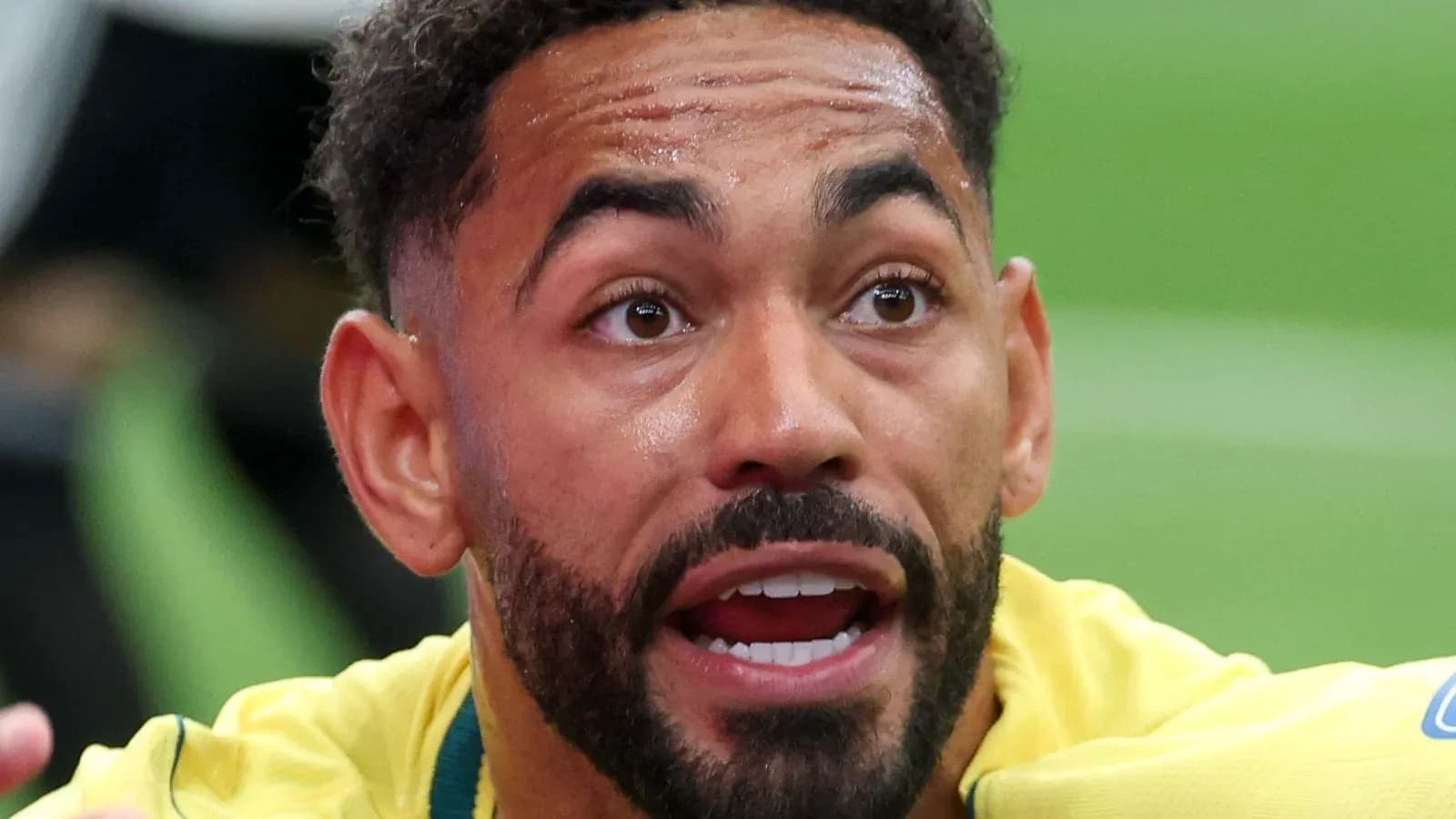
Matheus Cunha: The Myth of Football Niceness
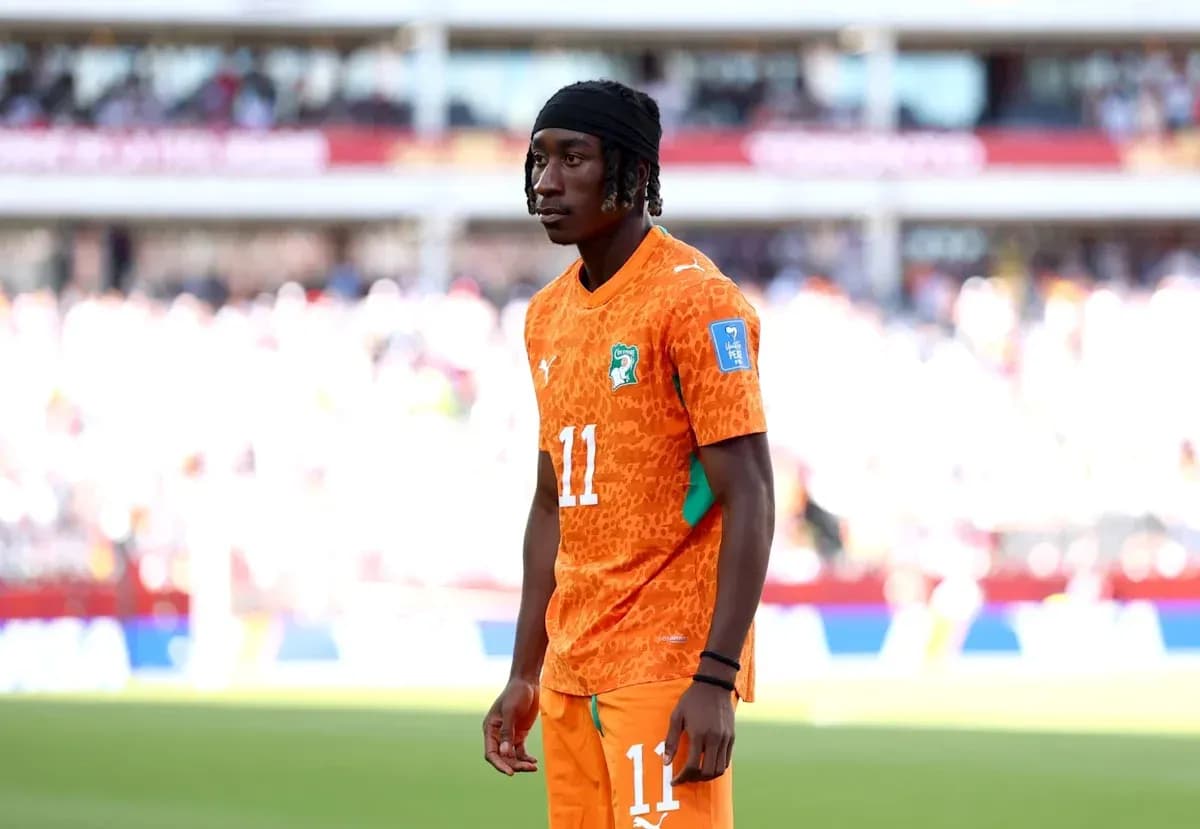
The World Cup has a habit of turning footballers into symbols. Heroes, villains, saviours, scapegoats. This time around, Matheus Cunha has apparently been cast in a new role: too nice to be great.
That, at least, is the curious “awkward narrative” floated around the Brazil and Manchester United forward. The suggestion, as reported, is that Cunha “lacks the grit to go with the guile” required to cross the line from good to great. The evidence? A moment of basic humanity.
After Brazil’s win over Japan, Cunha paused his celebrations to console Ao Tanaka, the beaten midfielder, before rejoining his team-mates. It was a small, classy act in the middle of a high‑stakes World Cup night. For some, though, it supposedly crystallised a wider problem: Cunha is simply too nice.
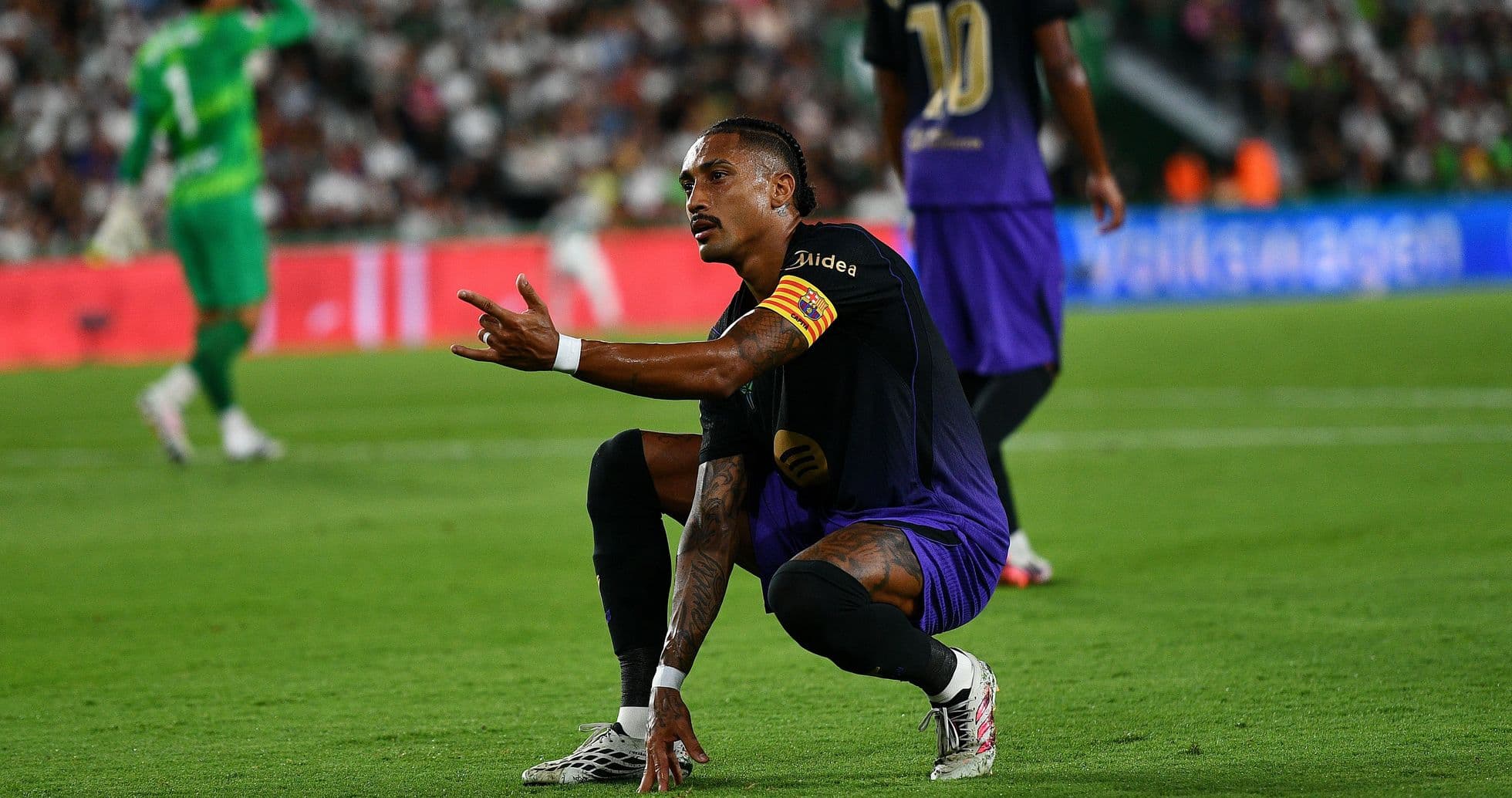
Strip that down and the logic becomes absurd. This is a player who, earlier in his career, was banned for removing an Ipswich security guard’s glasses in what could only reasonably be described as a fracas. This is hardly the CV of a shrinking violet. Yet from one gesture of sportsmanship, we’re now told there is “a general feeling” that he doesn’t possess the steel to match his skill.
The conclusion lands with a thud: when Neymar eventually steps away from the Seleção, the baton will go to Vinicius Junior, not Cunha. As if that decision would ever hinge on whether a forward offered a word of comfort to a distraught opponent, rather than on something more obvious – like Vinicius being one of the most devastating wide players on the planet.
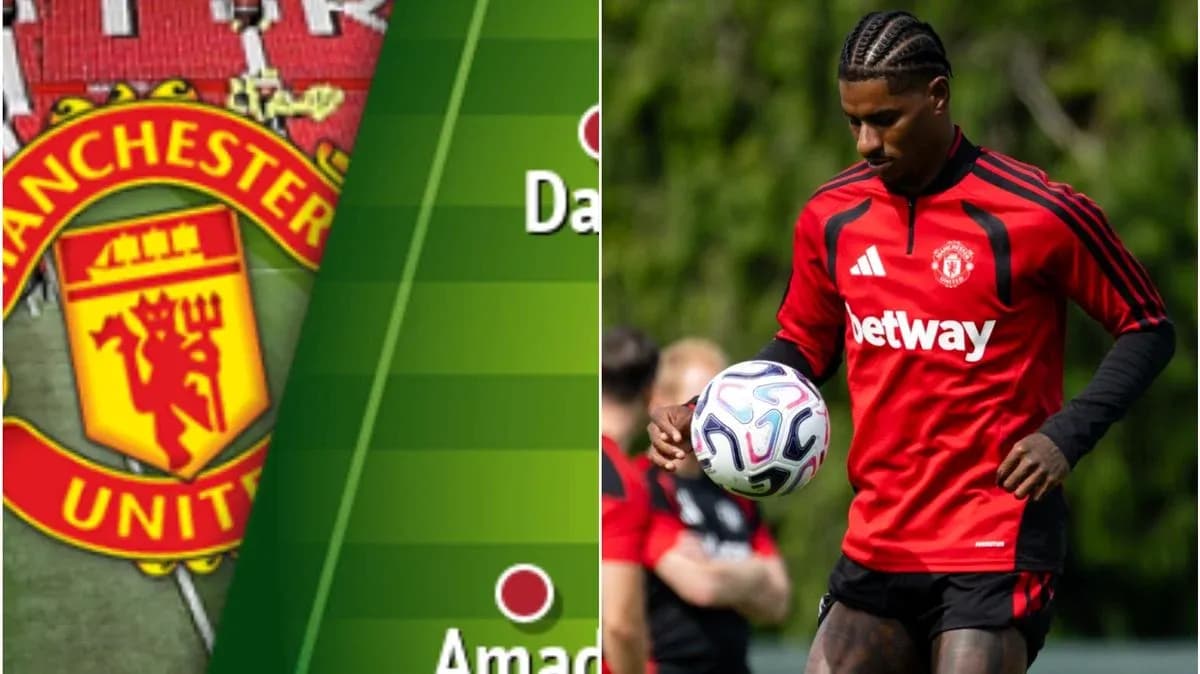
Cunha is fighting for status at both Brazil and Manchester United. He will be judged on goals, assists, movement, pressing, decision-making in the final third. Not on whether he dared to show empathy in the aftermath of a knockout tie. The idea that kindness disqualifies you from greatness says more about the lens than the player.
Kane, Bellingham and the Elastic Ego
This is not an isolated case. English football’s discourse is increasingly tangled in half-baked character studies dressed up as analysis, and Harry Kane sits squarely in the middle of it.
Craig Hope’s description of Kane as “the humblest of superstars” who nonetheless relies on “a stubborn streak of high self-regard” tries to walk a tightrope and ends up tying itself in knots. We are told he “does not have an ego in a traditional sense,” but also that he could not score the goals he does without exactly that inner steel and self-belief.
So which is it? Humble everyman or ruthless egotist? The truth is obvious: elite forwards live on that thin edge where humility and ego collide. Kane is relentless, driven, obsessed with numbers and legacy. You do not break records by being deferential to your own limitations. You also do not survive at the top for a decade without knowing how to carry yourself in a dressing room and in front of cameras.
What jars is not the description of Kane, but the contrast with Jude Bellingham. Bellingham has been painted as a “divisive soloist,” a “poster boy for moodiness,” “brand ambassador for petulance,” “an angry young man.” Kane’s intensity is rebranded as admirable stubbornness; Bellingham’s edge is framed as a problem to be managed.
Same sport, same stage, very different vocabulary.
Barcelona’s Lure and Bayern’s Reality
Kane’s move from Bayern Munich to Barcelona has been dressed up in another neat narrative: from “stable” and “logical” Bayern to the “irresistible” Nou Camp. The framing is clear – Bayern as the safe, sensible option; Barça as the romantic leap.
The explanation stretches to the point of condescension. We’re reminded that “Bayern is not Barca and the Bundesliga is not LaLiga. Der Klassiker is not El Clasico. Der Klassiker is Bayern versus Dortmund, by the way.” As if anyone watching Kane’s career arc needs a glossary for German football’s biggest fixture.
Barcelona’s history is luminous, no question. But the idea that Bayern are merely functional, a kind of well-run consolation prize, collapses under the weight of recent evidence. Bayern went further than Barcelona in the Champions League last season and collected more trophies. They dominate domestically, compete habitually in Europe and carry their own aura. Calling them merely “stable” undersells a club that has built a modern dynasty.
The romance of the Nou Camp is real. So is the reality that Bayern, right now, are the more dependable sporting project. Kane’s choice is not between a grey machine and a golden dream. It is between two superclubs with different kinds of chaos attached.
Japan, Brazil and England’s “Boost”
Back to the World Cup, where Brazil’s victory over Japan was reported as a potential “major boost” for England. The logic: Japan taking the lead left Brazil at risk of exiting, which might have cleared England’s path.
That line ignores the recent history. England lost to Japan only three months ago. Calling them a “major boost” is a stretch when they have just beaten you. In fact, England have beaten Brazil more recently than they have beaten Japan. The idea that Japan represent some sort of soft landing does not survive contact with the results.
Brazil, for their part, did what Brazil often do: they found a way. Cunha played his part, showed his quality, and then showed his character. The performance mattered. The result mattered. The handshake with Tanaka did not change the tactical picture; it simply reminded everyone that elite footballers are still human beings.
Nagelsmann, Pressure and the “Snap” That Wasn’t
While Brazil advanced, Germany crashed out on penalties to Paraguay, and the post-mortem began immediately. MailOnline led with a headline claiming Julian Nagelsmann “snaps at female reporter’s questioning” as Jürgen Klopp supposedly eyes his job.
Two things stand out. First, the insistence on labelling Lili Engels as a “female reporter” in the headline, despite her being referred to simply as a reporter in the copy. The gender tag feels less like context and more like a device – an excuse to place a picture of a young woman at the top of the page and to sharpen the implied conflict: embattled coach versus female journalist.
Second, the word “snaps.” Watch the exchange and what you see is a slightly tense, entirely predictable conversation between a coach under immense pressure and a reporter doing her job. There is edge, but no explosion. No tirade. No meltdown.
If that counts as “snapping,” then the bar for outrage has been set laughably low. Managers have always bristled in the immediate aftermath of failure. It is part of the theatre, part of the scrutiny. Dressing it up as a gendered flashpoint only distorts what actually happened.
The Fixing Cloud
Away from the headline nations, FIFA have taken a decision on whether to investigate the Algeria vs Austria clash after match-fixing claims. The mere presence of such allegations is enough to cast a shadow over a tournament that lives on its sense of competitive integrity.
Nothing corrodes trust in football faster than the suspicion that the result might not be real. Whether this particular case goes any further or not, the sport’s governing bodies cannot afford to treat such claims lightly. The modern game is too exposed, too global, too heavily wagered upon for any hint of manipulation to be brushed aside.
Where This All Leaves Cunha
And so we circle back to Matheus Cunha, standing between celebration and consolation, caught in the crossfire of a narrative he never wrote.
He will not replace Vinicius Junior for Brazil. Almost nobody will. Vinicius is a phenomenon, and when Neymar finally steps aside, the natural heir is already in place. That hierarchy is about talent, output and impact, not about who does or doesn’t pause to acknowledge an opponent’s pain.
Cunha’s battle is different. He must prove he can be decisive for club and country, that his movement and invention translate into numbers on the board in the biggest games. He must show he can handle the weight of expectation at Manchester United and in the yellow shirt of Brazil.
If he does that, nobody will care that he once put an arm around Ao Tanaka. If he doesn’t, nobody will be able to blame his manners.
In a sport that lionises aggression and edge, perhaps the more interesting question is this: when did being a decent human being become a tactical weakness?