
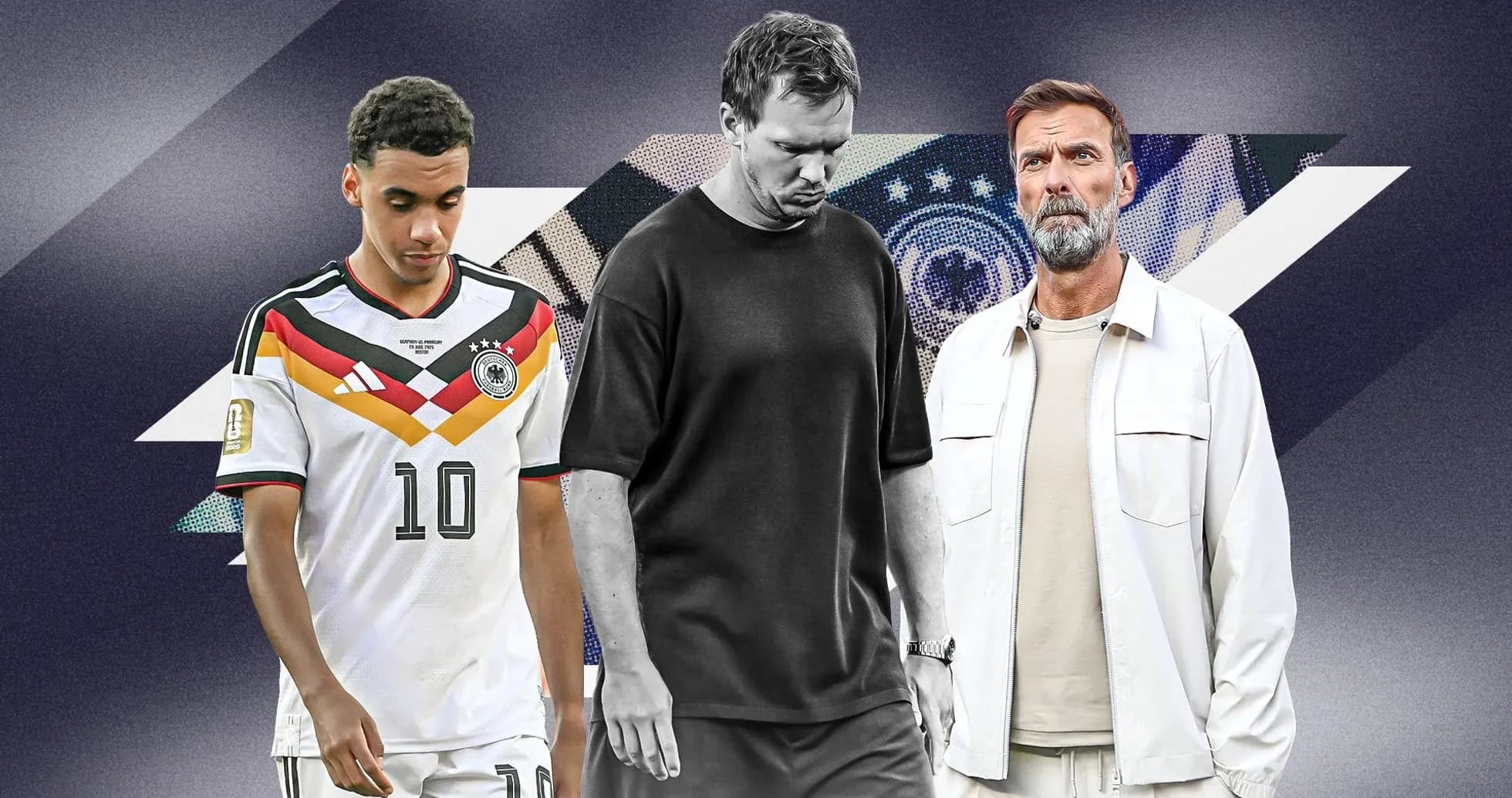
Germany's World Cup Struggles: Nagelsmann's Tenure Under Scrutiny
Germany have been here before. That is precisely the problem.
When the world champions crashed out of the 2018 World Cup in the group stage, undone by Mexico and South Korea, the inquest centred on one man: Joachim Löw. Twelve years in charge, one World Cup title, and then a collapse so stark it felt like the end of an era. The logical step was to draw a line.
Instead, the DFB blinked.
Löw stayed on, shielded by past glory, and Germany drifted. The football grew stale, the identity blurred. At Euro 2020, delayed by the pandemic, they went out with a whimper in the last 16 against England. Only then did Löw walk away. Germany had lost three years and gained nothing.
Hansi Flick arrived on a wave of relief and optimism. The architect of Bayern Munich’s treble was supposed to restore order, intensity, fear. He guided Germany to the 2022 World Cup with momentum behind him. Then Japan happened. Germany led, lost control, and lost the game. The group-stage exit that followed felt like a bad sequel.
Again, everyone expected the axe to fall. Again, the DFB hesitated. Flick clung on until autumn 2023, a string of poor results finally forcing change. By then, valuable time had gone.
Enter Julian Nagelsmann, and with him, hope.
From golden boy to lightning rod
Nagelsmann’s appointment in September 2023 felt like a reset. Young, tactically sharp, unafraid of bold calls, he refreshed the squad and the mood almost overnight. Germany arrived at Euro 2024 on home soil with something they had not possessed in years: a sense of unity.
For a while, it worked. The team played with purpose, the crowd reconnected, the country leaned in. A quarter-final defeat to eventual champions Spain hurt, but it also felt like a platform. Nagelsmann spoke quickly, and loudly, about the next step. The 2026 World Cup became the new target, the new obsession.
At that moment, he was the most popular national coach since peak Löw. It already feels like a different lifetime.
In less than two years, Nagelsmann has burned through his goodwill at astonishing speed. The nadir came in Foxborough on Monday, the latest low in a World Cup campaign that never truly caught fire.
The problems were not just tactical. They were personal, public and relentless.
Nagelsmann repeatedly used press conferences and interviews to dissect his own players in forensic detail. Individuals were singled out, roles were questioned, and internal discussions spilled into the open. The impression grew of a coach who craved the spotlight, who could not resist another soundbite.
Some of his statements were clumsy. Others were simply wrong. Promises about how certain players would be used were made, then broken. When journalists pushed back, Nagelsmann too often lost his cool, lapsing into a patronising tone that grated across the World Cup cycle.
Neuer, Kimmich and a team without a plan
On the pitch, the contradictions multiplied.
After Toni Kroos’ triumphant return for Euro 2024, Nagelsmann doubled down on experience by hauling Manuel Neuer out of international retirement for this World Cup. He had repeatedly denied such a move. Then he did it anyway.
The fallout was brutal for Oliver Baumann. The goalkeeper had been flawless in qualifying, a dependable presence in a team still finding itself. He lost his place not because of form, but because of reputation. Neuer, 40, did nothing in this tournament that Baumann could not have delivered. The gamble felt unnecessary from the start, and it stayed that way.
Joshua Kimmich’s role became another symbol of the muddled thinking. The captain shuttled between right-back and central midfield, sometimes within the same match. The defeat to Paraguay underlined the chaos: Kimmich moved, the structure shifted, and Germany never looked settled.
That Paraguay loss was no freak. It was the logical conclusion of a campaign that had flatlined.
Germany showed no discernible progress since the Euros. Apart from a brief, spirited second-half spell against minnows Curaçao, they were consistently underwhelming. The attack lacked invention. The defence looked fragile. Against Ivory Coast, Ecuador and Paraguay – all solid, none spectacular – Germany floundered.
On pure footballing terms, this World Cup was more disappointing than 2022. Back then, they at least clawed a draw against Spain. This time, there was no such performance to cling to.
To their credit, the players fronted up. They took collective responsibility and went out of their way to absolve Nagelsmann. That is admirable, but it does not change the core truth: it is the coach’s job to give a gifted squad a clear, coherent plan. Nagelsmann did not.
His in-game management raised more questions. The substitutions against Ecuador baffled. So did starting super-sub Undav against Paraguay, blunting one of his most effective weapons before the game had even settled.
Klopp in the studio, Klopp in the air
As Germany unravelled, one figure dissected every misstep from the comfort of the television studio: Jürgen Klopp.
On Magenta TV, Klopp cut through the noise with the kind of clarity that has defined his career.
"You have to attack down the wings. There's no alternative," he said after Germany’s exit. The message was simple, brutal and accurate. "We all know how well these guys can play, but they didn't bring that to the pitch. In three months, we'll be raving about [Florian] Wirtz and [Jamal] Musiala again about how great they are, but not now."
He drew a sharp line between the two teams on the pitch in Foxborough.
"Paraguay had the opportunity to achieve something, Germany was under pressure to achieve something. Everyone in the stadium thought: Now they'll turn it around! But we didn't. We let them off the hook... We can talk about the DFB. We absolutely have to change a few things."
For many German fans, "change" has a face and a name. Klopp is currently Red Bull’s head of soccer, but in the public imagination he is already standing on the touchline in a DFB tracksuit, leading Germany into Euro 2028 and the 2030 World Cup.
His appointment would trigger an eruption of euphoria across German football. The idea is almost too easy to picture: the charisma, the authority, the ability to bind players and public together. It is precisely what the national team has lacked.
Klopp, though, stayed firmly on the fence when asked in Boston.
"I haven't thought about that yet. I understand that when the national coach position is discussed, my name is mentioned in some form. But it's not the moment to really talk about it. There's nothing to say about it. I have a job that I enjoy very much. As far as I know, it's not a part-time job."
The message was cautious, not closed. Klopp did not slam the door. He simply refused to open it on command.
The DFB’s moment of truth
Inside the camp, Nagelsmann still has public backing. Senior players have spoken up for him. Sporting director Rudi Völler has defended him. The instinct to protect the coach, to value continuity, runs deep in German football.
That instinct has already cost them once with Löw. It cost them again with Flick.
They cannot afford a third repeat.
The DFB now stands at a crossroads it has visited too often in the last decade. The pattern is familiar: loyalty to a coach who has lost his way, time wasted, tournaments squandered. The lesson is obvious, yet still unlearned.
This time, the decision must be swift and unsentimental. However much Nagelsmann once symbolised the future, his tenure now represents a stalled project. The World Cup exposed that brutally.
Klopp may or may not be ready. He may or may not say yes. But one thing is certain: he will not wait forever.




