
Germany's World Cup Collapse in Boston: A Footballing Nightmare
Germany’s World Cup collapse in Boston will live long in the country’s footballing nightmares. Not just because Paraguay, ranked 41st in the world, sent them home on penalties. Not just because it was the first World Cup shootout defeat in their history. But because one of the players supposed to drag them into a new era, Florian Wirtz, walked off the pitch as a symbol of everything that went wrong.
A giant falls in Boston
Julian Nagelsmann’s side arrived in the United States talking about redemption. They leave it talking about crisis. Again.
Paraguay struck first, Julio Enciso punishing a hesitant German back line in the first half to silence the European support and ignite the South Americans. Germany needed a spark. It came, briefly, from Wirtz.
The Liverpool midfielder, under pressure to translate club hype into national-team authority, delivered a teasing cross that Kai Havertz glanced home. One moment of quality, one moment that hinted at the player he is supposed to be. For a while, it felt like Germany had steadied.
Then came the chaos.
Jonathan Tah thought he had completed the rescue act, bundling the ball in late on to spark wild celebrations. VAR killed them. Officials ruled that goalkeeper Orlando Gill had been fouled in the build-up. The goal was chalked off, the mood flipped, and Germany never truly recovered their composure.
The game staggered into penalties. History weighed heavily on Paraguay; aura weighed heavily on Germany. Only one of those things survived.
Havertz, so often the man for the big stage, saw his spot-kick saved by Gill. Nick Woltemade, the Newcastle forward, followed with another miss. Paraguay had not one but two chances to slam the door shut, only for Antonio Sanabria and Fabian Balbuena to squander both.
Germany were still alive. Just.
Tah stepped up with the third reprieve of the night and lashed his penalty over the bar. That was the moment the dam finally burst. Jose Canale converted, Paraguay won 4-3 in the shootout, and a World Cup heavyweight crashed out in the round of 32.
Wirtz in the firing line
The inquest began almost immediately, and Wirtz found himself front and centre.
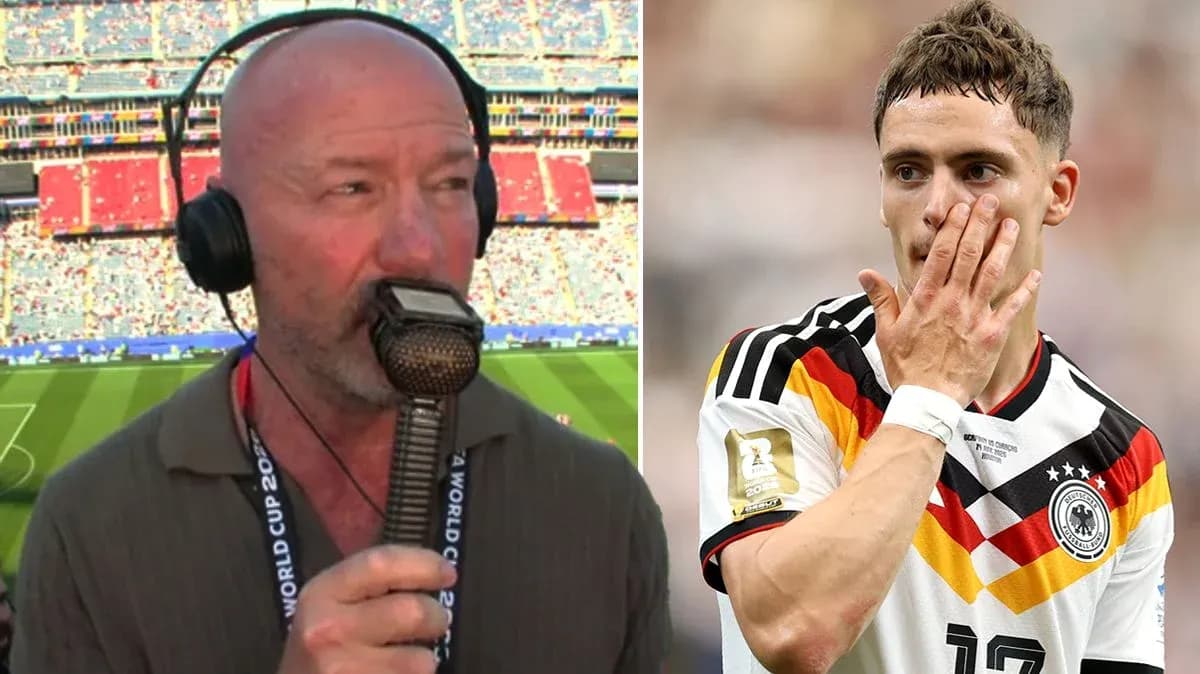
On Netflix’s The Rest is Football, Alan Shearer did not hold back. The former England captain highlighted the gap between Germany’s reputation and their output, and Wirtz’s season at Liverpool became a focal point.
"They've got the quality in names and on paper, but they just didn't deliver," Shearer said, lumping Wirtz in with a group of underperformers. He pointed to Leroy Sane’s poor campaign, the late call for Denis Undav to inject life into the penalty area, and then zeroed in on the Liverpool man.
"Wirtz has had a terrible season at Liverpool, he hasn't performed again at this World Cup."
The assist for Havertz could not hide the bigger issue: when Germany needed a leader in possession, when the game tightened and the pressure rose, Wirtz drifted instead of dictating.
Micah Richards pushed back, arguing that the £116million Liverpool fee proves the 21-year-old’s ceiling. "He's a superstar," Richards said, conceding that Germany had not seen the best of him but refusing to accept that he lacks quality.
He rattled through the roll call of German talent: Havertz, a Champions League final scorer in 2021 and 2026 and now a Premier League winner. Tah, fresh from a big move to Bayern Munich. Antonio Rudiger, a model of consistency at Real Madrid. Young Nathaniel Brown, impressing on the big stage.
The point was clear. On paper, Germany still look like Germany. On grass, they look anything but.
A historic first – and a familiar pattern
For all their recent tournament pain, one thing had always held: Germany did not lose penalty shootouts at World Cups. Until Boston.
This was their first World Cup shootout defeat and their first loss from 12 yards in international football since 1976. The aura is gone. The numbers say so.
It all felt a world away from the swagger of their opening 7-1 demolition of Curacao. That rout looked like a statement. Instead, it was a mirage. A 2-1 win over Ivory Coast, a 2-1 defeat to Ecuador, and now this collapse to Paraguay tell the real story.
Three straight finals appearances without reaching the last 16. For a nation that once measured tournaments in semi-finals and trophies, the drop is brutal.
Nagelsmann stands firm as knives come out
Nagelsmann did not flinch in the aftermath. Embarrassed, yes. Broken, no.
"When you exit the World Cup after you play Paraguay it is very bitter. It is very hurtful," he admitted. "This is the third elimination in a row, so we are not part of the first-class teams any more."
He knows what is coming. He knows how Germany will react.
"If we're going to do a survey today in Germany, people are not going to speak about me positively obviously," he said. "I don't think everyone in Germany will agree with me staying on and continuing as manager of the team."
Still, he refused to resign.
"I'm not going to step back only because we are eliminated. If the DFB want me to continue, I am going to continue. I know how the industry works and a lot of people now want me to leave. I want to continue if the German FA wants me to."
He also reserved praise for the travelling supporters, surprised by the backing they gave even in defeat. It was one of the few warm notes on a cold night for German football.
Outside the dressing room, the mood was far less forgiving.
Legends lose faith
On BBC One, former international Thomas Hitzlsperger did not sugar-coat the situation.
"It's hard to explain how Germany got into this tournament with so many problems. It's unacceptable," he said. "It doesn't look good for Nagelsmann. In the last few months, he hasn't dealt with situations well. With the expanded World Cup format, to go out so early would be tough to take for any big nation."
Arne Friedrich, speaking on BBC Radio 5 Live, went further, calling the exit deserved when judged across the whole tournament.
"Nagelsmann has to face the consequences," he said. "It is very disappointing, but that is sport. I would definitely say the journey continues without Nagelsmann."
That is the fault line now running through German football. A coach determined to stay, a public and a group of former players who have seen enough.
Where do Germany – and Wirtz – go from here?
Strip away the names, the transfer fees, the club badges, and what remains is stark: a national team that no longer behaves like a superpower when it matters most.
Germany still possess players with elite résumés. Havertz. Rudiger. Tah. Wirtz, despite his struggles, remains one of Europe’s most gifted young midfielders. But reputations don’t win knockout games. Penalties in Boston proved that in the harshest way.
For Nagelsmann, the question is whether the DFB still believe he can turn a talented but brittle group into something coherent. For Wirtz, the challenge is even more personal. He arrived in this World Cup as Liverpool’s £116m man, the creative heartbeat of a new generation. He leaves as one of the faces of a failure Germany can no longer ignore.
The next time he pulls on that shirt, will he finally seize the stage, or will Boston be remembered as the night his promise started to be doubted for good?




