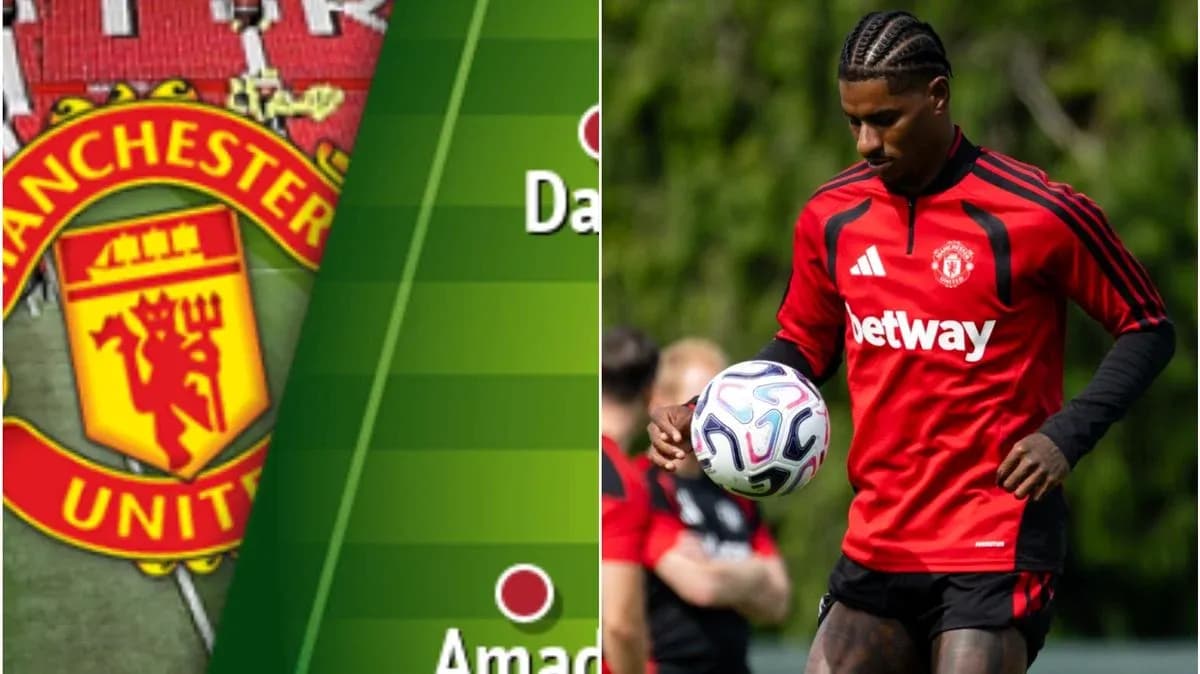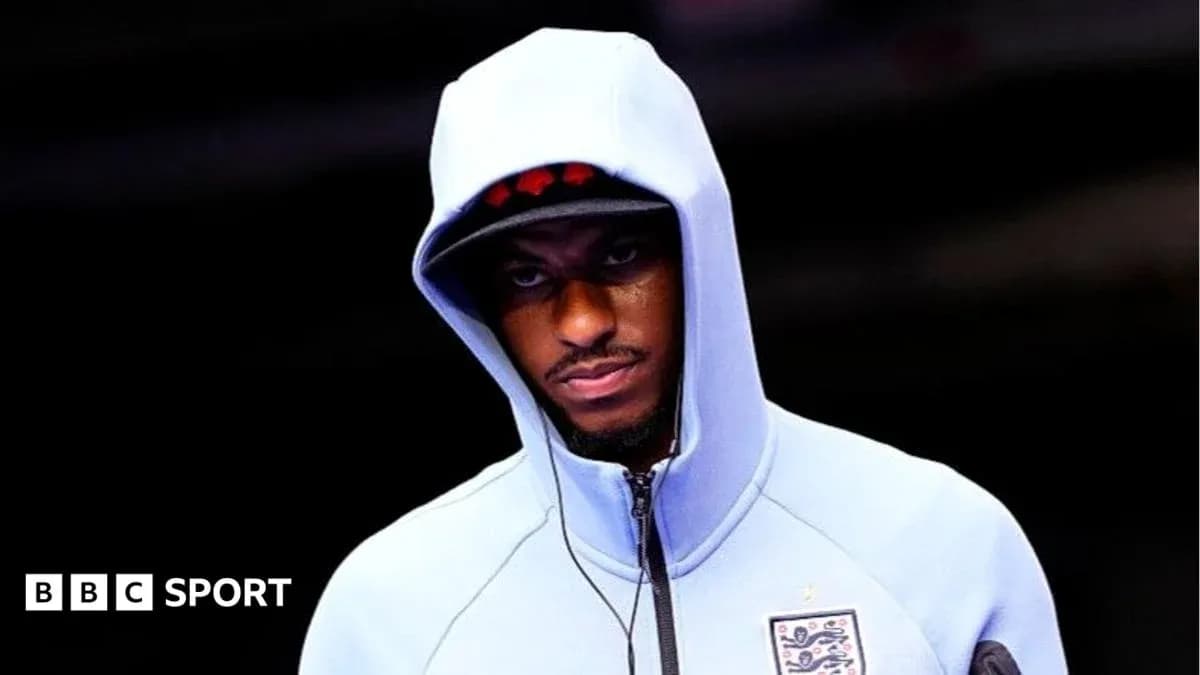
Marcus Rashford’s Reflection on His Future at Manchester United
Marcus Rashford’s World Cup ended not with a flourish on the pitch, but with a quiet, carefully chosen message on a screen.
“Keep believing in us. Our time will come,” he wrote after England’s wild 6-4 win over France in the third-place play-off in Miami. He talked about disappointment being guaranteed in football, about rest, reflection, family, friends, and returning “a better version of myself”.
One word leapt out of that statement.
Reflect.
Prime years, uneasy questions
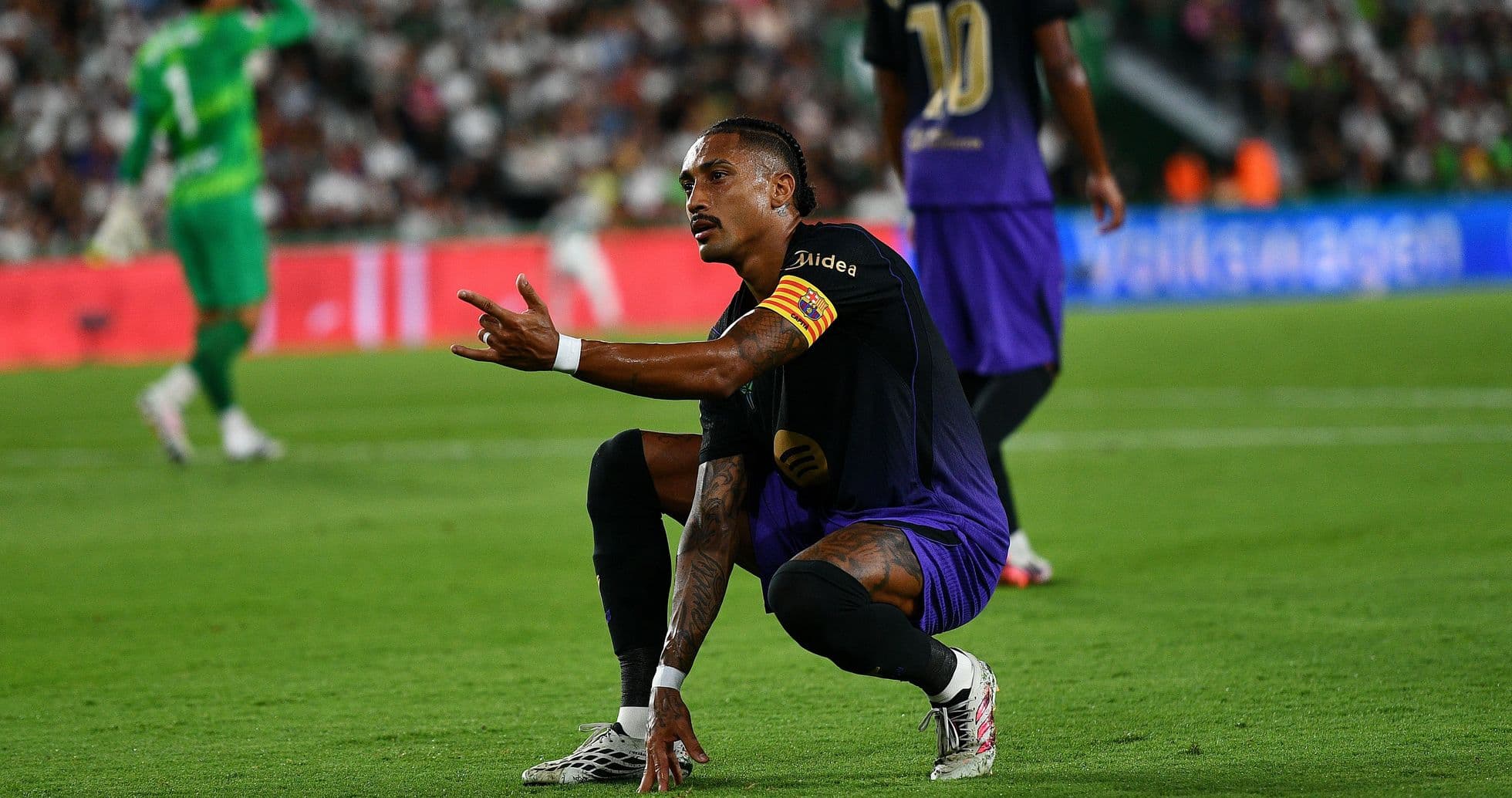
At 28, Rashford should be stepping into the clearest, most decisive phase of his career. He has just lifted his first league title, winning La Liga on loan at Barcelona. He has 77 England caps. He played in six of England’s eight games as Thomas Tuchel guided the country to its best World Cup finish since 1966.
On paper, these are the credentials of a forward settled at the top of the game.
In reality, the reflection he talks about will not just be about a long season or a draining tournament. It will be about Manchester United, his future there, and whether the club that shaped him is still the right place for the next act of his career.
Rashford is tied to United until 2028. At £325,000 a week, he is their highest earner, a financial marker of status at a club now run, in football terms, by Sir Jim Ratcliffe and a hierarchy obsessed with dragging wage costs under control.
That contract, once a symbol of security, now feels like a complication.
Options that never really were
Barcelona had the first big decision. Their loan deal included an option to buy Rashford permanently for £26m. The deadline came and went in mid-June. No move. No drama. Just silence.
Another clause sat there as a kind of safety valve: any club, apart from Liverpool and Manchester City, could have taken him for £40m. That expired earlier in July. No takers there either.
People close to Rashford always felt those figures told their own story. Why would any club bid more than Barcelona were allowed to pay? If the European champions, having worked with him for a season, did not take that opportunity, who was going to push beyond it?
Now, with England’s World Cup run over, Rashford is due a three-week break. Unless plans shift, he will walk back through the doors at Carrington just as United head off for a six-day training camp in the Republic of Ireland, built around a showpiece meeting with Leeds at Croke Park on 12 August.
For all the noise around him, those close to the situation say he is calm about returning.
From bomb squad to olive branch
The environment he returns to is very different from the one he left.
Ruben Amorim’s short and turbulent spell at Old Trafford left scars. The Portuguese coach clashed with Rashford within weeks of arriving from Sporting Lisbon. The relationship deteriorated quickly. Rashford was eventually exiled and farmed out on loan to Aston Villa.
When Amorim gathered his squad for pre-season last summer, he made a point of a hard reset. Rashford was placed in a so-called “bomb squad” with Alejandro Garnacho, Antony, Tyrell Malacia and Jadon Sancho. Every one of those other four has now left the club.
Amorim has gone too.
In his place stands Michael Carrick, a former team-mate, former coach and, briefly, former caretaker manager during the chaotic days after Ole Gunnar Solskjaer’s departure in 2021. Carrick knows Rashford’s game, and Rashford knows Carrick’s temperament.
Carrick’s only public comment on Rashford late last season was conciliatory, in keeping with his measured, diplomatic style. He has not yet been pressed, in detail, on how he sees Rashford fitting into his plans now.
But the dynamic is no longer confrontational. That alone changes the mood music.
United draw a financial line
If there is warmth on the training ground, there is far less sentiment in the boardroom.
United have been clear: they will not renegotiate Barcelona’s option at a lower fee, and they will not entertain another cut-price loan to Camp Nou. The Catalan club, for their part, have moved on in the market. They have already brought in Anthony Gordon and are closing in on Karim Adeyemi from Borussia Dortmund. That attacking reshuffle raises obvious questions about how strong any lingering interest in Rashford really is.
United’s stance on Rashford fits a broader summer strategy. The message from the top is blunt: no more being bounced into bad deals.
They stepped away from Elliot Anderson, a player widely expected to choose Manchester City anyway, rather than move towards the £116m Nottingham Forest eventually accepted. They did the same with Mateus Fernandes, whose £85m switch from West Ham to Tottenham underlined the inflation they are determined to resist.
Behind that approach sits an expanded data operation led by director Michael Sansoni and his team. United believe that with better analysis, they can identify cheaper, smarter alternatives rather than paying premiums out of panic.
The flip side of that discipline is obvious. To buy, they need clubs willing to sell. To reshape the squad, they need buyers for the players they no longer want.
And Rashford sits right on that fault line.
A big contract, a small market
There are not many clubs in world football who can take on a £325,000-a-week wage. Fewer still who would do so for a player whose recent club form has been uneven, whose best work in the last year arguably came in a different shirt, in a different league.
Even if the finances line up, the player still has to want the move.
Rashford’s recent comments about England make his priorities clear. He will not gamble with his international place. He also has reservations about certain Premier League destinations; BBC Sport has been told there are some domestic clubs he simply would not consider.
So where does that leave him when the window closes on 1 September?
Right now, the most realistic answer, by a distance, is Manchester United.
After that, the possibilities blur into generalities: a Spanish club, a Turkish club, a German club. The vagueness is telling. This is the 15th-highest scorer in United’s history, on 138 goals, just 17 short of breaking into their all-time top 10. Yet there is no obvious queue, no bidding war, no clear escape route.
Time to reconcile?
Plenty of voices argue the opposite path. Former captain Gary Neville is among those who believe Rashford’s time at Old Trafford should be over, that both player and club need a clean break and that any reconciliation risks dragging old problems into a new era.
The market may not care what they think.
If no acceptable offer arrives, if no club steps up with the money and the project to tempt Rashford away, then the outcome becomes almost unavoidable. He stays. He reintegrates. He fights for his place under Carrick.
Not everyone would complain.
“A fit and focused Marcus Rashford has the ability to be one of the best players,” said his friend Sam Smith, the Wrexham forward who scored the winner against Carrick’s United in Helsinki in pre-season, speaking on the United We Stand podcast.
“He has everything.
“He has had a difficult time at United and getting away from it all was a good thing.
“I don’t know what is going to happen but as his friend, I hope he comes back and proves how good a player he was, how good he can be and starts scoring goals again.”
The reflection Rashford promised has already begun. The real test comes next: whether he can turn it into a revival, not somewhere else in Europe, but back where it all started.